Katz Marie Sophie, Benidamou Rajae, Ooms Mark, Heitzer Marius, Bock Anna, Elvers Dirk, Steiner Timm, Peters Florian, Hölzle Frank, Modabber Ali
Department of Oral and Maxillofacial Surgery, University Hospital RWTH Aachen, Pauwelsstraße 30, 52074, Aachen, Germany.
BMC Oral Health. 2024 Dec 13;24(1):1485. doi: 10.1186/s12903-024-05275-6.
The aim of this retrospective study was to identify high-risk dental extraction patients and the timing of postoperative hemorrhage to evaluate whether preventive hospitalization should be considered in patients on antiplatelet medication (AP) or anticoagulants.
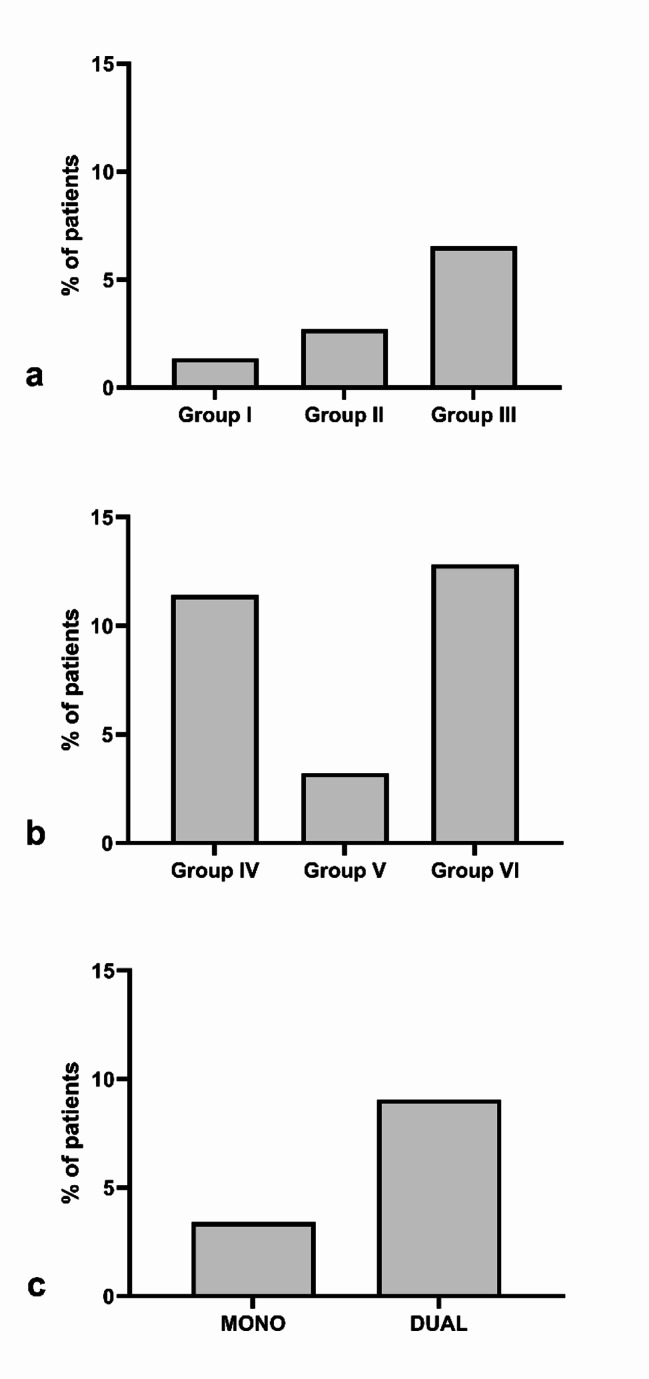
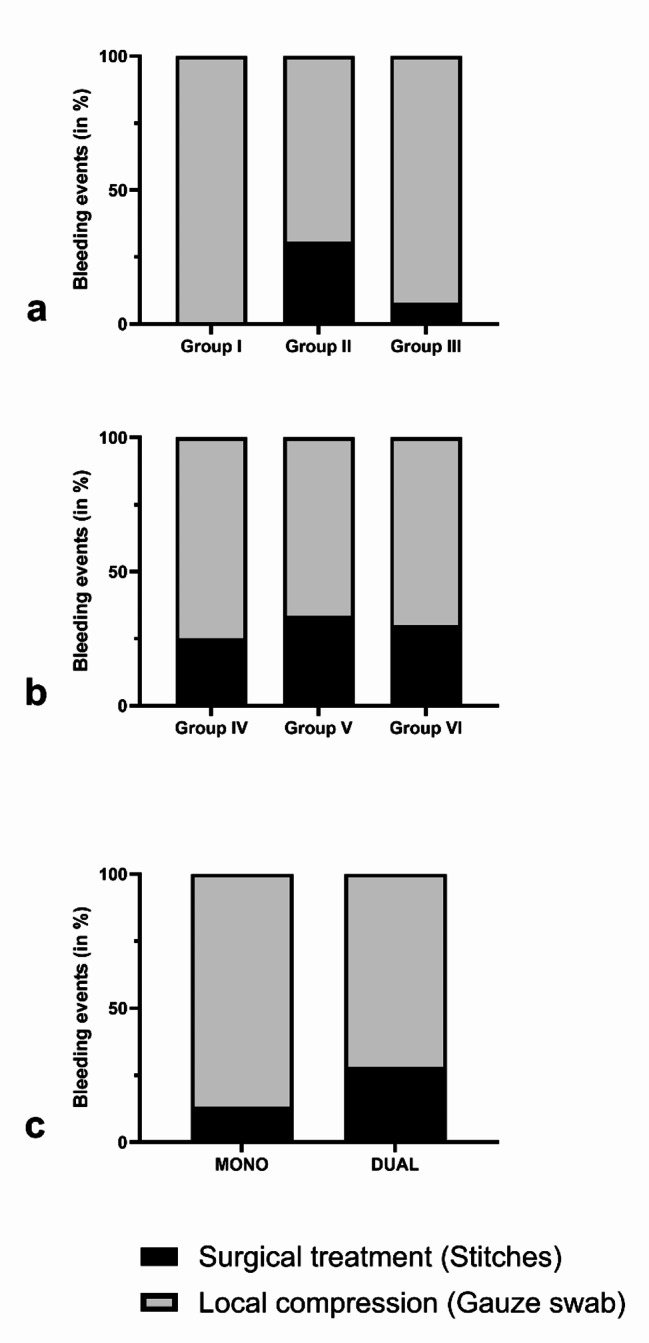
Our study included 1595 procedures; 1319 were conducted under monotherapy (Group I: AP; Group II: indirect oral anticoagulant [IAC]; Group III: direct oral anticoagulant [DOAC]) and 276 under dual therapy (Group IV: double AP; Group V: AP and IAC; Group VI: AP and DOAC). We evaluated the incidence, frequency and timing of hemorrhage, hospitalization rate, and treatment of bleeding incidents.
The incidence of hemorrhagic events was significantly higher in the dual therapy groups compared to the monotherapy groups (p < 0.001). Comparing the procedures under monotherapy, those on DOAC (Group III) had a significantly higher risk of postoperative bleeding than Groups I and II (p < 0.001) and a higher rate of repeated bleeding episodes (p = 0.035). Regarding bleeding incidents, 44% (dual therapy) vs. 51.1% (monotherapy) occurred on the day of surgery.
The bleeding risk after dental extractions is overall low and patients were often hospitalized preventively due to their comorbidities rather than actual bleeding risk. Patients should be instructed about local compression, and surgeries should be completed in the morning to avoid emergency visits. However, patients with cardiovascular diseases and dual therapy had a higher risk of postoperative hemorrhage. Thus, hospitalization is to be considered in these cases.
The study was approved by the Ethics Committee of the Medical Faculty of RWTH Aachen (Decision Number 24-136). This was a retrospective clinical study designed to analyze postoperative bleeding and hospitalization rates after dental extractions in patients on AP or anticoagulation therapy.
这项回顾性研究的目的是识别高风险拔牙患者以及术后出血时间,以评估是否应考虑让服用抗血小板药物(AP)或抗凝剂的患者进行预防性住院治疗。
我们的研究纳入了1595例手术;其中1319例在单一疗法下进行(第一组:AP;第二组:间接口服抗凝剂[IAC];第三组:直接口服抗凝剂[DOAC]),276例在联合疗法下进行(第四组:双重AP;第五组:AP和IAC;第六组:AP和DOAC)。我们评估了出血的发生率、频率和时间、住院率以及出血事件的治疗情况。
与单一疗法组相比,联合疗法组的出血事件发生率显著更高(p < 0.001)。在单一疗法下的手术比较中,服用DOAC的患者(第三组)术后出血风险显著高于第一组和第二组(p < 0.001),且重复出血事件发生率更高(p = 0.035)。关于出血事件,44%(联合疗法)与51.1%(单一疗法)发生在手术当天。
拔牙后的出血风险总体较低,患者常因合并症而非实际出血风险接受预防性住院治疗。应指导患者进行局部压迫,手术应在上午完成以避免急诊就诊。然而,患有心血管疾病且接受联合疗法的患者术后出血风险更高。因此,在这些情况下应考虑住院治疗。
该研究经亚琛工业大学医学院伦理委员会批准(批准号24 - 136)。这是一项回顾性临床研究,旨在分析接受AP或抗凝治疗的患者拔牙后的术后出血和住院率。