Messersmith Elizabeth M, Hansen Stephanie L
Department of Animal Science, College of Agriculture and Life Sciences, Iowa State University, Ames, IA 50011, USA.
J Anim Sci. 2024 Jan 3;102. doi: 10.1093/jas/skae365.
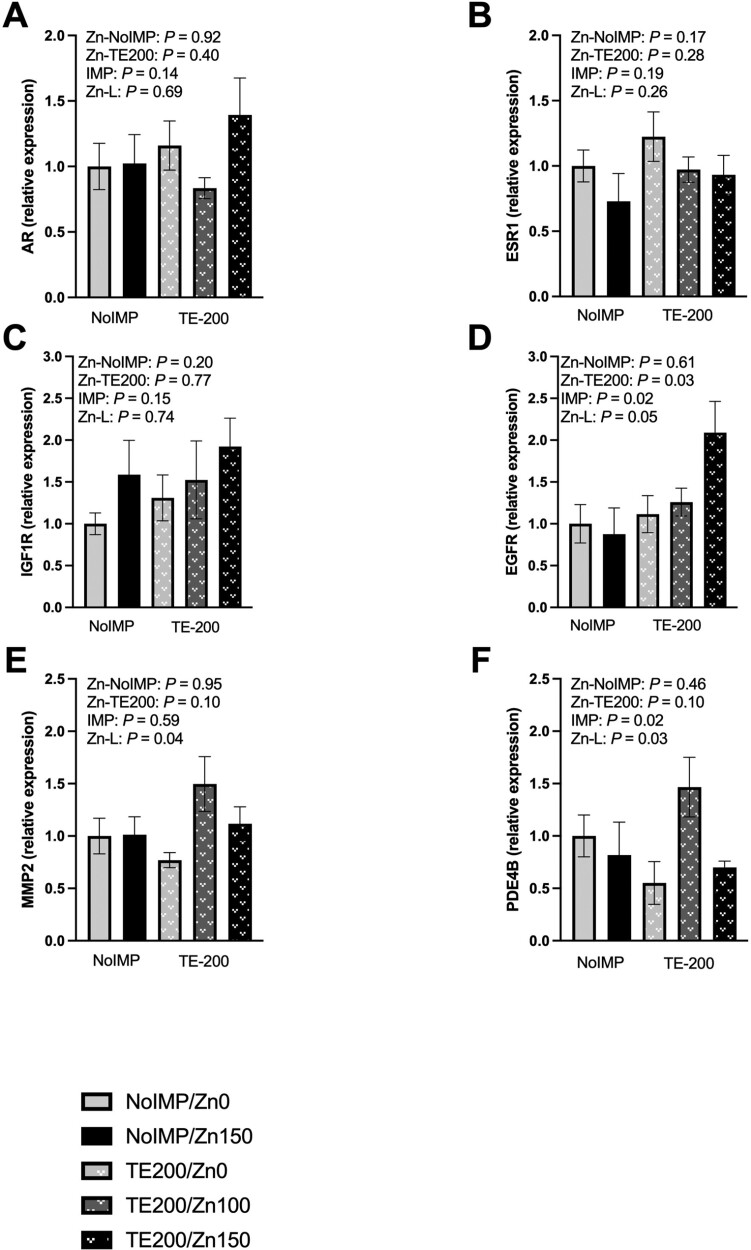
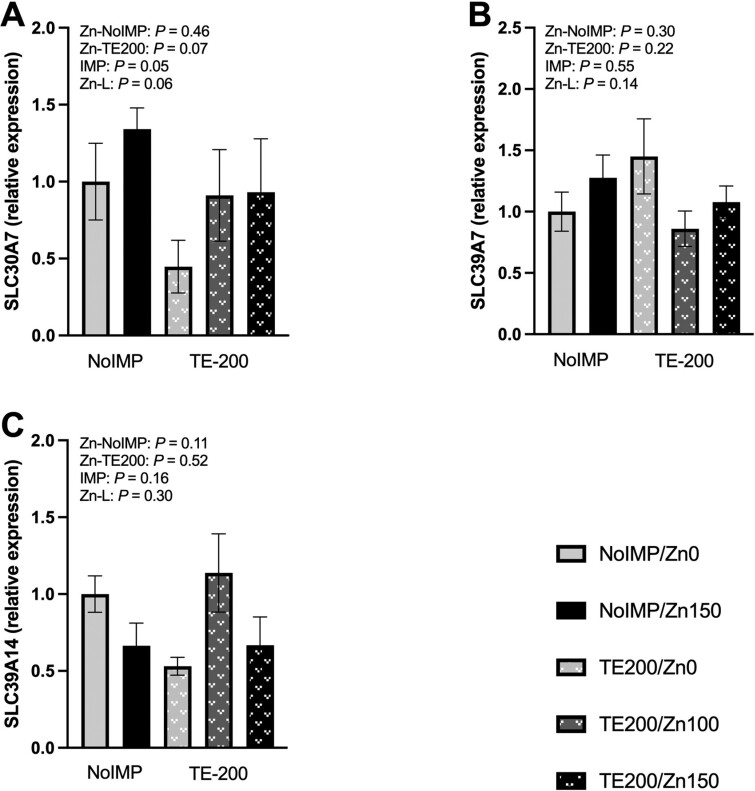
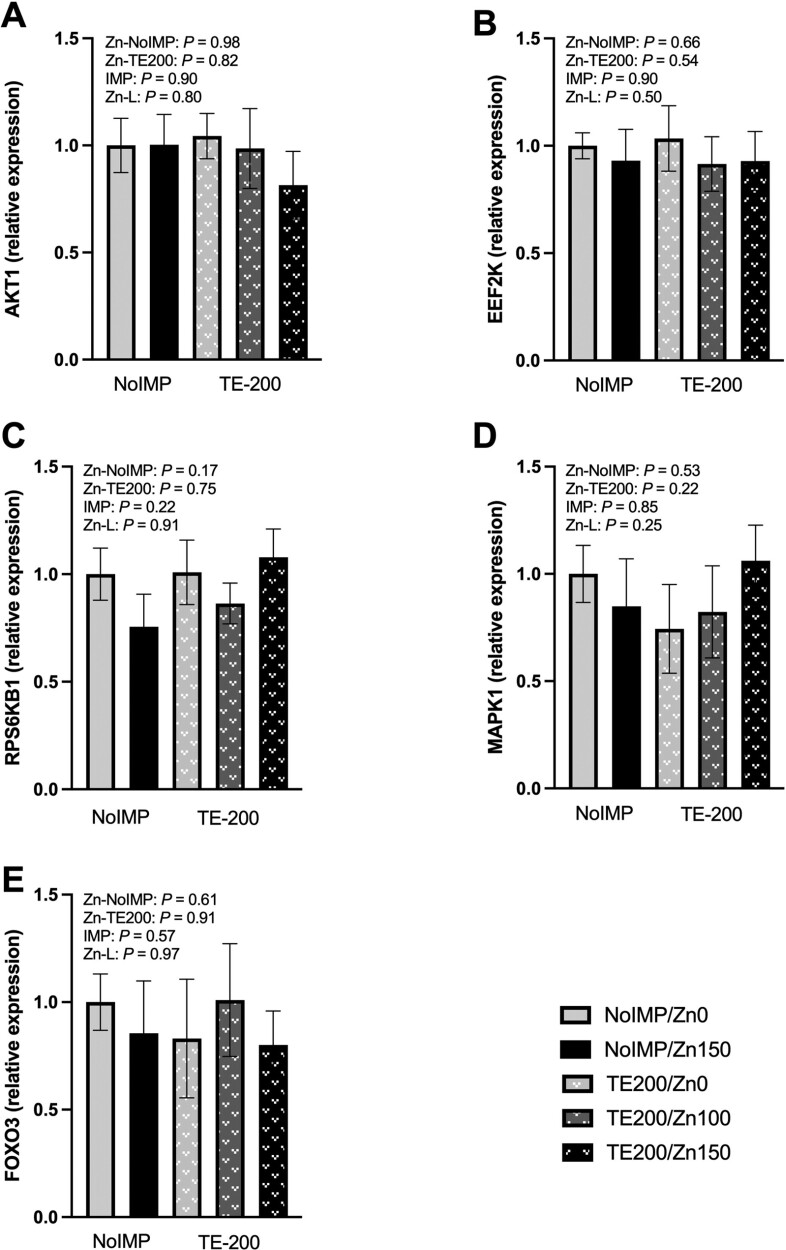
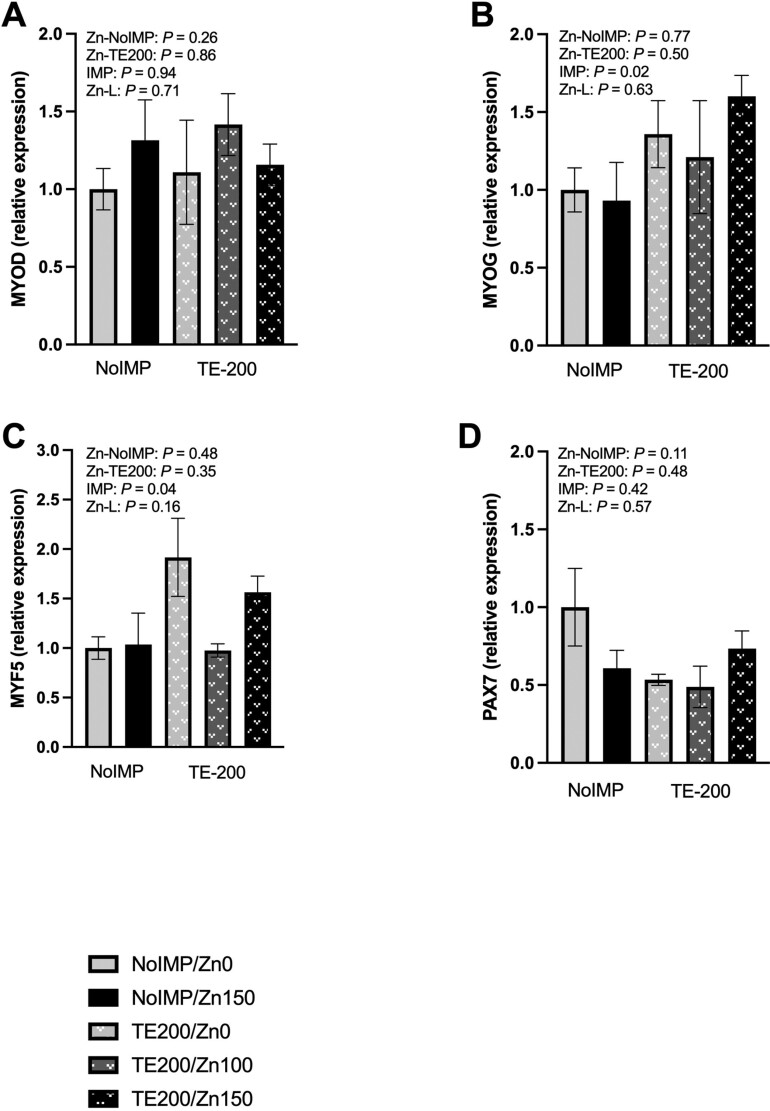
The effects of supplemental Zn within steroidal implant strategy on performance, carcass characteristics, trace mineral status, and muscle gene expression were tested in a 59-d study using 128 Angus-crossbred steers (492 ± 29 kg) in a 2 × 4 complete randomized design. Implant strategies included no implant (NoIMP) or Component TE-200 (TE200; Elanco, Greenfield, IN) administered on day 0. Zinc was supplemented at 0, 30, 100, or 150 mg Zn/kg dry matter (Zn0, Zn30, Zn100, Zn150, respectively) from ZnSO4. Steers were stratified by body weight (BW) to pens (n = 5 or 6 steers/pen) equipped with GrowSafe bunks (GrowSafe Systems Ltd., Airdrie, AB, Canada) and assigned treatments (n = 15, 16, or 17 steers/treatment). Cattle were weighed on days -1, 0, 18, and 59 with blood collected on days -1, 18, 40, and 59. Muscle samples were collected from the longissimus thoracis on day 11 and liver samples were collected on day 55 or 56. Data were analyzed using the Mixed Procedure of SAS via contrast statements testing the linear and quadratic response to Zn supplementation within implant treatment and NoIMP vs. TE200 for performance, carcass, blood, and liver parameters. Specific contrast statements were formed for the analysis of gene expression in muscle including: Zn0 vs. Zn150 within NoIMP and TE200, NoIMP vs. TE200 (Zn0 and Zn150 only), and the linear effect of supplementing Zn0, Zn100, and Zn150 within TE200. Steer was the experimental unit. Day 18 BW and days 0 to 18 average daily gain (ADG) were linearly increased due to Zn supplementation within TE200 (P ≤ 0.002) in conjunction with a linear increase from Zn in day 11 muscle epidermal growth factor receptor, matrix metalloproteinase 2, and phosphodiesterase 4B gene expression of TE200 steers (P ≤ 0.05). Plasma Zn on days 18 and 40 linearly increased with increasing Zn supplementation regardless of implant treatment (P ≤ 0.03) and was lesser for TE200 than NoIMP steers on day 18 (P = 0.001). Day 59 BW and hot carcass weight (HCW) were greater for TE200 vs. NoIMP (P ≤ 0.002) and HCW of implanted steers tended to linearly increase with increasing Zn supplementation (P = 0.09). No effects of Zn supplementation were observed in NoIMP for HCW, BW, or ADG (P ≥ 0.17). Yield grade and 12th rib fat tended to quadratically decrease within NoIMP (P ≤ 0.09), with Zn100 being the most lean. These data indicate increasing supplemental Zn influences steroidal implant signaling machinery while increasing the Zn status and implant-induced growth of feedlot cattle.
在一项为期59天的研究中,采用2×4完全随机设计,使用128头安格斯杂交阉牛(492±29千克),测试了在甾体植入策略中补充锌对生产性能、胴体特性、微量矿物质状态和肌肉基因表达的影响。植入策略包括不植入(NoIMP)或在第0天施用Component TE-200(TE200;美国伊利诺伊州格林菲尔德市的Elanco公司)。从硫酸锌中分别以0、30、100或150毫克锌/千克干物质(分别为Zn0、Zn30、Zn100、Zn150)补充锌。阉牛按体重分层至配备GrowSafe饲槽(加拿大艾伯塔省艾尔德里市的GrowSafe Systems Ltd.)的围栏(每围栏5或6头阉牛),并分配处理(每个处理15、16或17头阉牛)。在第-1、0、18和59天对牛称重,在第-1、18、40和59天采集血液。在第11天从胸最长肌采集肌肉样本,在第55或56天采集肝脏样本。使用SAS的混合程序通过对比语句分析数据,测试在植入处理和NoIMP与TE200之间补充锌对生产性能、胴体、血液和肝脏参数的线性和二次响应。形成了用于分析肌肉中基因表达的特定对比语句,包括:NoIMP和TE200内的Zn0与Zn150、NoIMP与TE200(仅Zn0和Zn150)以及TE200内补充Zn0、Zn100和Zn150的线性效应。阉牛是实验单位。由于TE200内补充锌,第18天体重和第0至18天平均日增重(ADG)呈线性增加(P≤0.002),同时TE200阉牛第11天肌肉表皮生长因子受体、基质金属蛋白酶2和磷酸二酯酶4B基因表达中的锌呈线性增加(P≤0.05)。无论植入处理如何,随着锌补充量增加,第18天和40天血浆锌呈线性增加(P≤0.03),且第18天TE200阉牛的血浆锌低于NoIMP阉牛(P = 0.001)。TE200的第59天体重和热胴体重(HCW)高于NoIMP(P≤0.002),植入阉牛的HCW随着锌补充量增加呈线性增加趋势(P = 0.09)。在NoIMP中未观察到锌补充对HCW、体重或ADG有影响(P≥0.17)。在NoIMP中,产量等级和第12肋骨处脂肪呈二次方下降趋势(P≤0.09),Zn100最瘦。这些数据表明,增加锌补充量会影响甾体植入信号传导机制,同时提高育肥牛的锌状态和植入诱导的生长。