Miao Yu, Dong Meng, Zhou Qiyin, Thiel Julia, Li Na, Cai Ying, Yuan Dan, Wang Haitao, Jin Su-Han, Yang Hua, Wang Jinjing, Frey Benjamin, Gaipl Udo S, Ma Hu, Zhou Jian-Guo
Department of Oncology, The Second Affiliated Hospital of Zunyi Medical University, Zunyi, China.
Institute of Biomedical Research, Henan Academy of Sciences, Zhengzhou, China.
Front Immunol. 2024 Nov 29;15:1513076. doi: 10.3389/fimmu.2024.1513076. eCollection 2024.
Low-grade endometrial stromal sarcoma (LG-ESS) is a rare uterine malignancy characterized by its complex tumor microenvironment (TME) and high recurrence rates, posing challenges to accurate prognosis and effective treatment. Identifying prognostic biomarkers is essential for improving patient stratification and guiding therapeutic strategies.
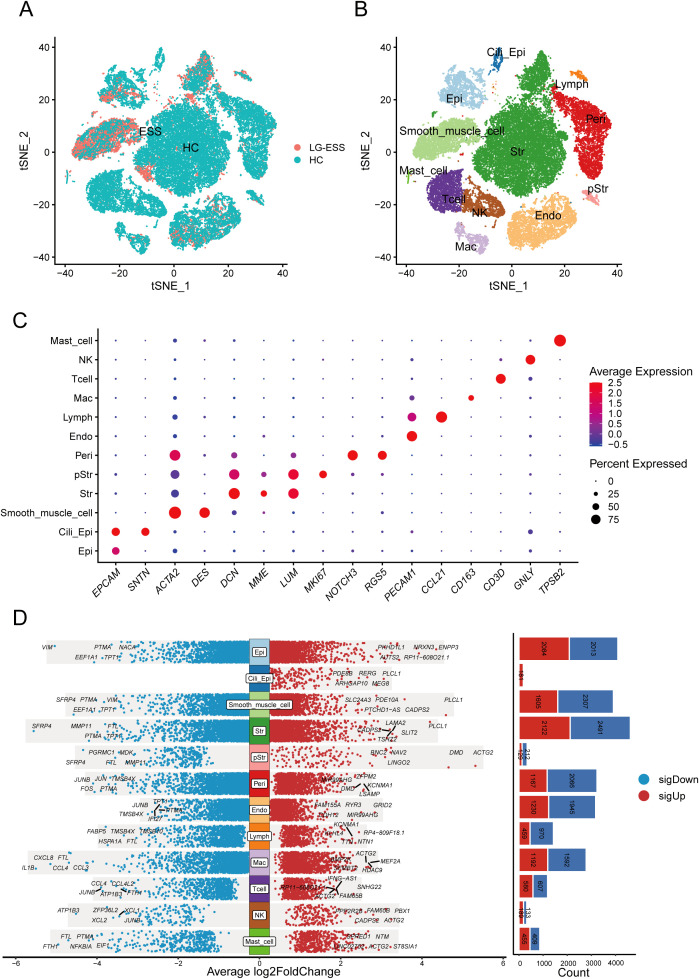
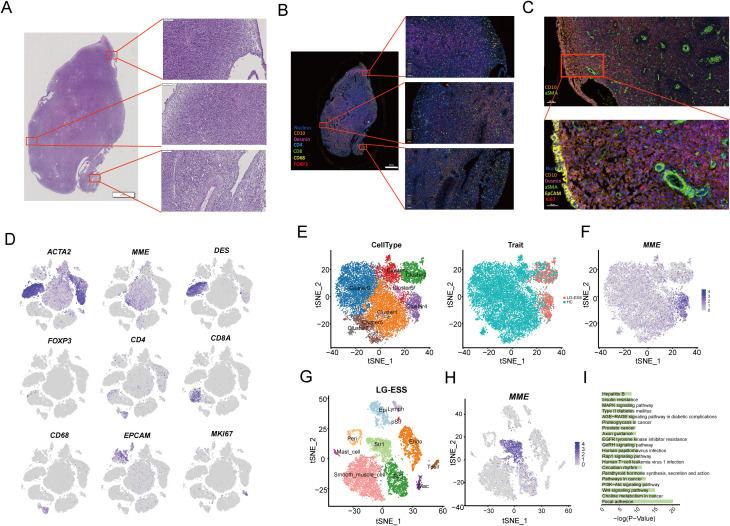
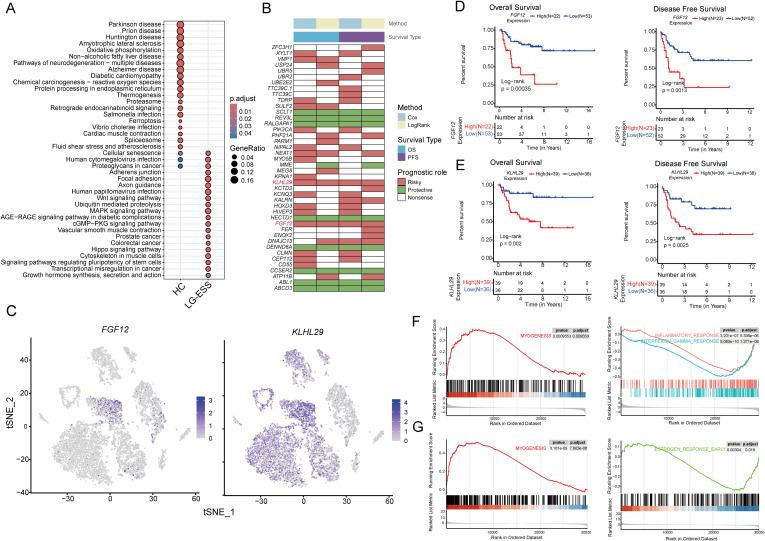
Using single-cell transcriptome analysis combined with H&E and multiplex immunofluorescence staining, we identified a subpopulation of tumor cells in LG-ESS and further validated the association of this subpopulation and its characteristic genes with LG-ESS prognosis by molecular characterization and bulk transcriptome data.
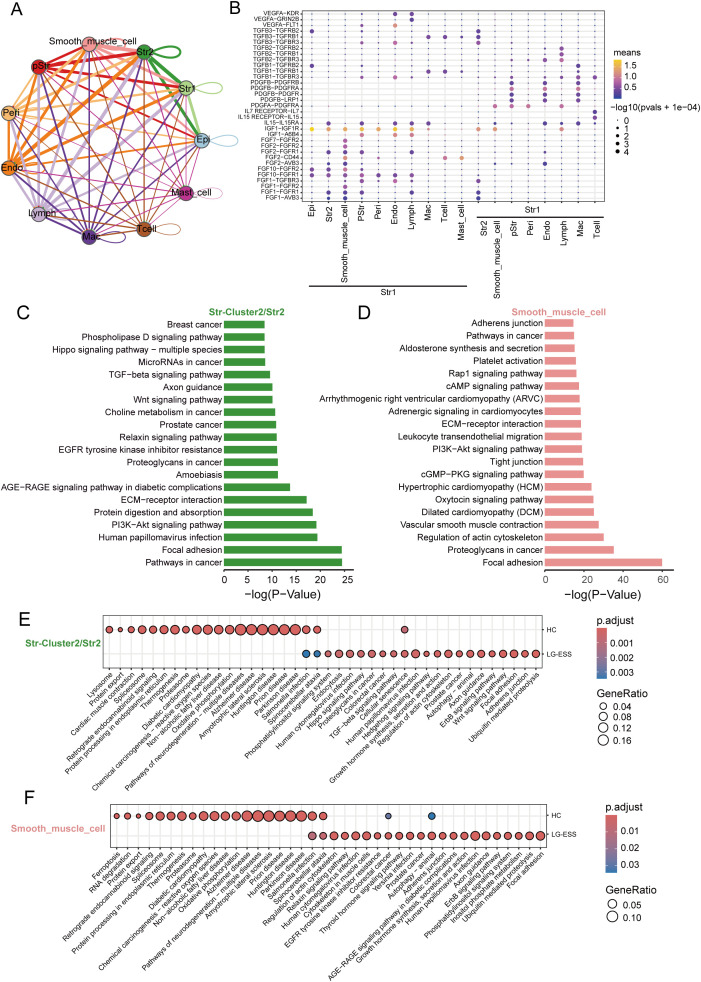
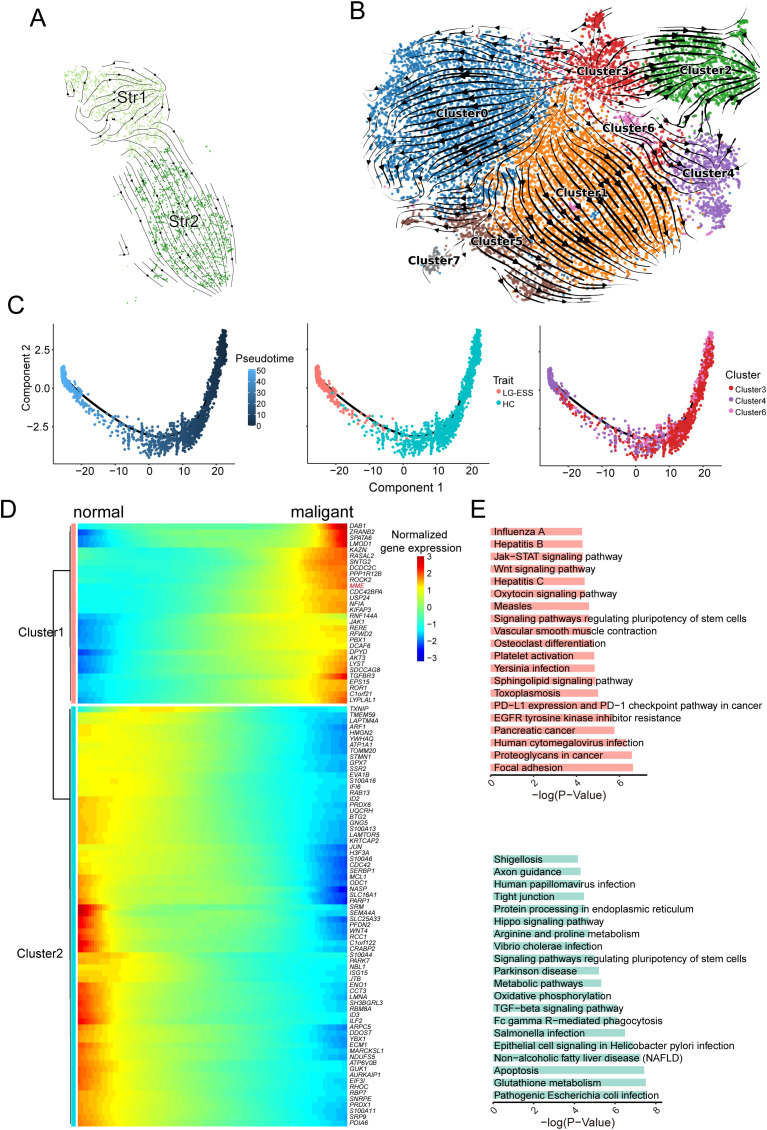
Our analysis reveals multiple cellular subpopulations within the tumor tissue, particularly a tumor cell subpopulation among them which is associated with poor prognosis. Originating from normal stromal fibroblasts, this subpopulation appears to play a crucial role in TME remodeling, smooth muscle cell behavior, and potentially in tumorigenesis and metastasis. Of particular interest in this subpopulation is the highly expressed gene, which is significantly associated with a shortened survival in ESS, highlighting its potential as a prognostic biomarker.
Our study reveals the complexity of TME within the LG-ESS and highlights the role that tumor cell subpopulations play in disease progression and patient prognosis. The identification of as a prognostic biomarker suggests a new approach for the personalized treatment and prognosis monitoring of patients.
低级别子宫内膜间质肉瘤(LG-ESS)是一种罕见的子宫恶性肿瘤,其特征在于复杂的肿瘤微环境(TME)和高复发率,这给准确的预后评估和有效治疗带来了挑战。识别预后生物标志物对于改善患者分层和指导治疗策略至关重要。
通过单细胞转录组分析结合苏木精-伊红(H&E)染色和多重免疫荧光染色,我们在LG-ESS中鉴定出一个肿瘤细胞亚群,并通过分子特征分析和批量转录组数据进一步验证了该亚群及其特征基因与LG-ESS预后的相关性。
我们的分析揭示了肿瘤组织内的多个细胞亚群,特别是其中一个与预后不良相关的肿瘤细胞亚群。该亚群起源于正常基质成纤维细胞,似乎在TME重塑、平滑肌细胞行为以及潜在的肿瘤发生和转移中发挥关键作用。在这个亚群中,特别值得关注的是高表达的 基因,它与ESS患者的生存期缩短显著相关,突出了其作为预后生物标志物的潜力。
我们的研究揭示了LG-ESS中TME的复杂性,并强调了肿瘤细胞亚群在疾病进展和患者预后中的作用。将 鉴定为预后生物标志物为患者的个性化治疗和预后监测提出了一种新方法。