
基于可持续纳米技术的减轻制浆造纸工业污染物的技术
Sustainable Nanotechnology Based Techniques for Mitigating the Pollutants from Pulp and Paper Industry.
作者信息
Gupta Guddu Kumar, Sailwal Megha, Shukla Pratyoosh
机构信息
Enzyme Technology and Protein Bioinformatics Laboratory, School of Biotechnology, Institute of Science, Banaras Hindu University, Varanasi 221005, Uttar Pradesh, India.
出版信息
ACS Omega. 2024 Nov 26;9(49):47904-47919. doi: 10.1021/acsomega.4c06022. eCollection 2024 Dec 10.
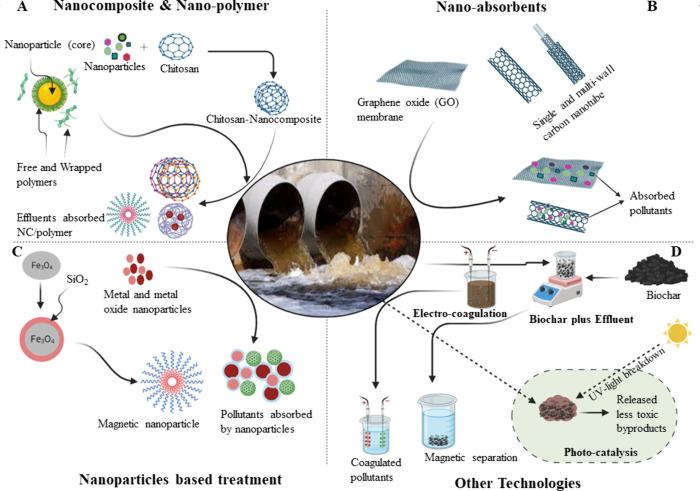
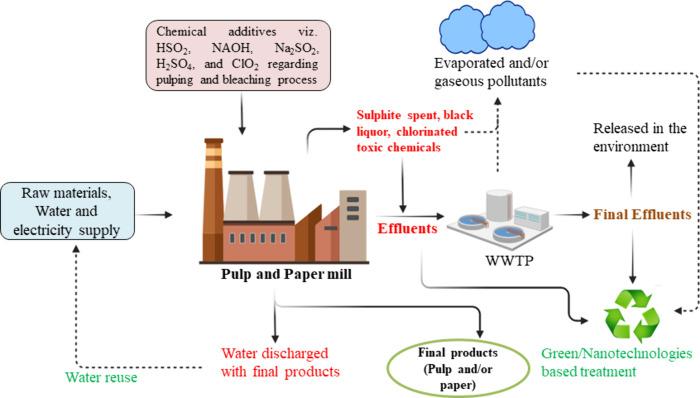
Paper mills inevitably produce various pollutants, including chlorolignin, chlorophenols, chloroguaiacol, furan, cyanide, and heavy metals. These pollutants cause significant threats to aquatic and terrestrial life. The pulp and paper industries are looking for eco-friendly solutions for the disposal of effluents during paper processing. Moreover, environmental management practices are a key concern that may be addressed by removing these effluents using suitable bioremediation techniques. Therefore, we have discussed several eco-friendly nanotechnology based sustainable bioremediation technologies like the use of nanoparticles, nanomaterials, nanocomposites, nanoadsorbents, and several advanced methods such as electrocoagulation and photocatalysis, which may be utilized for the elimination of hazardous pollutants from paper industry effluents. This review finally includes critical insight into the potential use of the above-mentioned nanotechnology based interventions for mitigation of contaminants from the paper industry. Nevertheless, there are a few limitations and challenges toward implementation of such technologies, which are also discussed in this review.
造纸厂不可避免地会产生各种污染物,包括氯木素、氯酚、氯代愈创木酚、呋喃、氰化物和重金属。这些污染物对水生生物和陆地生物构成重大威胁。制浆造纸行业正在寻找纸加工过程中废水处理的环保解决方案。此外,环境管理措施是一个关键问题,可通过使用合适的生物修复技术去除这些废水来解决。因此,我们讨论了几种基于环保纳米技术的可持续生物修复技术,如使用纳米颗粒、纳米材料、纳米复合材料、纳米吸附剂,以及几种先进方法,如电凝聚和光催化,这些技术可用于消除造纸工业废水中的有害污染物。本综述最后深入探讨了上述基于纳米技术的干预措施在减轻造纸工业污染物方面的潜在用途。然而,实施此类技术存在一些限制和挑战,本综述也对此进行了讨论。
 Zotero 插件