Carnevali Adriano, Bacherini Daniela, Metrangolo Cristian, Chiosi Flavia, Viggiano Pasquale, Astarita Carlo, Gallinaro Valentina, Bonfiglio Vincenza M E
Department of Surgical and Medical Sciences, University Magna Graecia of Catanzaro, Catanzaro, Italy.
Department of Neurosciences, Psychology, Drug Research and Child Health (NEUROFARBA), University of Florence, Florence, Italy.
Front Med (Lausanne). 2024 Nov 29;11:1454591. doi: 10.3389/fmed.2024.1454591. eCollection 2024.
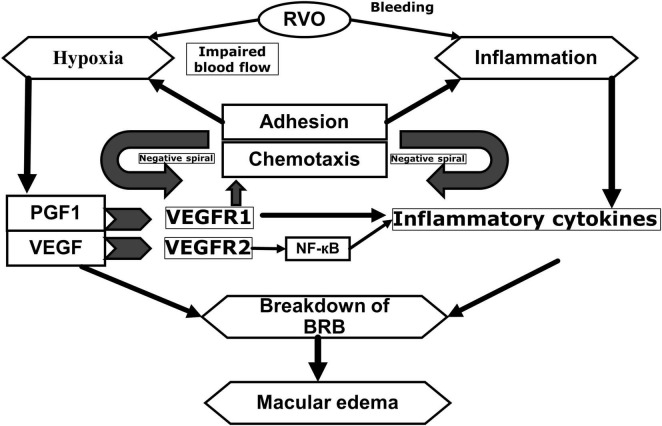
BACKGROUND/OBJECTIVE: Retinal vein occlusion (RVO) is a common, sight-threatening vascular disorder affecting individuals of all ages, with incidence increasing with age. Due to its complex, multifactorial nature, treating RVO remains a clinical challenge. Currently, treatment strategies include laser photocoagulation (especially for branch RVO), anti-VEGF therapies, and intravitreal corticosteroids. This systematic review (without meta-analysis) aimed to update the evidence on the efficacy and safety of the sustained-release intravitreal dexamethasone implant (DEX-i) in managing macular edema (ME) secondary to central and branch RVO.
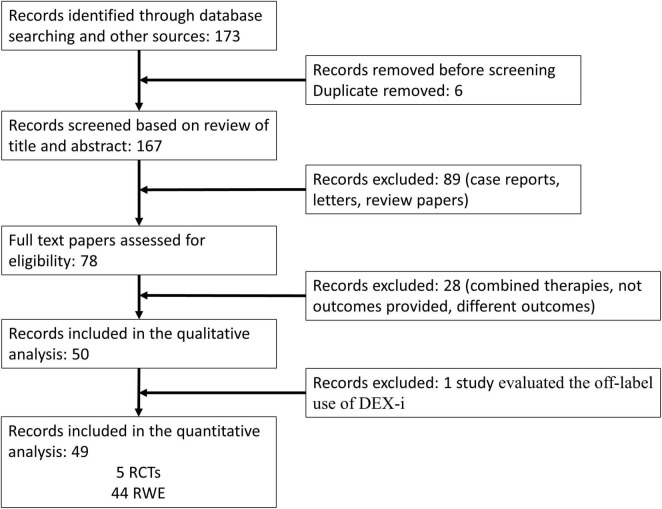
A systematic review was conducted to assess current literature on DEX-i for ME secondary to RVO. Relevant studies were analyzed for outcomes related to visual acuity, retinal thickness, and the safety profile of DEX-i in RVO treatment.
Evidence indicates that DEX-i substantially improves best-corrected visual acuity (BCVA) and reduces central retinal thickness (CRT) in ME associated with both branch and central RVO, demonstrating rapid and sustained effects. Common adverse events associated with DEX-i included manageable complications, such as medically controlled intraocular pressure elevation and progression of cataracts.
DEX-i offers effective and sustained improvements in both visual and anatomical outcomes for patients with ME secondary to RVO. Individualized treatment selection is essential to optimize patient outcomes. Future directions include identifying predictive biomarkers and adopting patient-centered approaches based on individual clinical characteristics, which may enhance treatment success in RVO.
背景/目的:视网膜静脉阻塞(RVO)是一种常见的、威胁视力的血管疾病,影响各年龄段人群,发病率随年龄增长而增加。由于其性质复杂、涉及多因素,治疗RVO仍然是一项临床挑战。目前,治疗策略包括激光光凝(特别是用于分支RVO)、抗VEGF治疗和玻璃体内注射皮质类固醇。本系统评价(无荟萃分析)旨在更新关于缓释玻璃体内地塞米松植入物(DEX-i)治疗继发于中央和分支RVO的黄斑水肿(ME)的疗效和安全性的证据。
进行系统评价以评估当前关于DEX-i治疗继发于RVO的ME的文献。分析相关研究中与视力、视网膜厚度以及DEX-i在RVO治疗中的安全性相关的结果。
证据表明,DEX-i可显著提高分支和中央RVO相关ME患者的最佳矫正视力(BCVA),并降低中央视网膜厚度(CRT),显示出快速且持续的效果。与DEX-i相关的常见不良事件包括可控的并发症,如药物控制的眼压升高和白内障进展。
DEX-i可为继发于RVO的ME患者在视力和解剖学结果方面带来有效且持续的改善。个体化治疗选择对于优化患者预后至关重要。未来的方向包括确定预测性生物标志物,并根据个体临床特征采用以患者为中心的方法,这可能提高RVO的治疗成功率。