Allen C M, Beck F M, Lurie F A, Pinsky H M
Infect Immun. 1985 Feb;47(2):480-3. doi: 10.1128/iai.47.2.480-483.1985.
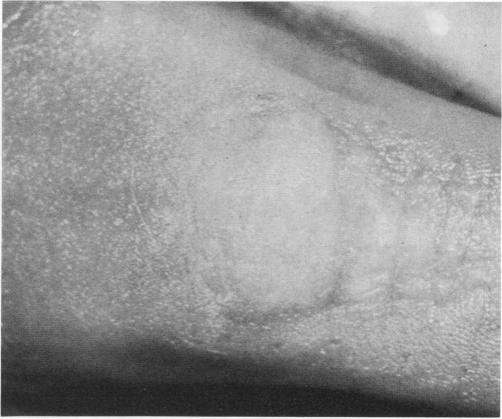
Forty female Sprague-Dawley rats were randomly divided into two groups. Group 1 animals received tetracycline solution (0.1% during week 1 and 0.01% thereafter) as drinking water, as in previous studies. Group 2 animals received double-distilled demineralized water. Animals in both groups were inoculated orally with an equal number of viable, mucosally pathogenic Candida albicans organisms. After 20 weeks, inspection of the tongues showed gross lesions in 16 of the 20 animals in group 1 and 17 of the 20 in group 2. These lesions were confirmed histologically. No significant difference in the number of lesions was noted between the two groups. However, the lesions in group 1 animals were significantly larger than those in group 2 animals. These results suggest that, given this mucosally pathogenic strain of C. albicans, the establishment of a chronic infection of the rat tongue is apparently not influenced by tetracycline-treated drinking water as administered in this study. This suggests that antibiotic exposure is not an essential factor in the pathogenesis of this lesion. A larger lesion area, however, does appear to be related to the use of tetracycline solution as drinking water.
40只雌性斯普拉格-道利大鼠被随机分为两组。第1组动物饮用四环素溶液(第1周为0.1%,此后为0.01%)作为饮用水,如同先前的研究。第2组动物饮用双蒸去离子水。两组动物均经口接种等量的具有黏膜致病性的白色念珠菌活菌。20周后,对舌头的检查显示,第1组20只动物中有16只出现肉眼可见的病变,第2组20只中有17只出现病变。这些病变经组织学证实。两组之间病变数量无显著差异。然而,第1组动物的病变明显大于第2组动物的病变。这些结果表明,对于这种具有黏膜致病性的白色念珠菌菌株,本研究中给予四环素处理的饮用水显然不会影响大鼠舌头慢性感染的形成。这表明抗生素暴露不是该病变发病机制中的必要因素。然而,更大的病变面积似乎与使用四环素溶液作为饮用水有关。