Dan Yaqian, Ye Meiyan, Dong Weiwei, Yao Yihang, Lian Min, Du Mingyang, Ma Shuailing, Li Xiaodong, Cui Tian
Institute of High-Pressure Physics, School of Physical Science and Technology, Ningbo University Ningbo 315211 China
College of Science, Hainan Tropical Ocean University Sanya 572022 China.
RSC Adv. 2024 Dec 13;14(53):39429-39435. doi: 10.1039/d4ra07692c. eCollection 2024 Dec 10.
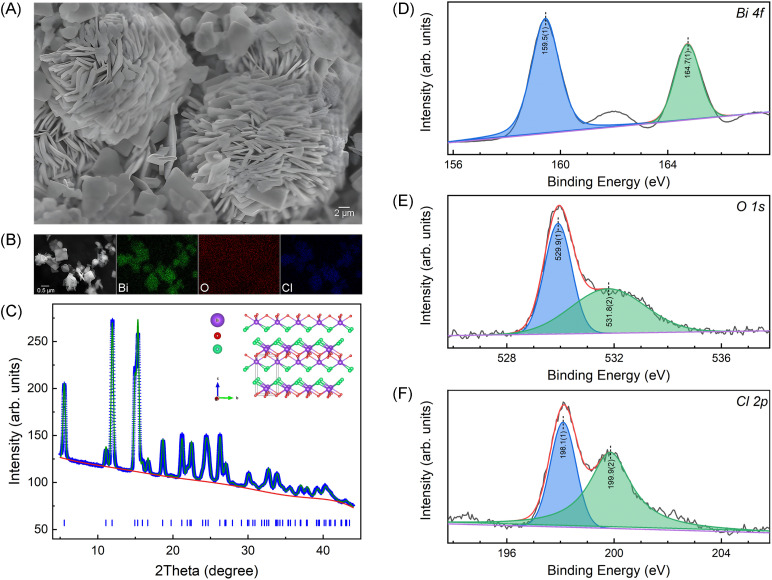
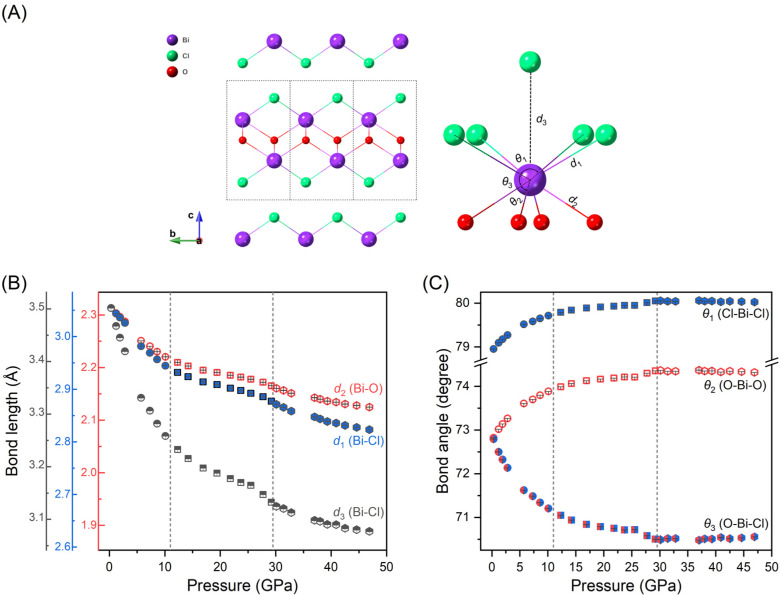
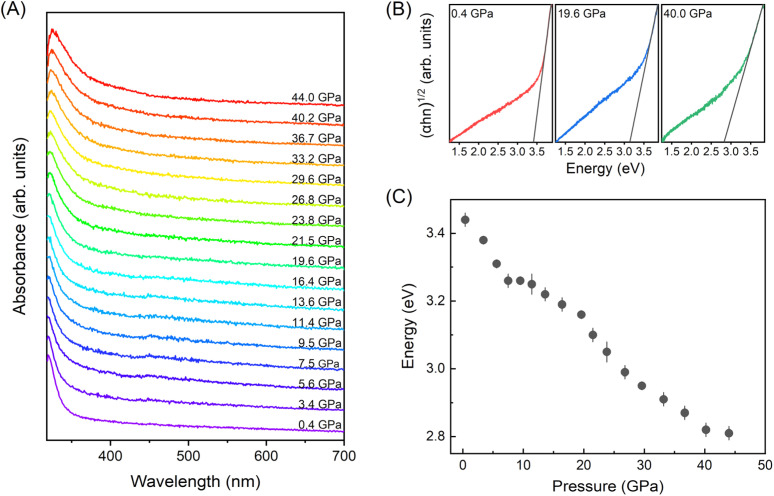
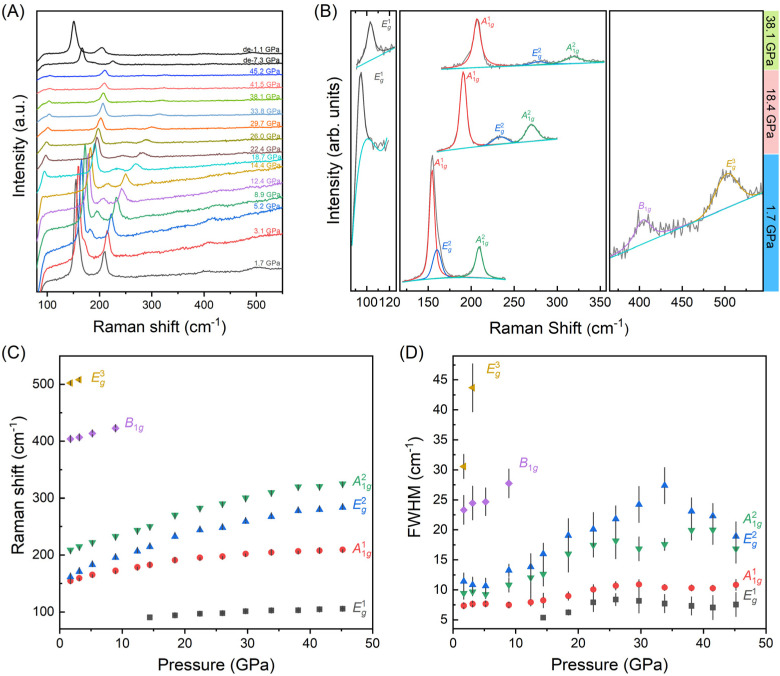
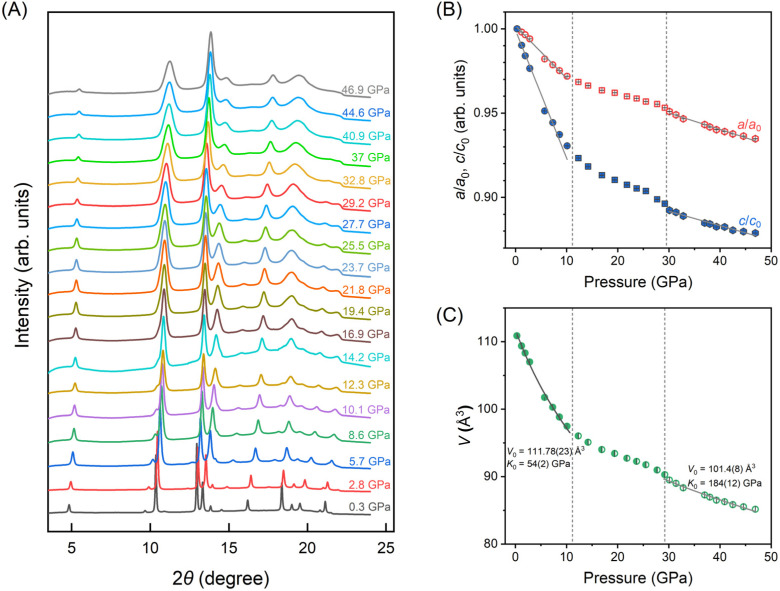
van der Waals BiOCl semiconductors have gained significant attention due to their excellent photochemical catalysis, low-cost and non-toxicity. However, their intrinsic wide band gap limits visible light utilization. This study explores high-pressure band-gap engineering, a "chemical clean" method, to optimize BiOCl's electronic structure. Utilizing high-pressure ultraviolet-visible (UV-vis) absorption spectra, Raman spectroscopy and XRD, we systematically investigate the effects of compression on band gap and crystal structure evolution of BiOCl. Our results demonstrate that pressure efficiently narrows the band gap from 3.44 eV to 2.81 eV within the pressure range of 0.4-44 GPa. The further Raman and XRD analyses reveal an isostructural phase transition, leading to a significant change in the compressibility of the lattice parameters and bonds from anisotropic to isotropic. These findings provide a potential pathway to tune the bandgap for enhancing the photocatalytic efficiency of BiOCl.
范德华BiOCl半导体因其优异的光化学催化性能、低成本和无毒特性而备受关注。然而,其固有的宽带隙限制了可见光的利用。本研究探索了高压带隙工程这一“化学清洁”方法,以优化BiOCl的电子结构。利用高压紫外-可见(UV-vis)吸收光谱、拉曼光谱和XRD,我们系统地研究了压缩对BiOCl带隙和晶体结构演化的影响。我们的结果表明,在0.4-44 GPa的压力范围内,压力有效地将带隙从3.44 eV缩小到2.81 eV。进一步的拉曼和XRD分析揭示了一个同结构相变,导致晶格参数和键的压缩性从各向异性到各向同性发生显著变化。这些发现为调整带隙以提高BiOCl的光催化效率提供了一条潜在途径。