Tian Bei, Ji Jingyu, Jin Can
Nursing Department, Shanghai University of Medicine and Health Sciences Affiliated Zhoupu Hospital, Shanghai, China.
Department of Cardiovascular Medicine, Shanghai University of Medicine and Health Sciences Affiliated Zhoupu Hospital, Shanghai, China.
PLoS One. 2024 Dec 16;19(12):e0306514. doi: 10.1371/journal.pone.0306514. eCollection 2024.
Coronary heart disease (CHD) represents a significant global health concern, arising from an intricate interplay between genetic predisposition and environmental influences, with a pivotal involvement of oxidized low-density lipoprotein (ox-LDL) in the pathophysiology of it. We aimed to elucidate the synergistic dynamics of B cell activating transcription factor (BATF) and Sirtuin 1 (SIRT1) in cell injury caused by ox-LDL, reveal potential therapeutic strategies for CHD.
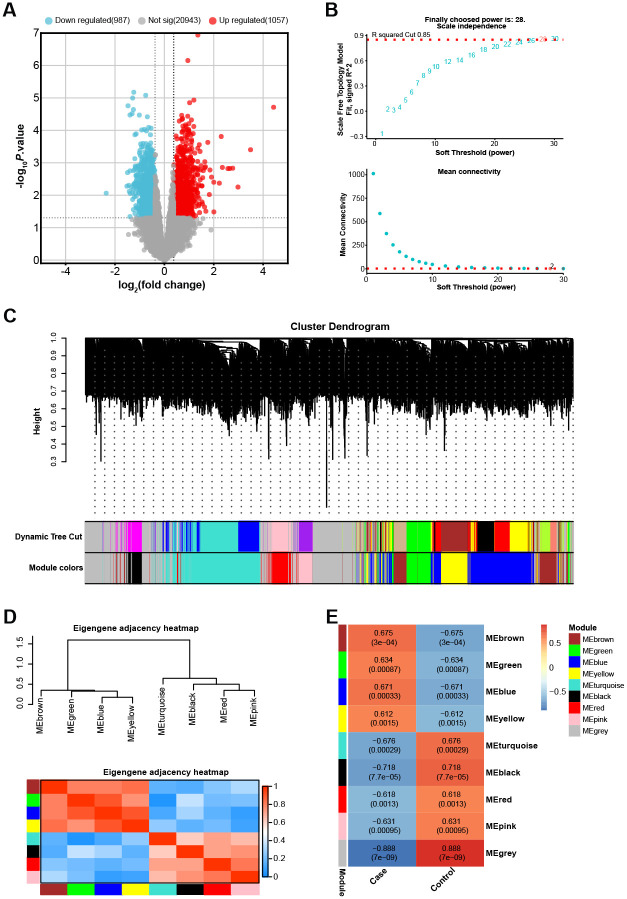
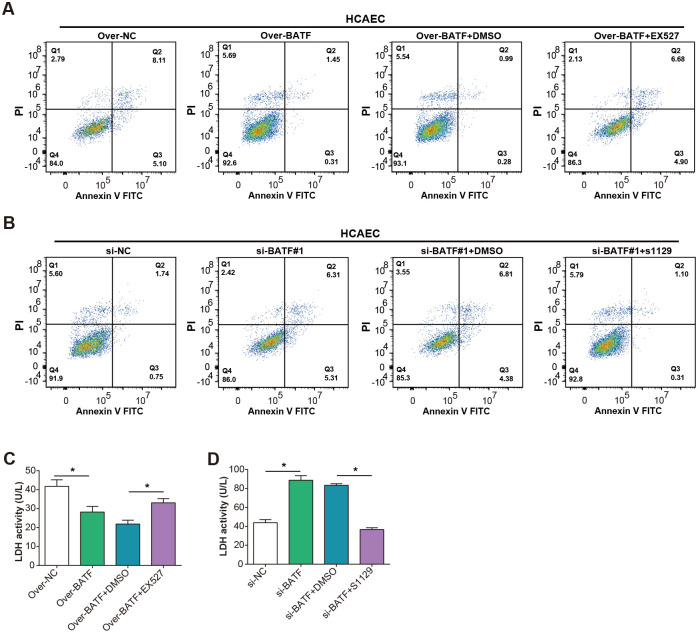
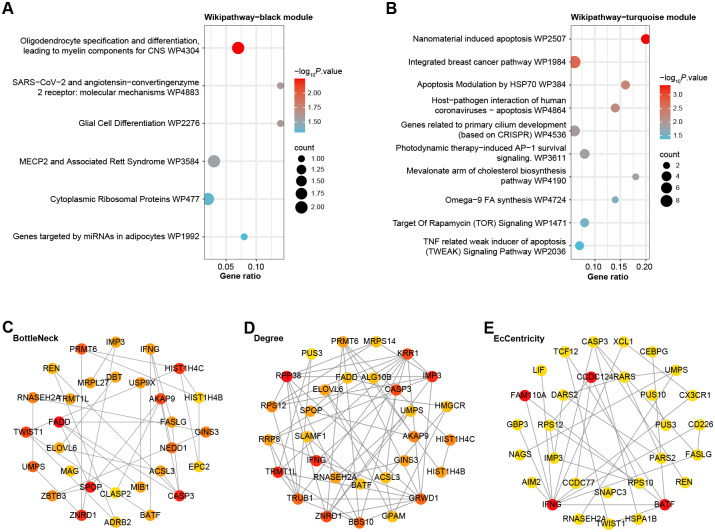
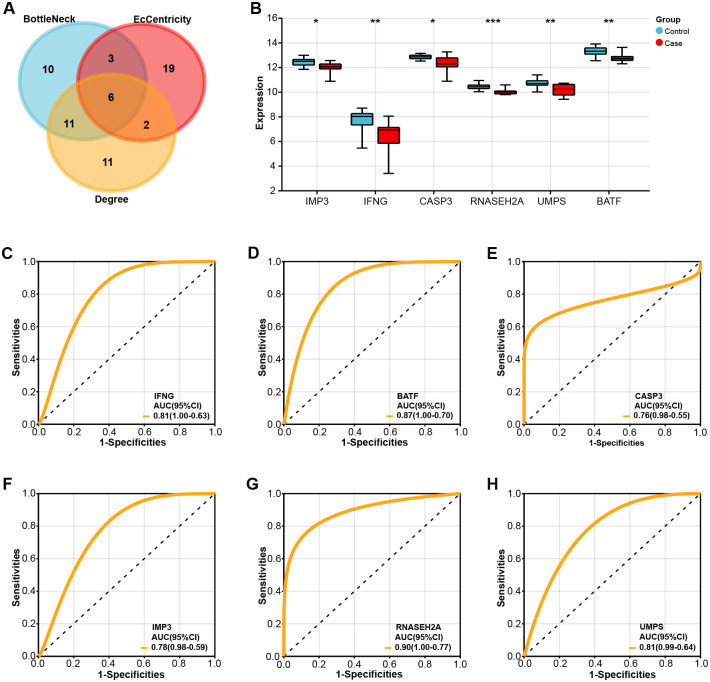
The GSE42148 dataset was used to analyze Differentially expressed genes (DEGs) to construct a gene co-expression network. Then bioinformatics analysis was performed on key modules to select the BATF gene. In vitro experiments were conducted to investigate the protective impact of BATF against human coronary artery endothelial cells (HCAEC) injury induced by ox-LDL. Further investigations probed the synergistic impact of BATF and SIRT1 modulation on cellular apoptosis and damage in the presence of ox-LDL.
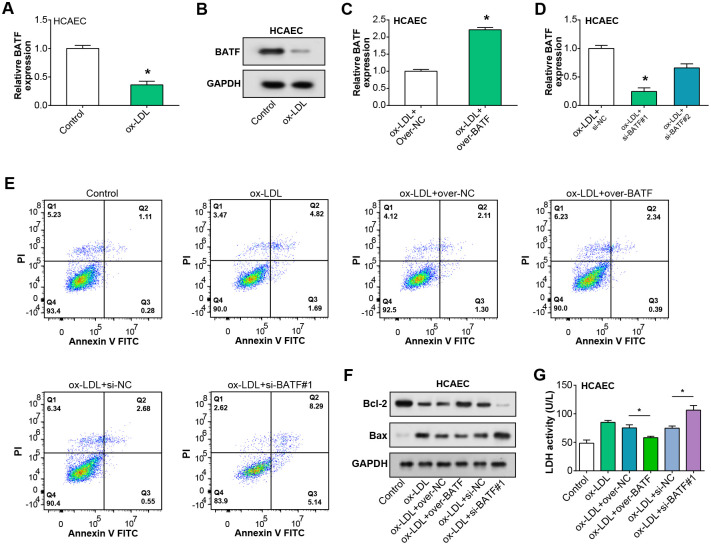
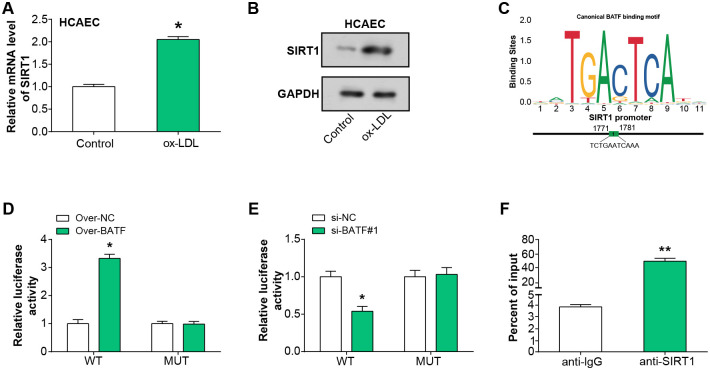
BATF was significantly down-regulated in the CHD sample of the GSE42148 dataset. In vitro assays have proven that BATF alleviates ox-LDL-induced HCAEC injury. Notably, BATF emerged as a pivotal regulator of SIRT1 expression post ox-LDL exposure. Subsequent experiments underscored the interplay between BATF and SIRT1 in mitigating ox-LDL-induced apoptosis and Lactate Dehydrogenase (LDH) activity elevation, highlighting their collaborative role in cellular protection.
The research findings suggested a prospective protective function of BATF in HCAEC injury induced by ox-LDL, likely through the mediation of SIRT1 regulation. These results could offer fresh perspectives on the etiology of CHD and possible treatment avenues.
冠心病(CHD)是一个重大的全球健康问题,它源于遗传易感性和环境影响之间的复杂相互作用,氧化型低密度脂蛋白(ox-LDL)在其病理生理学中起关键作用。我们旨在阐明B细胞活化转录因子(BATF)和沉默调节蛋白1(SIRT1)在ox-LDL所致细胞损伤中的协同作用机制,揭示冠心病潜在的治疗策略。
利用GSE42148数据集分析差异表达基因(DEG)以构建基因共表达网络。然后对关键模块进行生物信息学分析以筛选出BATF基因。进行体外实验以研究BATF对ox-LDL诱导的人冠状动脉内皮细胞(HCAEC)损伤的保护作用。进一步研究探讨了在存在ox-LDL的情况下BATF和SIRT1调节对细胞凋亡和损伤的协同影响。
在GSE42148数据集的冠心病样本中,BATF显著下调。体外实验证明BATF可减轻ox-LDL诱导的HCAEC损伤。值得注意的是,BATF是ox-LDL暴露后SIRT1表达的关键调节因子。随后的实验强调了BATF和SIRT1在减轻ox-LDL诱导的细胞凋亡和乳酸脱氢酶(LDH)活性升高方面的相互作用,突出了它们在细胞保护中的协同作用。
研究结果表明BATF在ox-LDL诱导的HCAEC损伤中可能具有潜在的保护作用,可能是通过介导SIRT1调节实现的。这些结果可为冠心病的病因学和可能的治疗途径提供新的视角。