Jiang Hui, Zhou Yongwen, Nabavi Seyed M, Sahebkar Amirhossein, Little Peter J, Xu Suowen, Weng Jianping, Ge Jianjun
Department of Cardiothoracic Surgery, The First Affiliated Hospital of USTC, Division of Life Sciences and Medicine, University of Science and Technology of China, Hefei, China.
Department of Endocrinology, Institute of Endocrine and Metabolic Diseases, The First Affiliated Hospital of USTC, Division of Life Sciences and Medicine, Clinical Research Hospital of Chinese Academy of Sciences (Hefei), University of Science and Technology of China, Hefei, China.
Front Cardiovasc Med. 2022 Jun 1;9:925923. doi: 10.3389/fcvm.2022.925923. eCollection 2022.
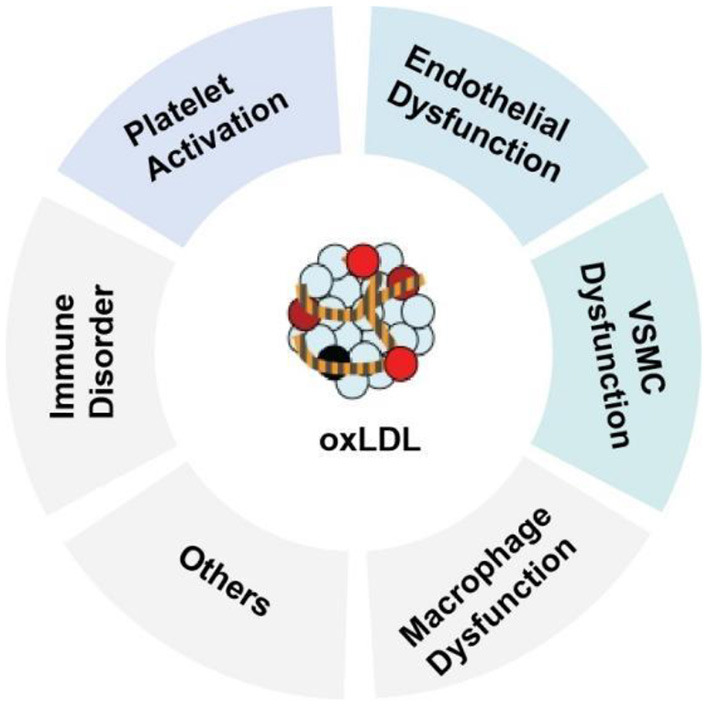
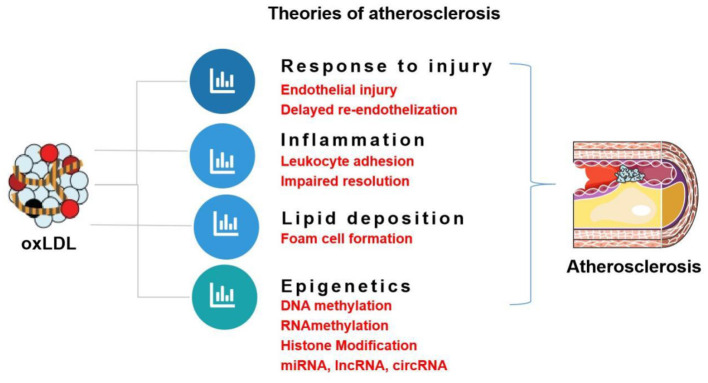
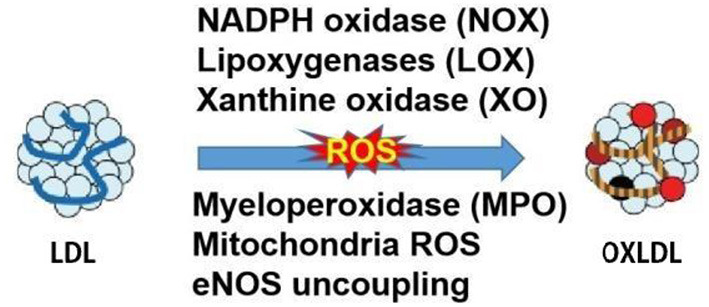
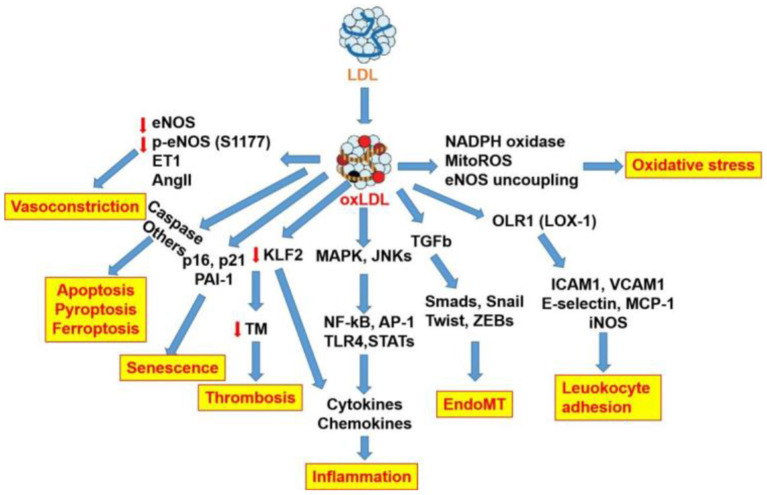
Atherosclerosis is an immuno-metabolic disease involving chronic inflammation, oxidative stress, epigenetics, and metabolic dysfunction. There is compelling evidence suggesting numerous modifications including the change of the size, density, and biochemical properties in the low-density lipoprotein (LDL) within the vascular wall. These modifications of LDL, in addition to LDL transcytosis and retention, contribute to the initiation, development and clinical consequences of atherosclerosis. Among different atherogenic modifications of LDL, oxidation represents a primary modification. A series of pathophysiological changes caused by oxidized LDL (oxLDL) enhance the formation of foam cells and atherosclerotic plaques. OxLDL also promotes the development of fatty streaks and atherogenesis through induction of endothelial dysfunction, formation of foam cells, monocyte chemotaxis, proliferation and migration of SMCs, and platelet activation, which culminate in plaque instability and ultimately rupture. This article provides a concise review of the formation of oxLDL, enzymes mediating LDL oxidation, and the receptors and pro-atherogenic signaling pathways of oxLDL in vascular cells. The review also explores how oxLDL functions in different stages of endothelial dysfunction and atherosclerosis. Future targeted pathways and therapies aiming at reducing LDL oxidation and/or lowering oxLDL levels and oxLDL-mediated pro-inflammatory responses are also discussed.
动脉粥样硬化是一种免疫代谢性疾病,涉及慢性炎症、氧化应激、表观遗传学和代谢功能障碍。有确凿证据表明存在多种修饰,包括血管壁内低密度脂蛋白(LDL)的大小、密度和生化特性的改变。除了LDL的跨细胞转运和潴留外,这些LDL修饰还促成了动脉粥样硬化的起始、发展和临床后果。在LDL的不同致动脉粥样硬化修饰中,氧化是主要的修饰。氧化型LDL(oxLDL)引起的一系列病理生理变化会增强泡沫细胞和动脉粥样硬化斑块的形成。OxLDL还通过诱导内皮功能障碍、泡沫细胞形成、单核细胞趋化、平滑肌细胞增殖和迁移以及血小板活化来促进脂肪条纹的发展和动脉粥样硬化的发生,最终导致斑块不稳定并最终破裂。本文简要综述了oxLDL的形成、介导LDL氧化的酶以及oxLDL在血管细胞中的受体和促动脉粥样硬化信号通路。该综述还探讨了oxLDL在不同阶段的内皮功能障碍和动脉粥样硬化中的作用。还讨论了未来旨在减少LDL氧化和/或降低oxLDL水平以及oxLDL介导的促炎反应的靶向途径和治疗方法。