
米托坦综述:肾上腺皮质癌的靶向治疗
A Review on Mitotane: A Target Therapy in Adrenocortical Carcinoma.
作者信息
Flauto Fabiano, De Martino Maria Cristina, Vitiello Chiara, Pivonello Rosario, Colao Annamaria, Damiano Vincenzo
机构信息
Department of Clinical Medicine and Surgery, University of Naples Federico II, 80131 Naples, Italy.
出版信息
Cancers (Basel). 2024 Dec 4;16(23):4061. doi: 10.3390/cancers16234061.
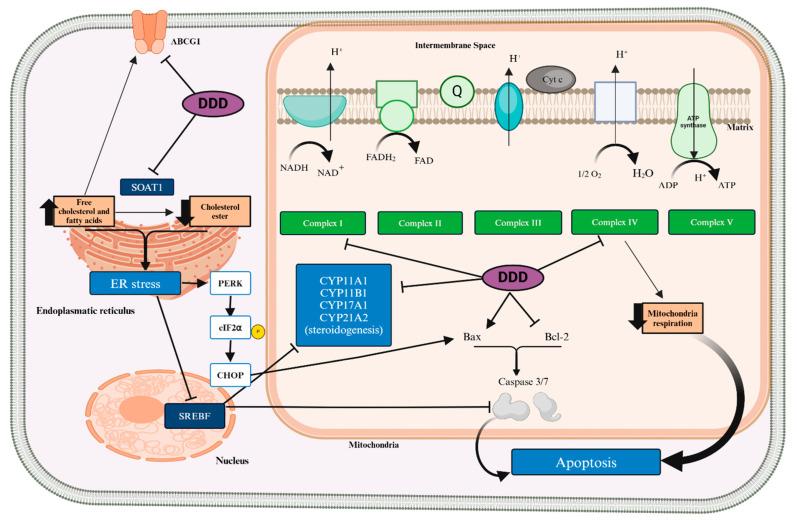
Adrenocortical carcinomas (ACCs) are rare and aggressive malignancies of adrenal cortex, associated with largely unknown mechanisms of biological development and poor prognosis. Currently, mitotane is the sole approved drug for treating advanced adrenocortical carcinomas (ACCs) and is being utilized more frequently as postoperative adjuvant therapy. Although it is understood that mitotane targets the adrenal cortex and disrupts steroid production, its precise mechanism of action requires further exploration. Additionally, mitotane affects cytochrome P450 enzymes, causes the depolarization of mitochondrial membranes, and leads to an accumulation of free cholesterol, ultimately resulting in cell death. Many patients treated with mitotane develop disease progression over time, underlying the need to understand the mechanisms of primary and acquired resistance. In this manuscript, we provide an overview on the intracellular mechanisms of action of mitotane, exploring data regarding predictive factors of response and evidence associated with the development of primary and acquired resistance mechanisms. In this discussion, mitotane is considered a real target therapy.
肾上腺皮质癌(ACC)是肾上腺皮质罕见的侵袭性恶性肿瘤,其生物学发展机制在很大程度上尚不明确,预后较差。目前,米托坦是唯一被批准用于治疗晚期肾上腺皮质癌(ACC)的药物,并且越来越多地被用作术后辅助治疗。尽管已知米托坦靶向肾上腺皮质并扰乱类固醇生成,但其确切作用机制仍需进一步探索。此外,米托坦会影响细胞色素P450酶,导致线粒体膜去极化,并导致游离胆固醇积累,最终导致细胞死亡。许多接受米托坦治疗的患者随着时间的推移会出现疾病进展,这凸显了了解原发性和获得性耐药机制的必要性。在本手稿中,我们概述了米托坦的细胞内作用机制,探讨了有关反应预测因素的数据以及与原发性和获得性耐药机制发展相关的证据。在本次讨论中,米托坦被视为一种真正的靶向治疗药物。

 Zotero 插件