Sundstrom Jonathan, Vanderleeden Emma, Barton Nathaniel J, Redick Sambra D, Dawes Pepper, Murray Liam F, Olson Meagan N, Tran Khanh, Chigas Samantha M, Orszulak Adrian R, Church George M, Readhead Benjamin, Oh Hyung Suk, Harlan David M, Knipe David M, Wang Jennifer P, Chan Yingleong, Lim Elaine T
Department of Medicine, Division of Innate Immunity, University of Massachusetts Chan Medical School, Worcester, MA 01605, USA.
Department of Molecular, Cell and Cancer Biology, University of Massachusetts Chan Medical School, Worcester, MA 01605, USA.
Cells. 2024 Nov 29;13(23):1978. doi: 10.3390/cells13231978.
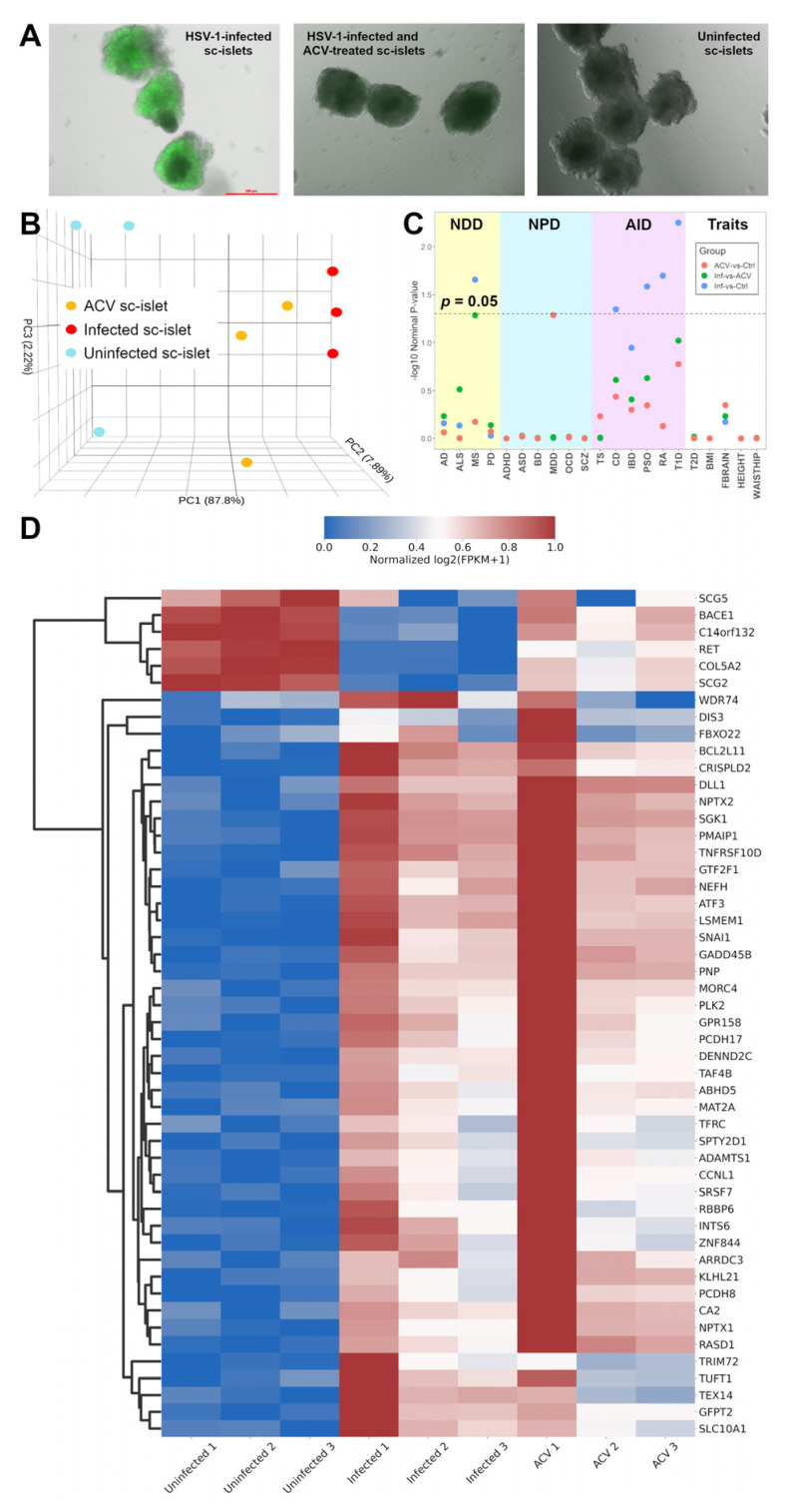
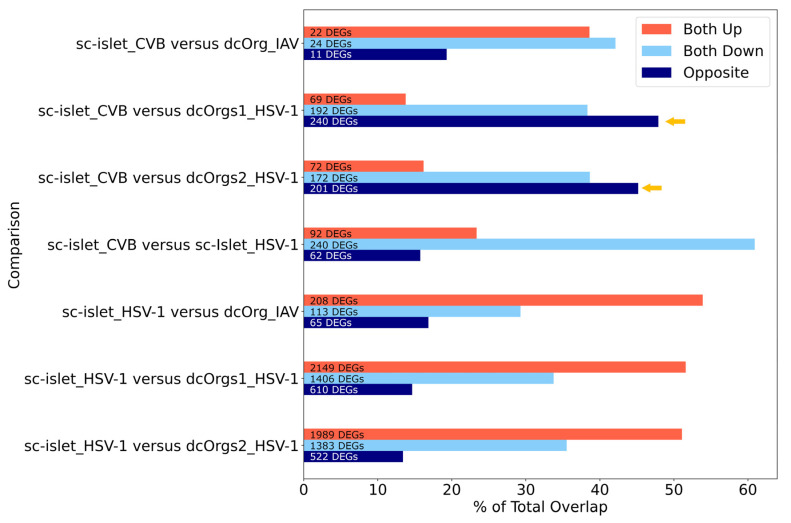
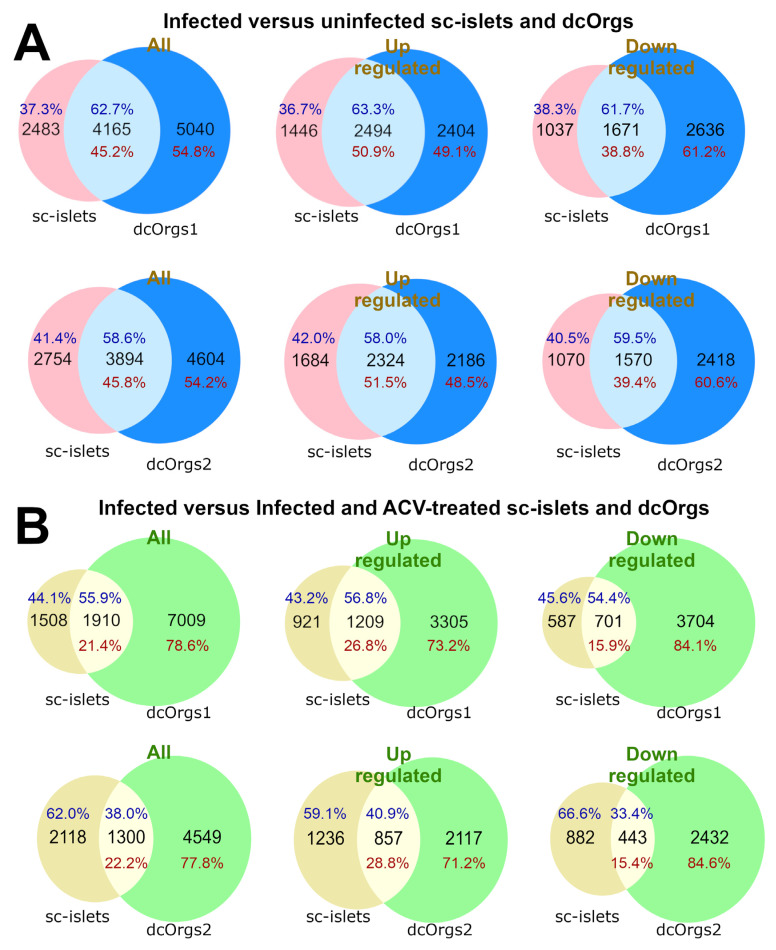
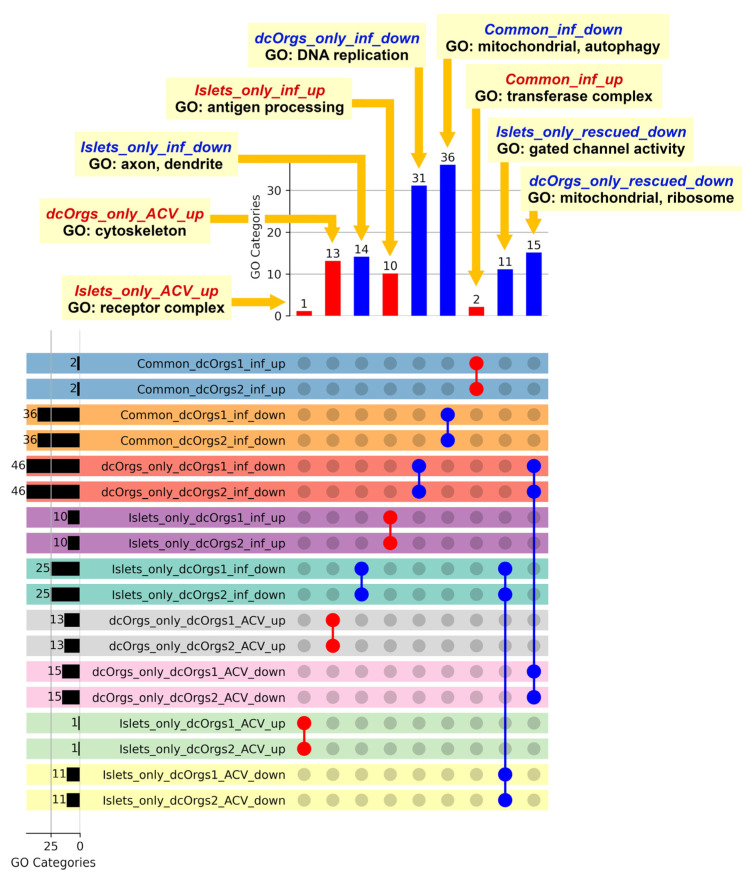
Viral infections leading to inflammation have been implicated in several common diseases, such as Alzheimer's disease (AD) and type 1 diabetes (T1D). Of note, herpes simplex virus 1 (HSV-1) has been reported to be associated with AD. We sought to identify the transcriptomic changes due to HSV-1 infection and anti-viral drug (acyclovir, ACV) treatment of HSV-1 infection in dissociated cells from human cerebral organoids (dcOrgs) versus stem cell-derived pancreatic islets (sc-islets) to gain potential biological insights into the relevance of HSV-1-induced inflammation in AD and T1D. We observed that differentially expressed genes (DEGs) in HSV-1-infected sc-islets were enriched for genes associated with several autoimmune diseases, most significantly, T1D, but also rheumatoid arthritis, psoriasis, Crohn's disease, and multiple sclerosis, whereas DEGs in HSV-1-infected dcOrgs were exclusively enriched for genes associated with AD. The ACV treatment of sc-islets was not as effective in rescuing transcript perturbations of autoimmune disease-associated genes. Finally, we identified gene ontology categories that were enriched for DEGs that were in common across, or unique to, viral treatment of dcOrgs and sc-islets, such as categories involved in the transferase complex, mitochondrial, and autophagy function. In addition, we compared transcriptomic signatures from HSV-1-infected sc-islets with sc-islets that were infected with the coxsackie B virus (CVB) that had been associated with T1D pathogenesis. Collectively, this study provides tissue-specific insights into the molecular effects of inflammation in AD and T1D.
导致炎症的病毒感染与几种常见疾病有关,如阿尔茨海默病(AD)和1型糖尿病(T1D)。值得注意的是,据报道单纯疱疹病毒1型(HSV-1)与AD有关。我们试图确定HSV-1感染以及用抗病毒药物(阿昔洛韦,ACV)治疗HSV-1感染对来自人脑类器官(dcOrgs)的解离细胞与干细胞衍生的胰岛(sc-胰岛)造成的转录组变化,以深入了解HSV-1诱导的炎症在AD和T1D中的潜在生物学相关性。我们观察到,HSV-1感染的sc-胰岛中的差异表达基因(DEG)富集了与几种自身免疫性疾病相关的基因,最显著的是T1D,还有类风湿性关节炎、银屑病、克罗恩病和多发性硬化症,而HSV-1感染的dcOrgs中的DEG仅富集了与AD相关的基因。ACV对sc-胰岛的治疗在挽救自身免疫性疾病相关基因的转录扰动方面效果不佳。最后,我们确定了基因本体类别,这些类别富集了dcOrgs和sc-胰岛病毒治疗共有的或特有的DEG,如参与转移酶复合物、线粒体和自噬功能的类别。此外,我们将HSV-1感染的sc-胰岛的转录组特征与感染了与T1D发病机制相关的柯萨奇B病毒(CVB)的sc-胰岛进行了比较。总的来说,这项研究提供了对AD和T1D中炎症分子效应的组织特异性见解。