Organoid Platform, Berlin Institute for Medical Systems Biology (BIMSB), Max Delbrück Center for Molecular Medicine in the Helmholtz Association (MDC), Berlin, Germany.
Laboratory for RNA Biology, Berlin Institute for Medical Systems Biology (BIMSB), Max Delbrück Center for Molecular Medicine in the Helmholtz Association (MDC), Berlin, Germany.
Nat Microbiol. 2023 Jul;8(7):1252-1266. doi: 10.1038/s41564-023-01405-y. Epub 2023 Jun 22.
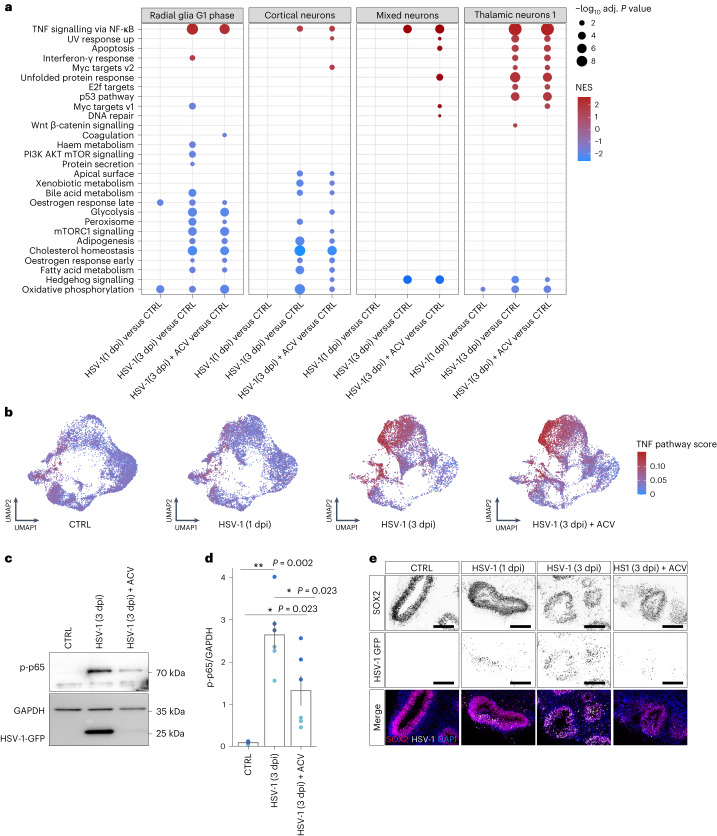
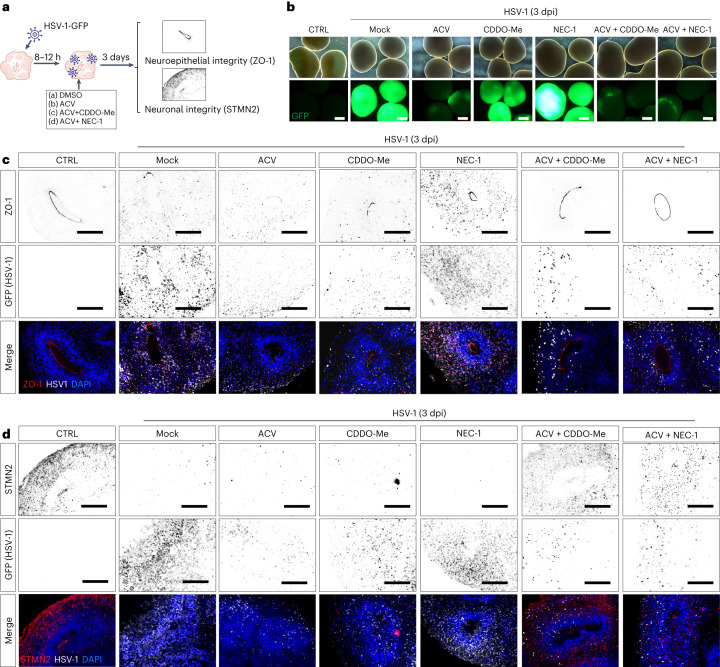
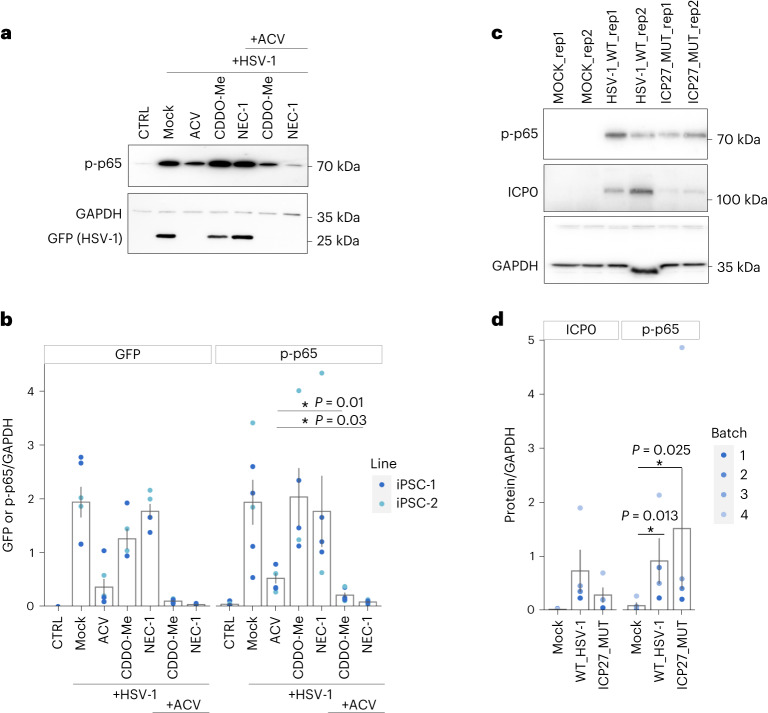
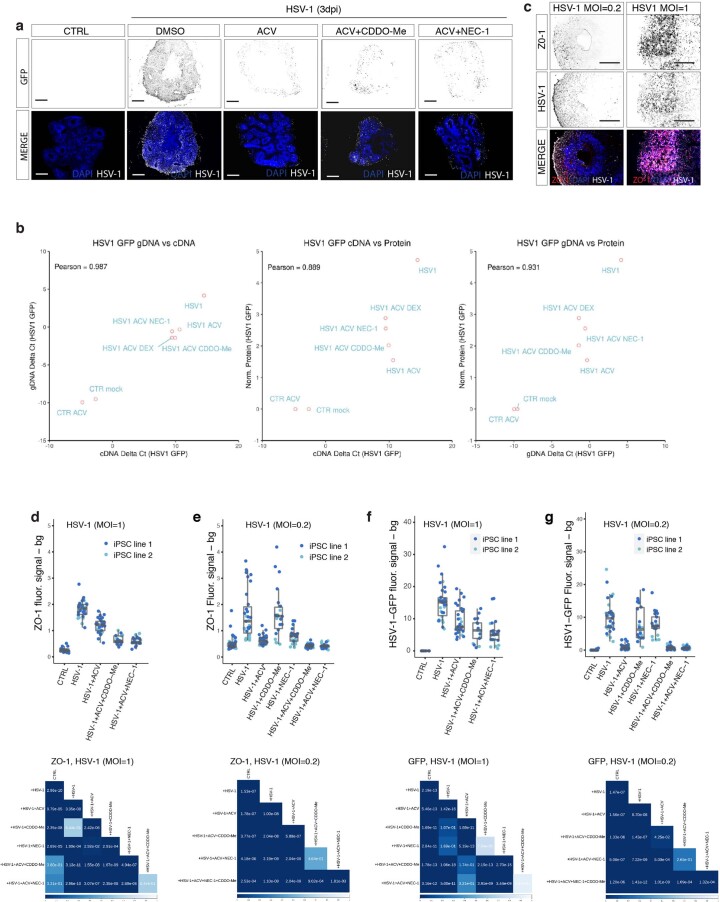
Herpes simplex encephalitis is a life-threatening disease of the central nervous system caused by herpes simplex viruses (HSVs). Following standard of care with antiviral acyclovir treatment, most patients still experience various neurological sequelae. Here we characterize HSV-1 infection of human brain organoids by combining single-cell RNA sequencing, electrophysiology and immunostaining. We observed strong perturbations of tissue integrity, neuronal function and cellular transcriptomes. Under acyclovir treatment viral replication was stopped, but did not prevent HSV-1-driven defects such as damage of neuronal processes and neuroepithelium. Unbiased analysis of pathways deregulated upon infection revealed tumour necrosis factor activation as a potential causal factor. Combination of anti-inflammatory drugs such as necrostatin-1 or bardoxolone methyl with antiviral treatment prevented the damages caused by infection, indicating that tuning the inflammatory response in acute infection may improve current therapeutic strategies.
单纯疱疹病毒性脑炎是一种由单纯疱疹病毒(HSV)引起的危及生命的中枢神经系统疾病。在接受阿昔洛韦抗病毒标准治疗后,大多数患者仍会出现各种神经后遗症。在这里,我们通过单细胞 RNA 测序、电生理学和免疫染色相结合的方法来描述人类脑类器官中的 HSV-1 感染。我们观察到组织完整性、神经元功能和细胞转录组的强烈扰动。在阿昔洛韦治疗下,病毒复制被停止,但未能阻止 HSV-1 驱动的缺陷,如神经元过程和神经上皮的损伤。对感染后失调通路的无偏分析显示,肿瘤坏死因子激活是一个潜在的致病因素。将坏死抑制剂-1 或 bardoxolone 甲酯等抗炎药物与抗病毒治疗联合使用可预防感染引起的损伤,表明在急性感染中调节炎症反应可能会改善当前的治疗策略。