Mosquera-Olano Camila, Quimbaya Carolina, Rodríguez Vanessa, Vanessa-Lasso Angie, Correa Santiago, Castrillón E D C, Rojas John, Ávila-Torres Yenny P
Environmental Remediation and Biocatalysis, Institute of Chemistry, University of Antioquia UdeA, Medellín CP 050010, Colombia.
Chemistry and Biotechnology, Santiago de Cali University, Cali CP 760032, Colombia.
Polymers (Basel). 2024 Nov 27;16(23):3316. doi: 10.3390/polym16233316.
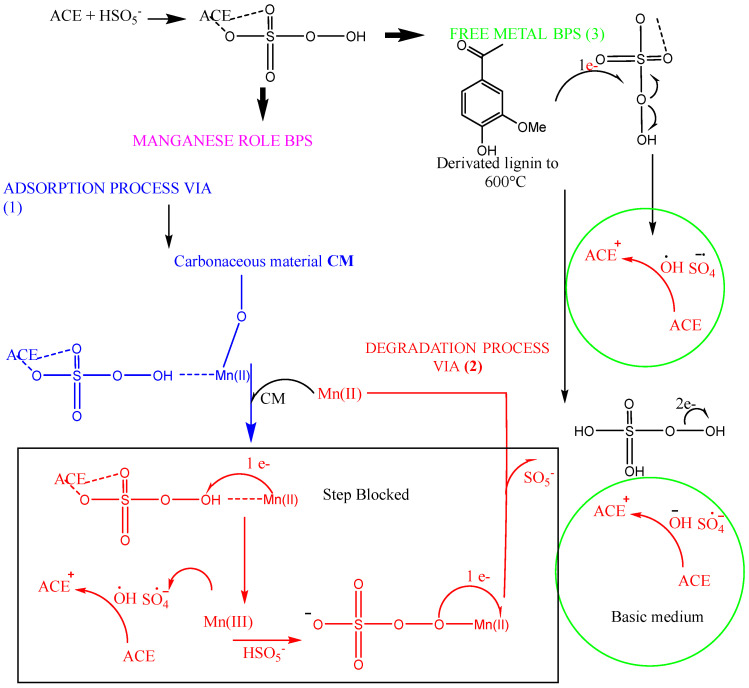
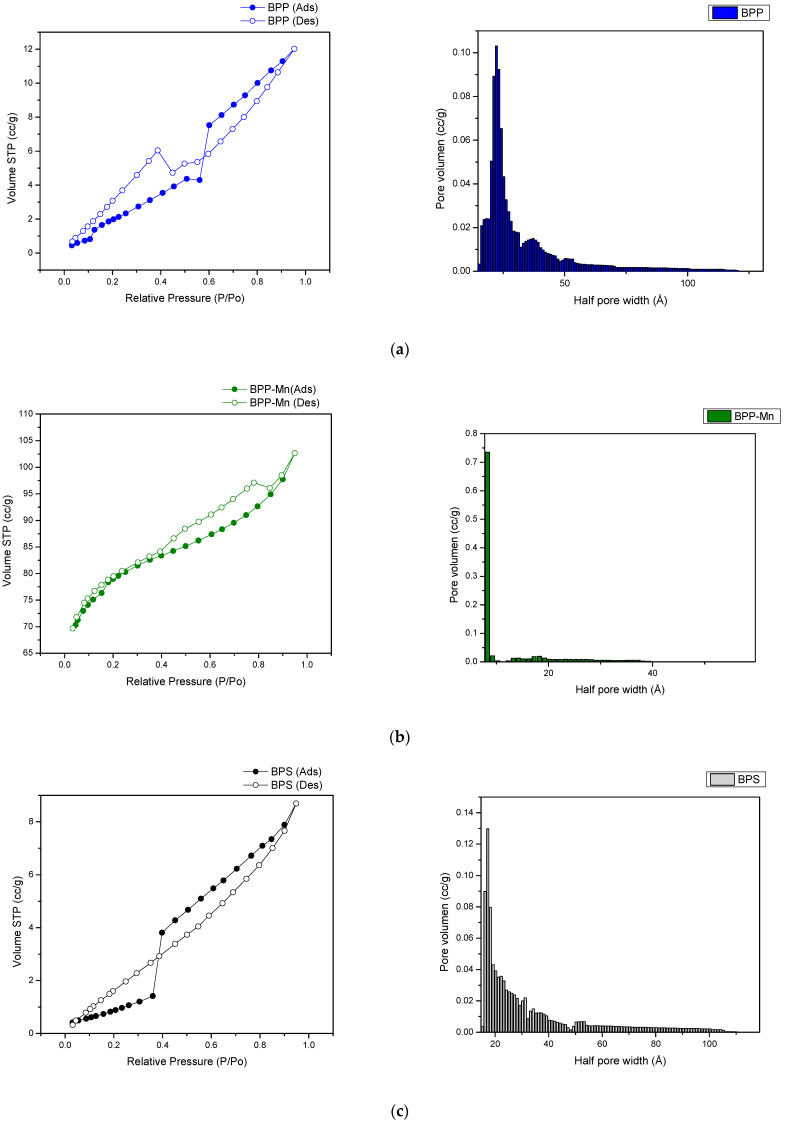
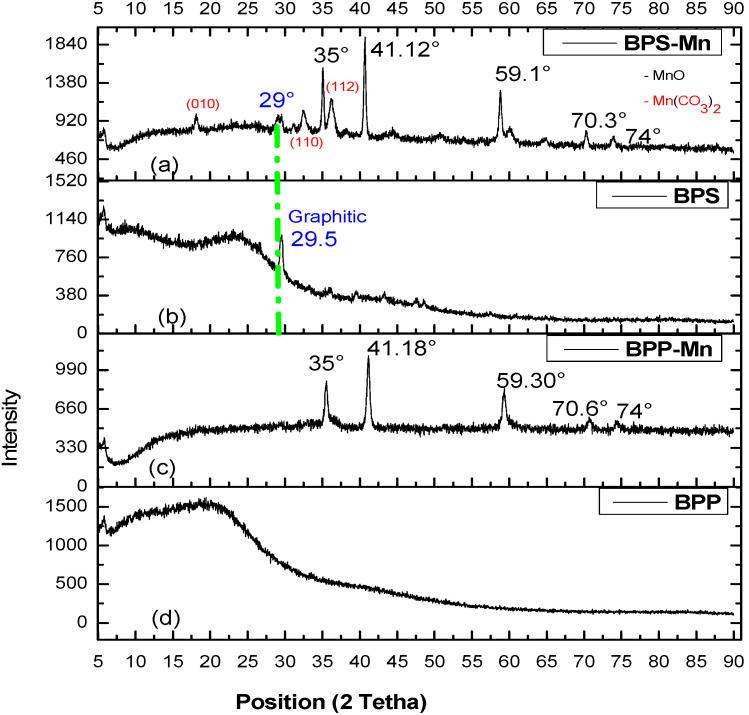
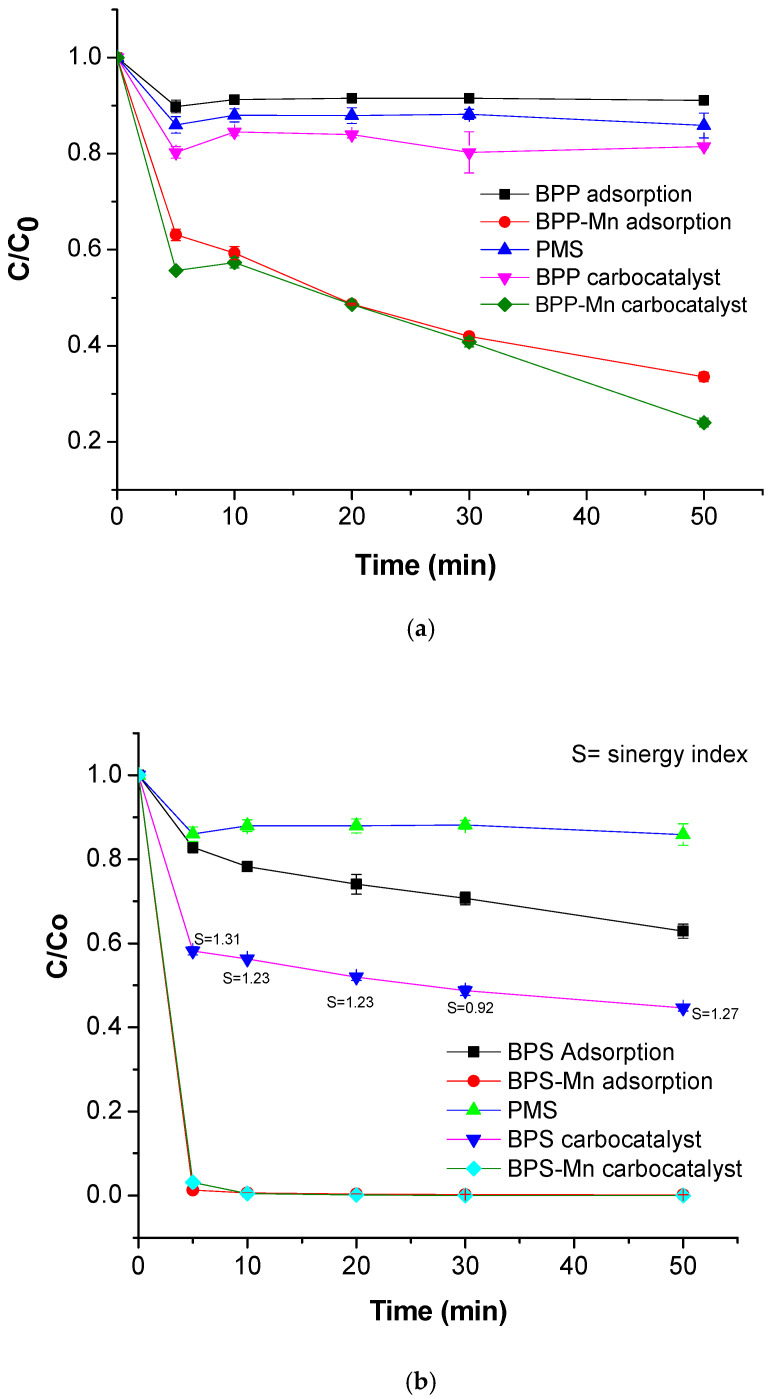
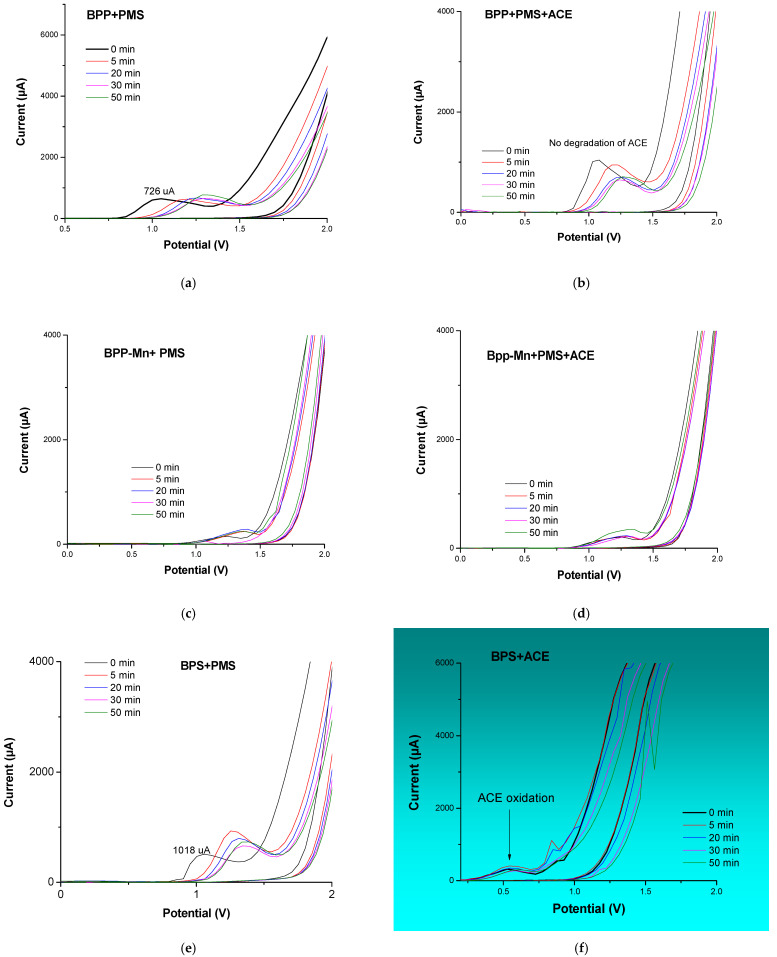
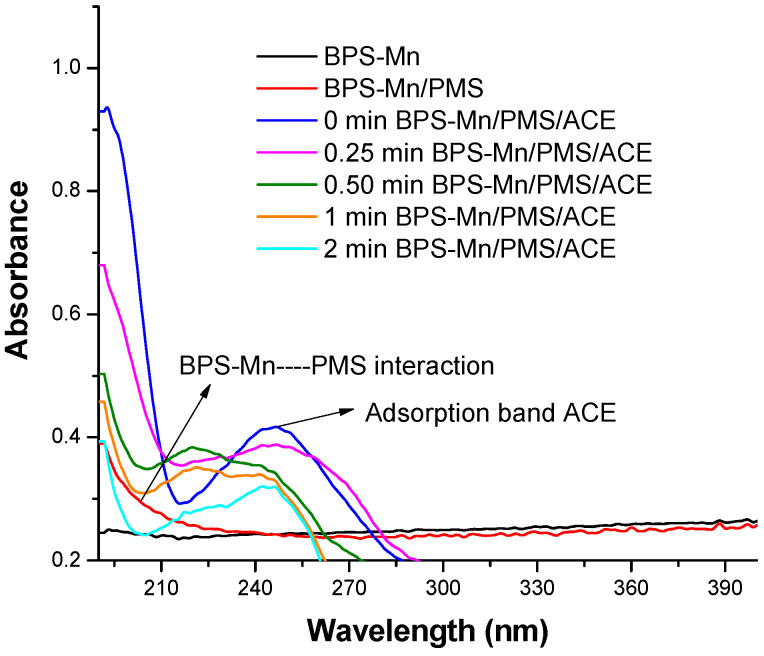
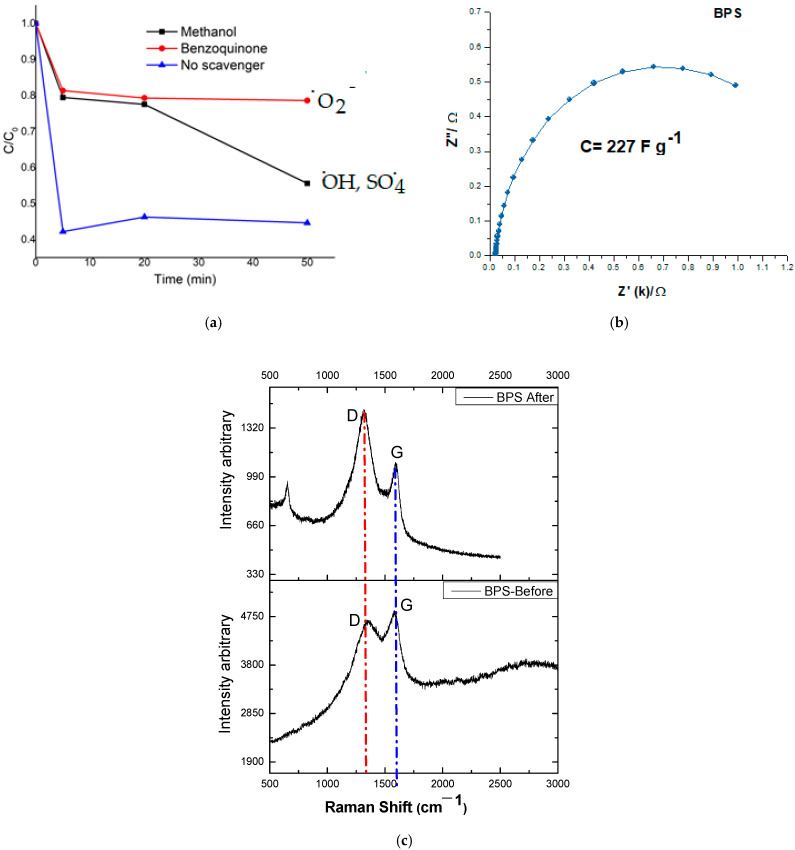
A carbon-based material was synthesized using potato peels (BPP) and banana pseudo-stems (BPS), both of which were modified with manganese to produce BPP-Mn and BPS-Mn, respectively. These materials were assessed for their ability to activate peroxymonosulfate (PMS) in the presence of MnCO to degrade acetaminophen (ACE), an emerging water contaminant. The materials underwent characterization using spectroscopic, textural, and electrochemical techniques. Manganese served a dual function: enhancing adsorption properties and facilitating the breaking of peroxide bonds. Additionally, carbonate ions played a structural role in the materials, transforming into CO at high temperatures and thereby increasing material porosity, which improved adsorption capabilities. This presents a notable advantage for materials that have not undergone de-lignification. Among the materials tested, BPS exhibited the highest efficiency in the carbocatalytic degradation of ACE, achieving a synergy index of 1.31 within just 5 min, with 42% ACE degradation in BPS compared to BPS-Mn, which achieved 100% ACE removal through adsorption. Reactive oxygen species such as sulfate, hydroxyl, and superoxide anion radicals were identified as the primary contributors to pollutant degradation. In contrast, no degradation was observed for BPP and BPP-Mn, which is likely linked to the lower lignin content in their precursor material. This work addressed the challenge of revalorizing lignocellulosic waste by highlighting its potential as an oxidant for emerging pollutants. Furthermore, the study demonstrated the coexistence of various reactive oxygen species, confirming the capacity of carbon-based matrices to activate PMS.
使用马铃薯皮(BPP)和香蕉假茎(BPS)合成了一种碳基材料,二者分别用锰进行改性,以分别制备BPP-Mn和BPS-Mn。评估了这些材料在碳酸锰存在下活化过一硫酸盐(PMS)以降解对乙酰氨基酚(ACE)的能力,对乙酰氨基酚是一种新出现的水中污染物。使用光谱、结构和电化学技术对这些材料进行了表征。锰起到双重作用:增强吸附性能并促进过氧化物键的断裂。此外,碳酸根离子在材料中起到结构作用,在高温下转化为二氧化碳,从而增加材料孔隙率,提高了吸附能力。这对于未经过脱木质素处理的材料来说是一个显著优势。在所测试的材料中,BPS在对ACE的碳催化降解中表现出最高效率,在短短5分钟内协同指数达到1.31,BPS中ACE降解率为42%,而BPS-Mn通过吸附实现了100%的ACE去除。硫酸根、羟基和超氧阴离子自由基等活性氧被确定为污染物降解的主要贡献者。相比之下,未观察到BPP和BPP-Mn有降解现象,这可能与其前体材料中较低的木质素含量有关。这项工作通过突出木质纤维素废物作为新兴污染物氧化剂的潜力,解决了其增值利用的挑战。此外,该研究证明了各种活性氧的共存,证实了碳基基质活化PMS的能力。