Li Sihan, Li Xingbo, Wang Quanji, Jiang Qian, Wang Zihan, Xu Linpeng, Huang Yimin, Lei Ting
Sino-German Neuro-Oncology Molecular Laboratory, Department of Neurosurgery, Tongji Hospital of Tongji Medical College of Huazhong University of Science and Technology, Jiefang Avenue 1095, Wuhan 430030, China.
Hubei Key Laboratory of Neural Injury and Functional Reconstruction, Huazhong University of Science and Technology, Wuhan 430030, China.
Int J Mol Sci. 2024 Nov 21;25(23):12483. doi: 10.3390/ijms252312483.
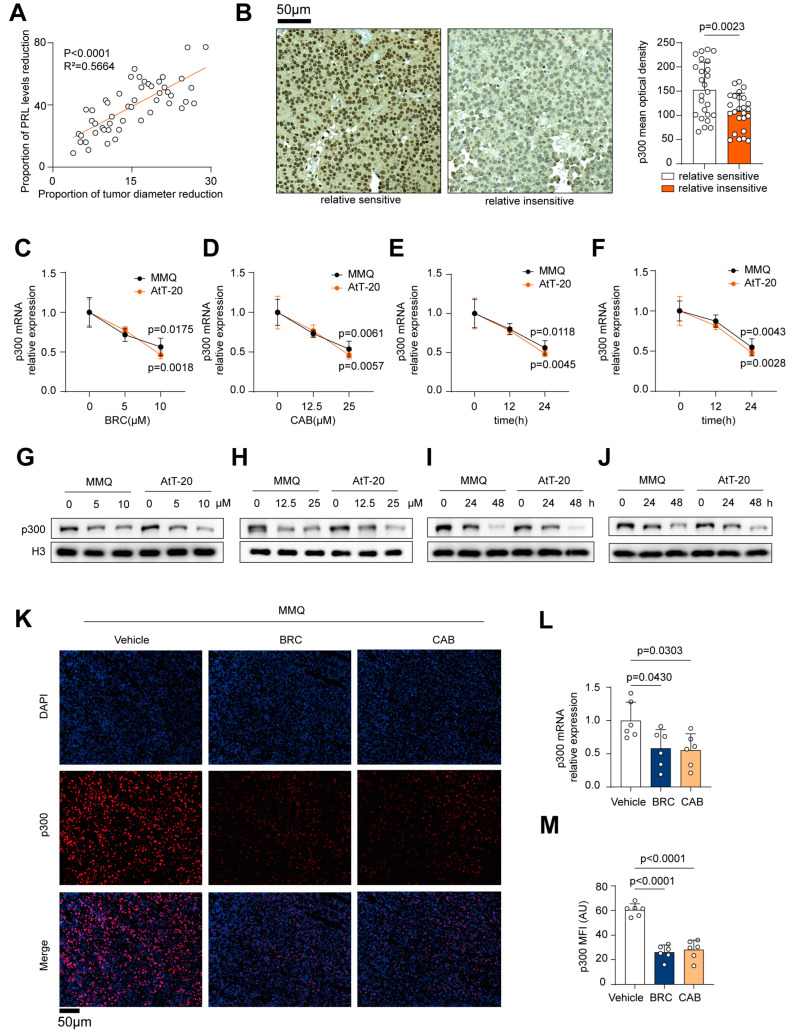
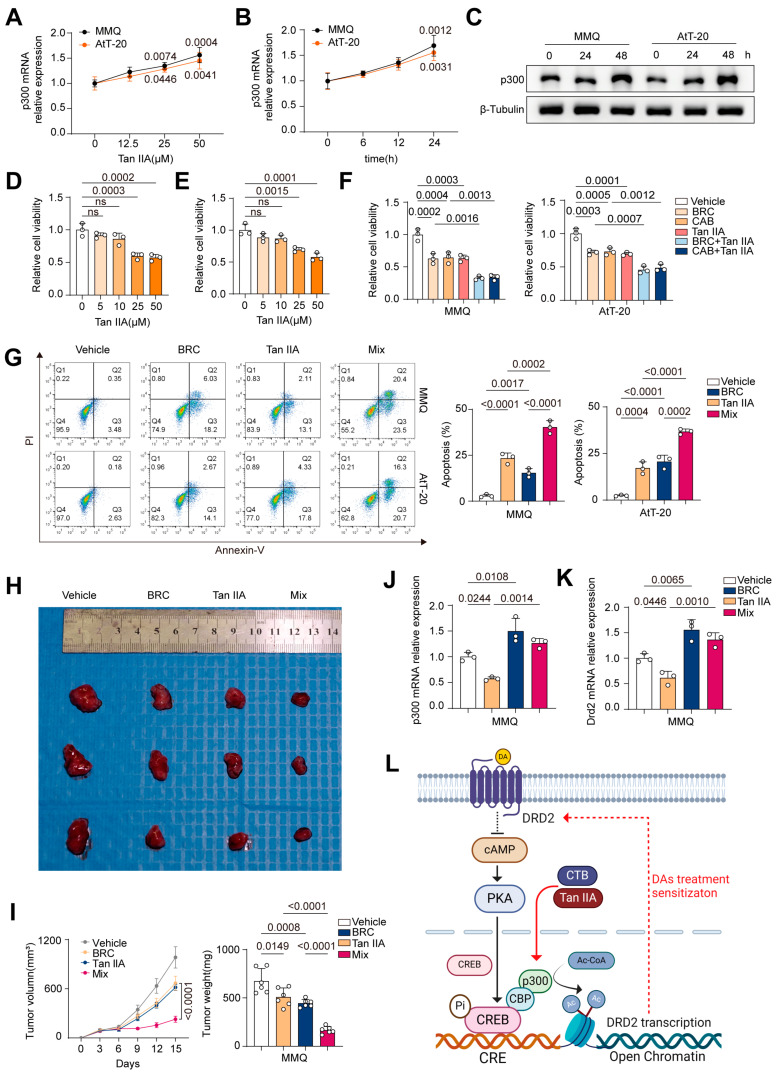
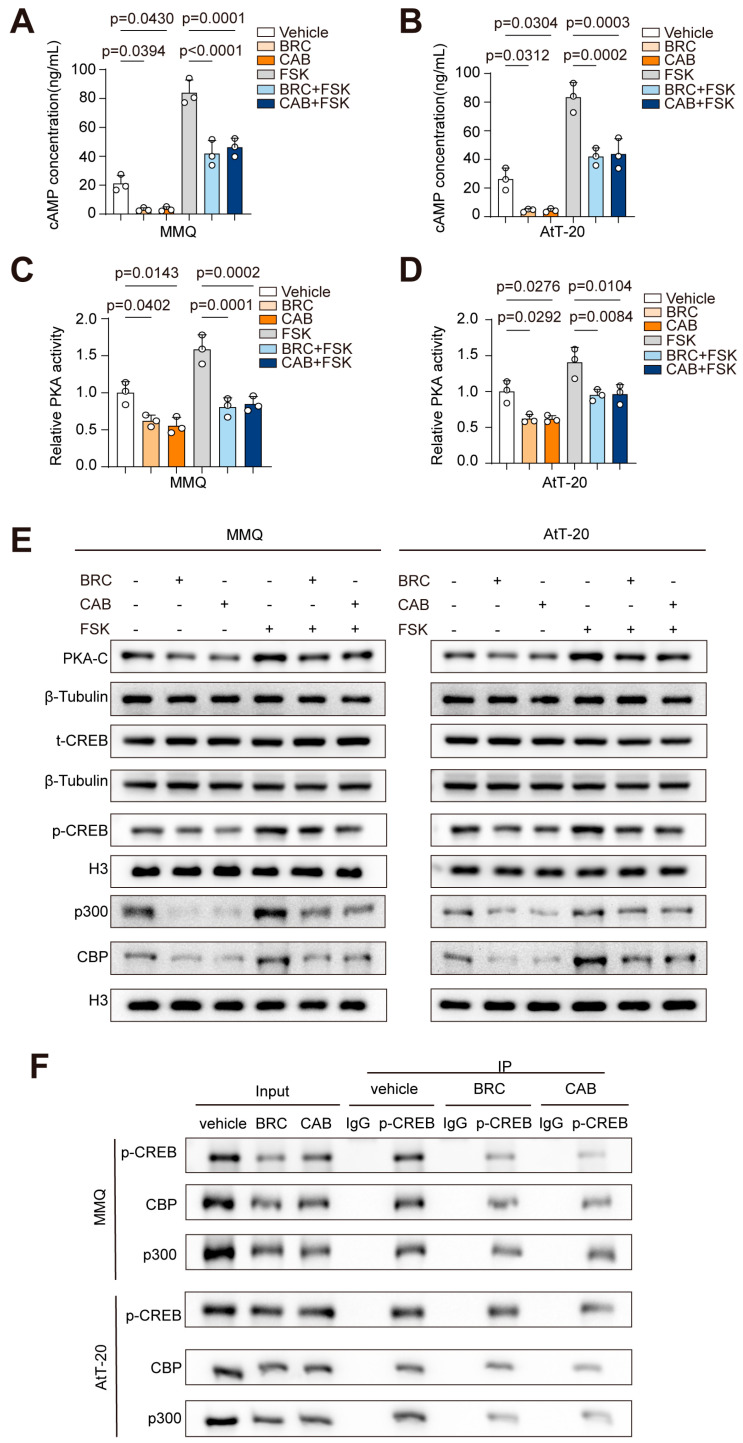
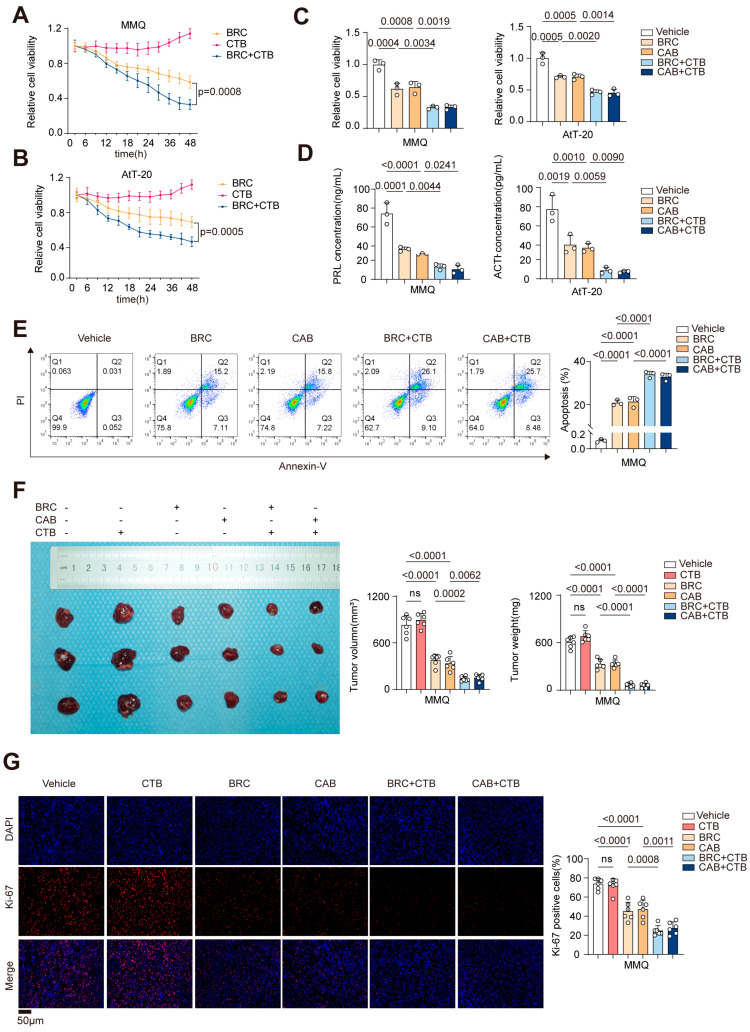
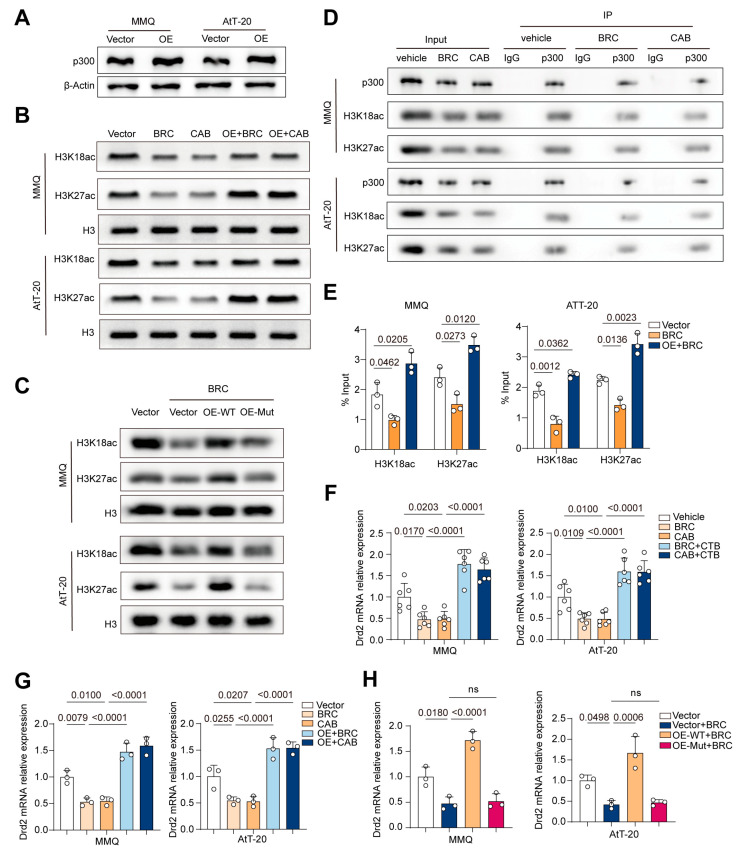
Prolactinomas are commonly treated with dopamine receptor agonists (DAs), such as bromocriptine (BRC) and cabergoline (CAB). However, 10-30% of patients exhibit resistance to DA therapies. DA resistance is largely associated with reduced dopamine D2 receptor (DRD2) expression, potentially regulated by epigenetic modifications, though the underlying mechanisms are still unclear. Clinical samples were assessed for p300 expression. MMQ and AtT-20 cells were engineered to overexpress either wild-type p300 or a histone acetyltransferase (HAT) domain-mutant form of p300. Mechanistic studies included cell proliferation assays, flow cytometry, immunohistochemistry, immunofluorescence, co-immunoprecipitation, chromatin immunoprecipitation followed by quantitative PCR, reverse transcription quantitative PCR, and Western blotting. Additionally, an in vivo nude mouse xenograft model was used to confirm the in vitro findings. DAs downregulated p300 through the cAMP-PKA-CREB pathway. Activation of the HAT domain of p300 increased H3K18/27 acetylation, promoted DRD2 transcription, and worked synergistically with DA to exert anti-tumor effects both in vitro and in vivo. Tanshinone IIA (Tan IIA) upregulated p300 and DRD2, enhancing the therapeutic efficacy of BRC. These findings highlight the role of p300 in regulating DRD2 transcription in DA-resistant prolactinomas. Combining Tan IIA with BRC may offer a promising strategy to overcome DA resistance.
泌乳素瘤通常采用多巴胺受体激动剂(DAs)进行治疗,如溴隐亭(BRC)和卡麦角林(CAB)。然而,10%至30%的患者对DA治疗表现出耐药性。DA耐药性在很大程度上与多巴胺D2受体(DRD2)表达降低有关,其可能受表观遗传修饰调控,尽管潜在机制仍不清楚。对临床样本进行了p300表达评估。构建了MMQ和AtT - 20细胞,使其过表达野生型p300或p300的组蛋白乙酰转移酶(HAT)结构域突变形式。机制研究包括细胞增殖测定、流式细胞术、免疫组织化学、免疫荧光、免疫共沉淀、染色质免疫沉淀后进行定量PCR、逆转录定量PCR和蛋白质免疫印迹。此外,使用体内裸鼠异种移植模型来证实体外研究结果。DAs通过cAMP - PKA - CREB途径下调p300。p300的HAT结构域激活增加了H3K18/27乙酰化,促进了DRD2转录,并与DA协同作用在体外和体内发挥抗肿瘤作用。丹参酮IIA(Tan IIA)上调p300和DRD2,增强了BRC的治疗效果。这些发现突出了p300在耐药性泌乳素瘤中调节DRD2转录的作用。将Tan IIA与BRC联合使用可能是克服DA耐药性的一种有前景的策略。