Bruschi Maurizio, Candiano Giovanni, Petretto Andrea, Angeletti Andrea, Meroni Pier Luigi, Prunotto Marco, Ghiggeri Gian Marco
Laboratory of Molecular Nephrology, IRCCS Istituto Giannina Gaslini, Via Gaslini, 16147 Genova, Italy.
Department of Experimental Medicine (DIMES), University of Genoa, 16132 Genova, Italy.
Int J Mol Sci. 2024 Nov 25;25(23):12659. doi: 10.3390/ijms252312659.
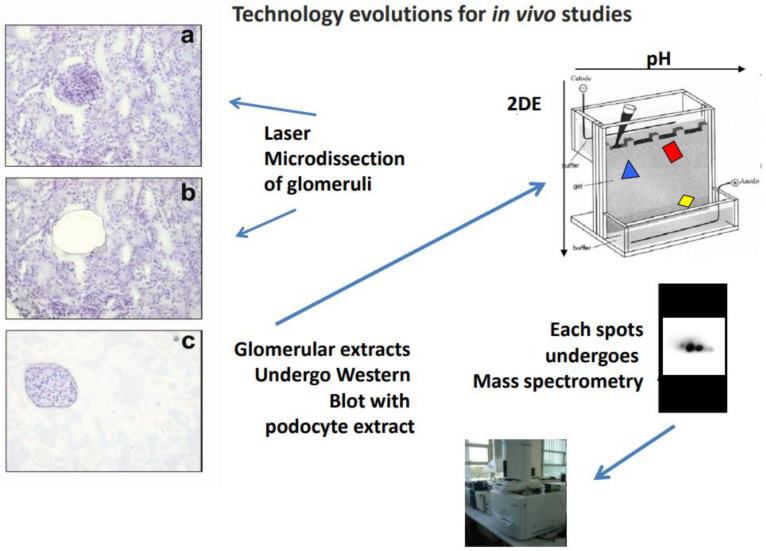
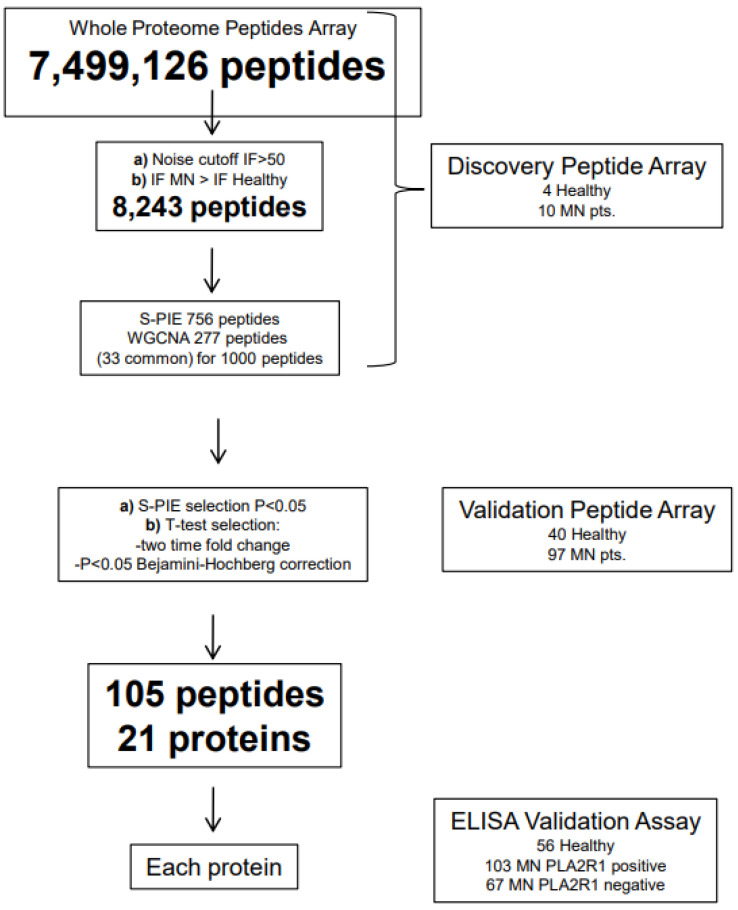
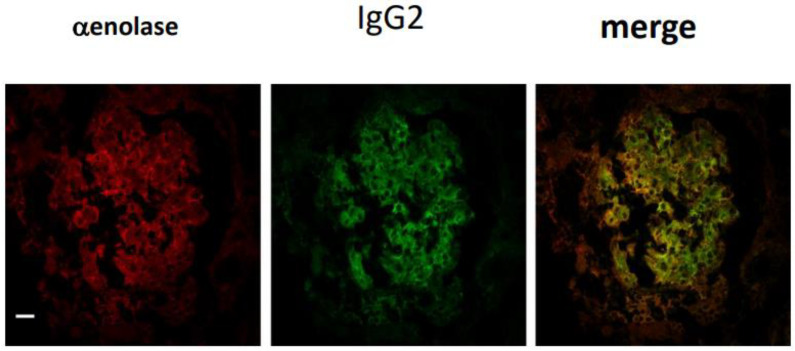
Autoimmune glomerulonephritis is a homogeneous area of renal pathology with clinical relevance in terms of its numerical impact and difficulties in its treatment. Systemic lupus erythematosus/lupus nephritis and membranous nephropathy are the two most frequent autoimmune conditions with clinical relevance. They are characterized by glomerular deposition of circulating autoantibodies that recognize glomerular antigens. Technologies for studying renal tissue and circulating antibodies have evolved over the years and have culminated with the direct analysis of antigen-antibody complexes in renal bioptic fragments. Initial studies utilized renal microdissection to obtain glomerular tissue. Obtaining immunoprecipitates after partial proteolysis of renal tissue is a recent evolution that eliminates the need for tissue microdissection. New technologies based on 'super-resolution microscopy' have added the possibility of a direct analysis of the interaction between circulating autoantibodies and their target antigens in glomeruli. Peptide and protein arrays represent the new frontier for identifying new autoantibodies in circulation. Peptide arrays consist of 7.5 million aligned peptides with 16 amino acids each, which cover the whole human proteome; protein arrays utilize, instead, a chip containing structured proteins, with 26.000 overall. An example of the application of the peptide array is the discovery in membranous nephropathy of many new circulating autoantibodies including formin-like-1, a protein of podosomes that is implicated in macrophage movements. Studies that utilize protein arrays are now in progress and will soon be published. The contribution of new technologies is expected to be relevant for extending our knowledge of the mechanisms involved in the pathogenesis of several autoimmune conditions. They may also add significant tools in clinical settings and modify the therapeutic handling of conditions that are not considered to be autoimmune.
自身免疫性肾小球肾炎是肾脏病理学中的一个同质领域,就其数量影响和治疗难度而言具有临床相关性。系统性红斑狼疮/狼疮性肾炎和膜性肾病是两种最常见且具有临床相关性的自身免疫性疾病。它们的特征是循环自身抗体在肾小球沉积,这些自身抗体可识别肾小球抗原。多年来,研究肾组织和循环抗体的技术不断发展,最终能够直接分析肾活检碎片中的抗原-抗体复合物。最初的研究利用肾脏显微切割技术获取肾小球组织。肾脏组织部分蛋白酶解后获得免疫沉淀是一项最新进展,无需进行组织显微切割。基于“超分辨率显微镜”的新技术增加了直接分析循环自身抗体与其在肾小球中的靶抗原之间相互作用的可能性。肽阵列和蛋白质阵列代表了识别循环中新自身抗体的新前沿。肽阵列由750万个排列的肽组成,每个肽有16个氨基酸,覆盖了整个人类蛋白质组;蛋白质阵列则使用包含结构化蛋白质的芯片,总共26000种。肽阵列应用的一个例子是在膜性肾病中发现了许多新的循环自身抗体,包括formin样-1,一种与巨噬细胞运动有关的足小体蛋白。利用蛋白质阵列的研究正在进行中,很快将会发表。预计新技术将有助于扩展我们对几种自身免疫性疾病发病机制的认识。它们还可能为临床提供重要工具,并改变对非自身免疫性疾病的治疗方式。