Yang Shuang, Zhang Tianqi, Yao Pei, Li Rui, Li Jing
College of Life Sciences, Northeast Agricultural University, Changjiang Road, Xiangfang District, Harbin 150038, China.
Int J Mol Sci. 2024 Nov 30;25(23):12895. doi: 10.3390/ijms252312895.
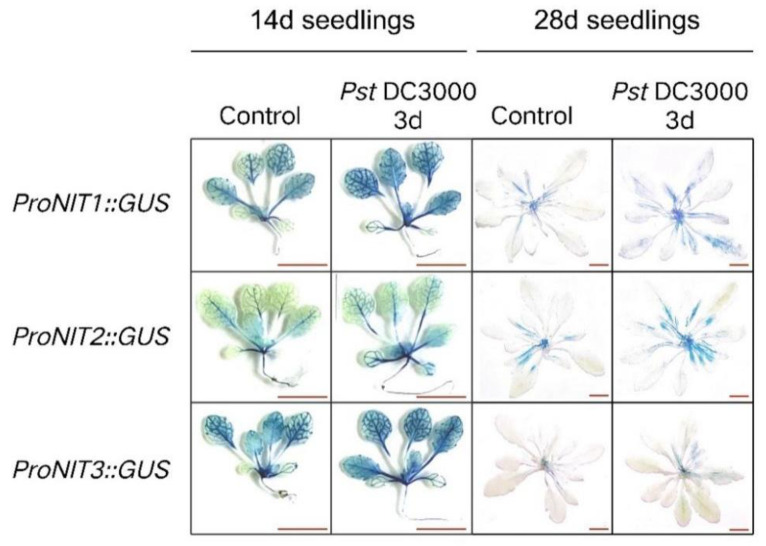
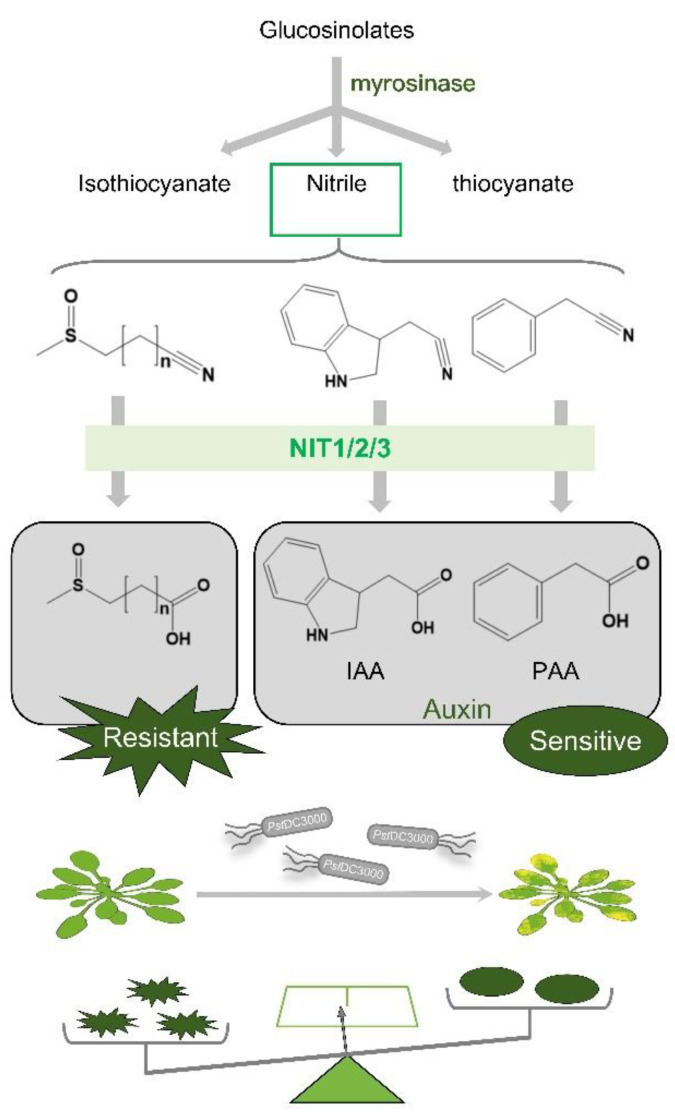
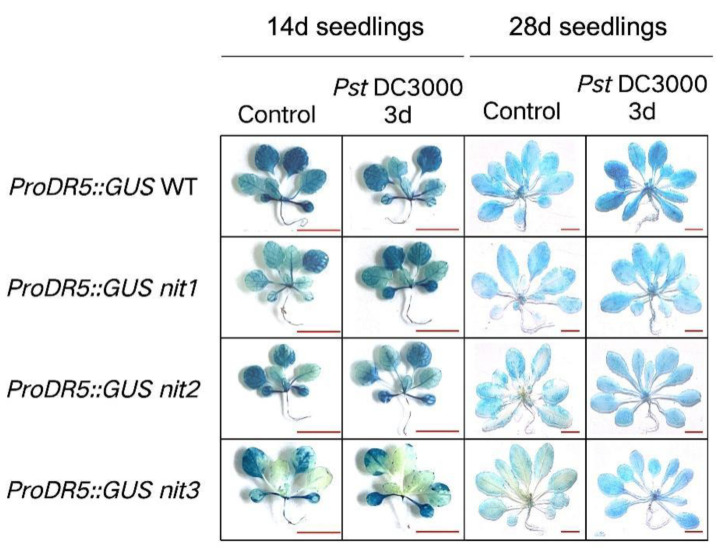
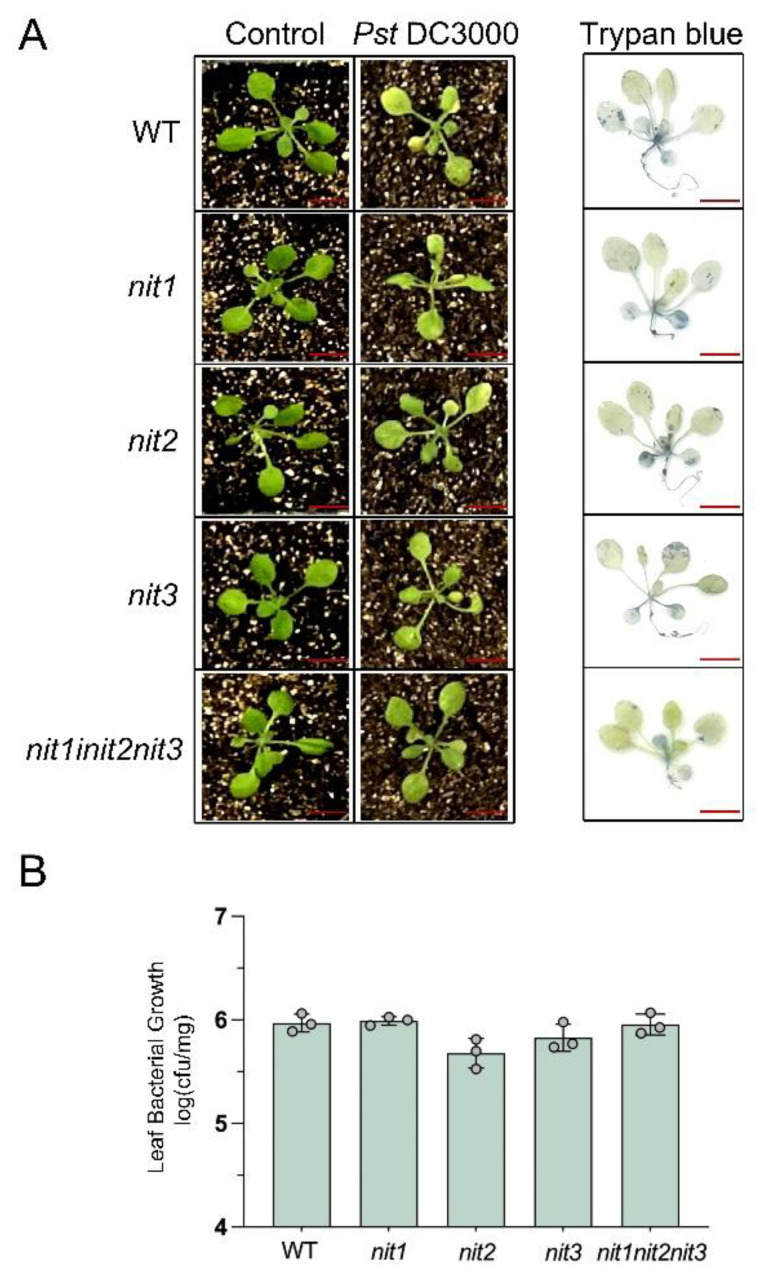
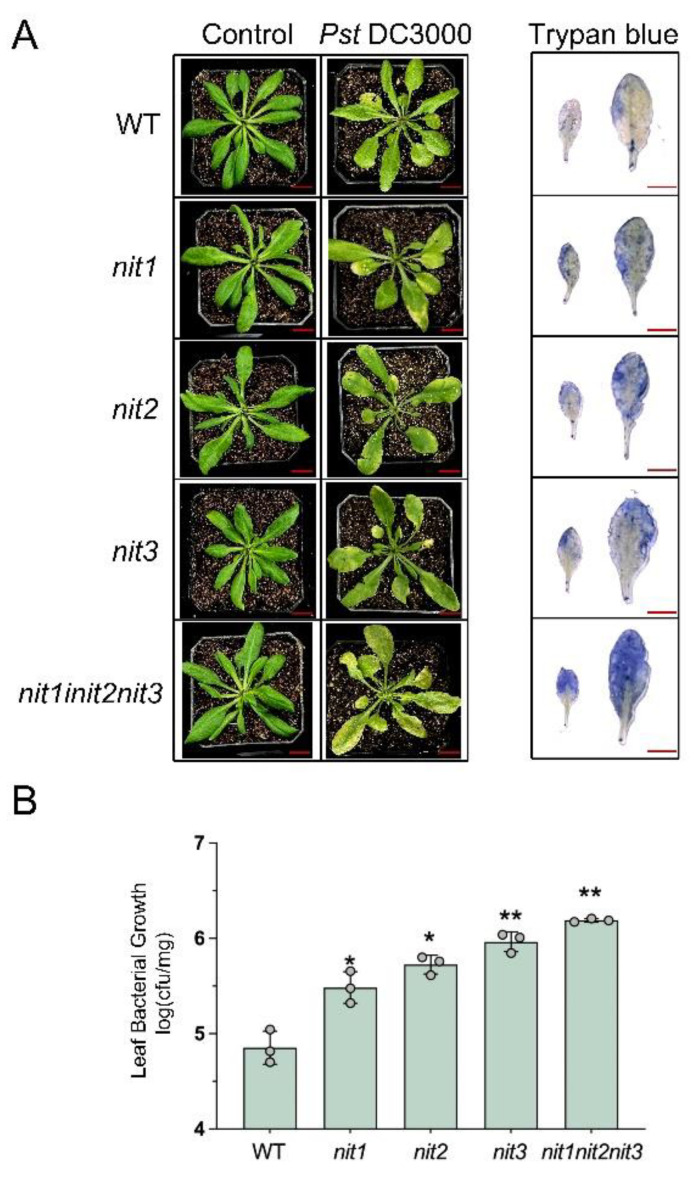
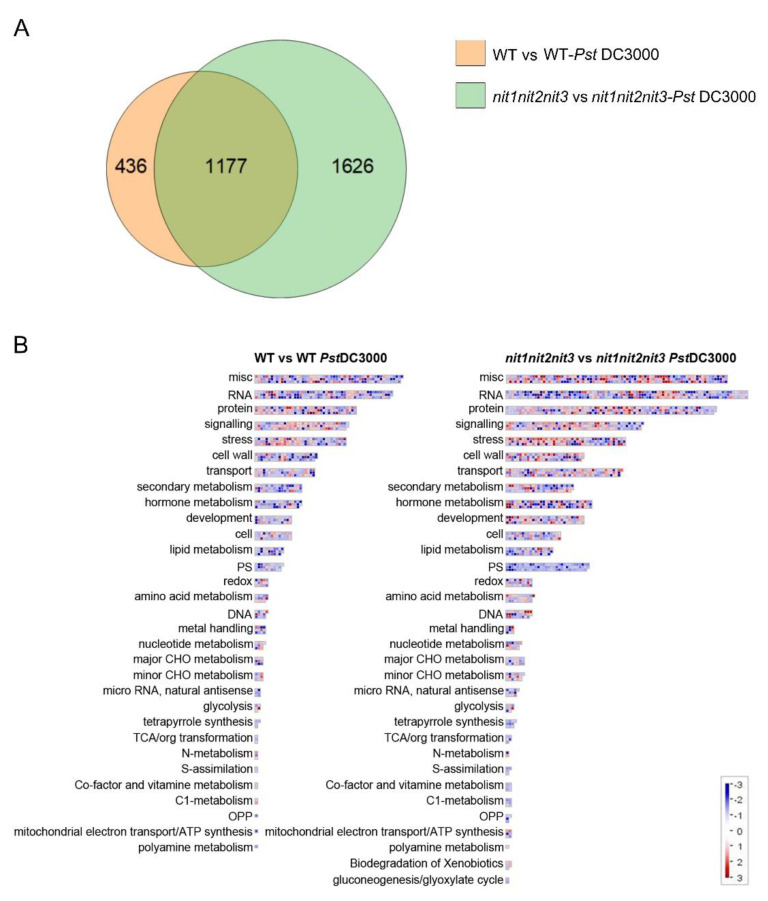
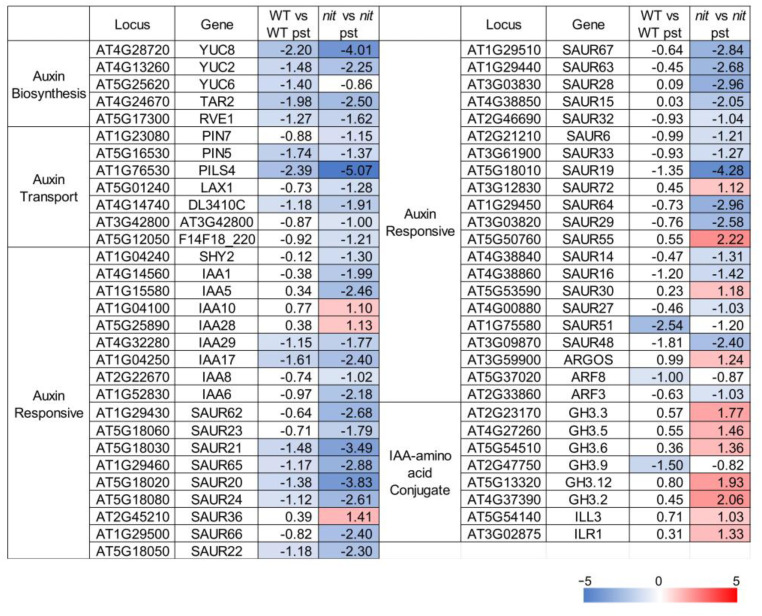
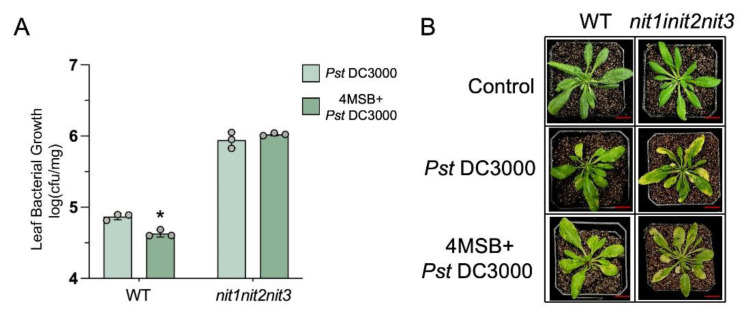
Nitrilases, found to have a common presence in the plant kingdom, are capable of converting nitriles into their corresponding carboxylic acids through hydrolysis. In Arabidopsis, the nitrilases NIT1, NIT2, and NIT3 catalyze the formation of indole-3-acetonitrile (IAN) into indole-3-acetic acid (IAA). Notably, IAN can originate from the breakdown products of indole glucosinolates. Glucosinolates, which are plant secondary metabolites commonly found in cruciferous plants, and their breakdown products, are crucial for plant defense against pathogens. In our study, we found that nitrilases positively regulate resistance to pv. DC3000 (DC3000) in mature Arabidopsis. Transcriptome data showed that after DC3000 treatment, genes related to the auxin pathway in changed more dramatically than in the wild type. Moreover, the enhancement of disease resistance through exogenous aliphatic glucosinolate application relies on NIT1/2/3. Hence, it is hypothesized that NIT1/2/3 may serve a dual role in disease resistance and defense mechanisms. After infection with DC3000, NIT1/2/3 catalyzes the biosynthesis of auxin, thereby triggering certain disease-related responses. On the other hand, NIT1/2/3 can also break down nitriles generated from aliphatic glucosinolate degradation to enhance disease resistance. Our study elucidates the regulatory mechanism of nitrilases in Arabidopsis disease resistance, offering a theoretical foundation for enhancing disease resistance in cruciferous plants.
腈水解酶在植物界普遍存在,能够通过水解作用将腈类化合物转化为相应的羧酸。在拟南芥中,腈水解酶NIT1、NIT2和NIT3催化吲哚 - 3 - 乙腈(IAN)形成吲哚 - 3 - 乙酸(IAA)。值得注意的是,IAN可源自吲哚硫代葡萄糖苷的分解产物。硫代葡萄糖苷是十字花科植物中常见的植物次生代谢产物,其分解产物对于植物抵御病原体至关重要。在我们的研究中,我们发现腈水解酶正向调节成熟拟南芥对丁香假单胞菌番茄致病变种(DC3000)的抗性。转录组数据表明,经DC3000处理后,突变体中与生长素途径相关的基因变化比野生型更为显著。此外,通过外源施加脂肪族硫代葡萄糖苷增强抗病性依赖于NIT1/2/3。因此,推测NIT1/2/3可能在抗病性和防御机制中发挥双重作用。在被DC3000感染后,NIT1/2/3催化生长素的生物合成,从而引发某些与疾病相关的反应。另一方面,NIT1/2/3还可以分解脂肪族硫代葡萄糖苷降解产生的腈类化合物以增强抗病性。我们的研究阐明了腈水解酶在拟南芥抗病性中的调控机制,为提高十字花科植物的抗病性提供了理论基础。