Ahmadi Mahdieh, Kim Hong Lae, Park So Jin, Jung Hye Jin
Department of Life Science and Biochemical Engineering, Graduate School, Sun Moon University, Asan 31460, Republic of Korea.
Department of Pharmaceutical Engineering and Biotechnology, Sun Moon University, Asan 31460, Republic of Korea.
Int J Mol Sci. 2024 Nov 30;25(23):12909. doi: 10.3390/ijms252312909.
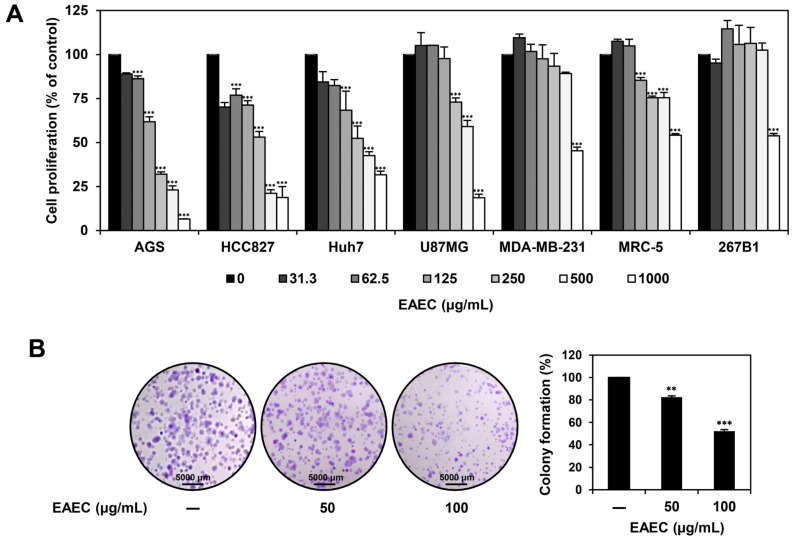
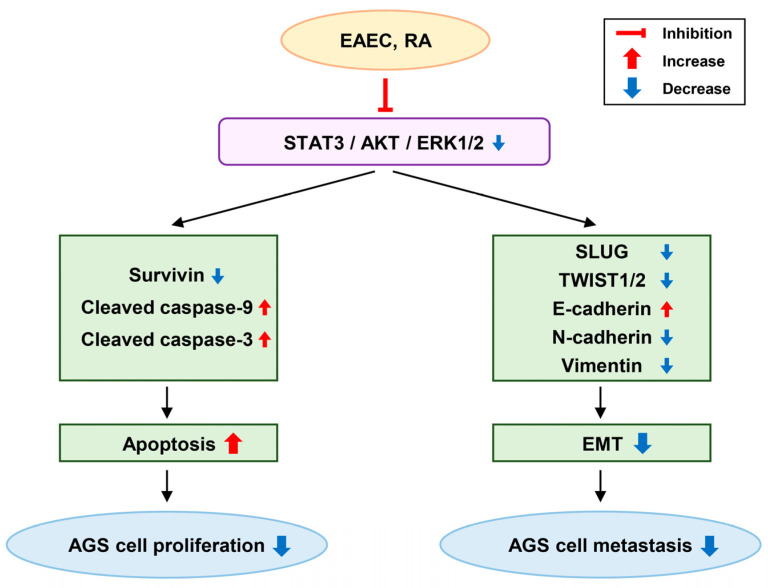
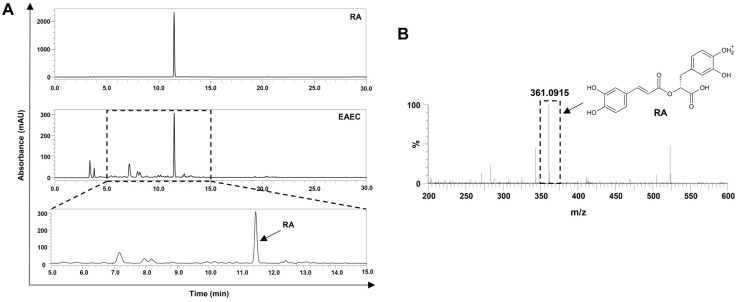
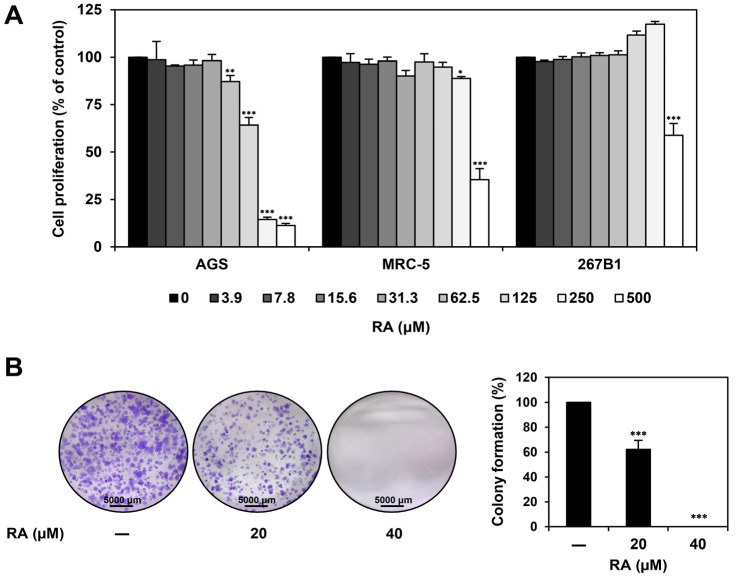
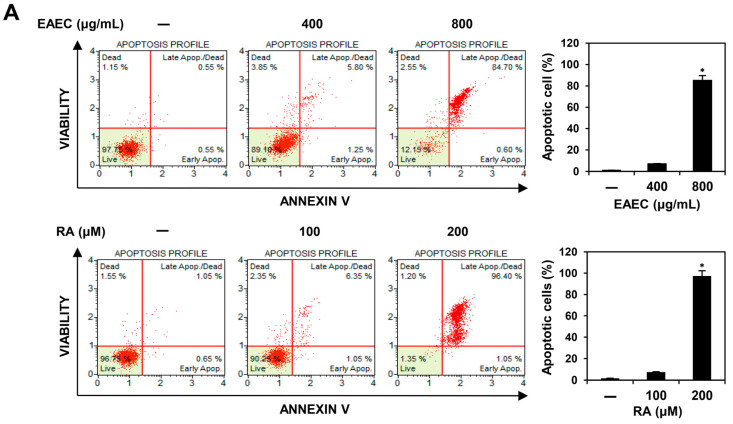
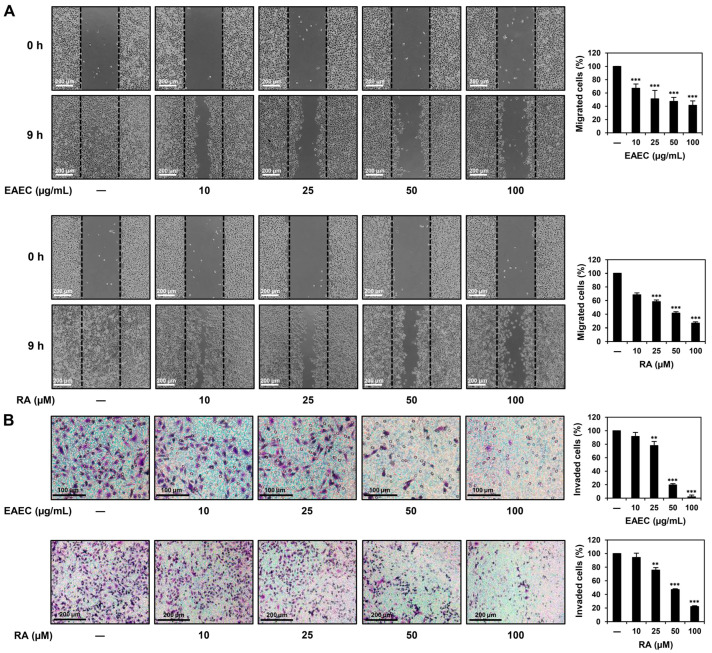
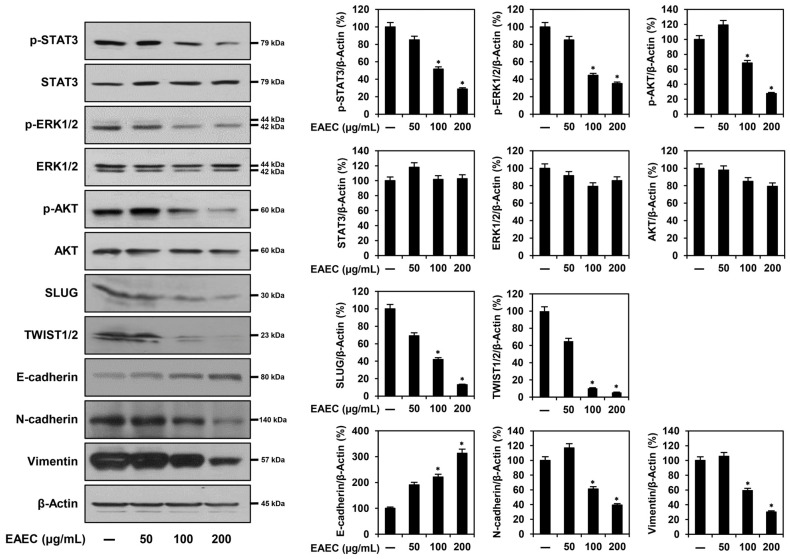
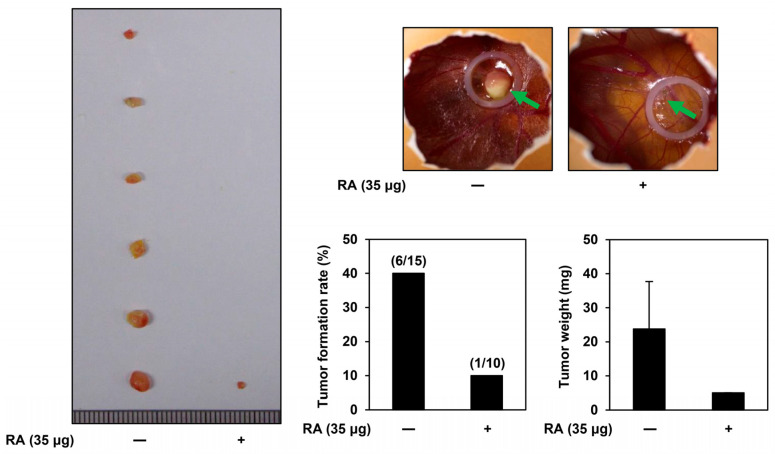
Gastric cancer (GC) ranks as the fifth most prevalent cancer globally. Owing to the absence of early manifest symptoms, it is difficult to diagnose GC until it has metastasized to other organs. Hence, the prevention and treatment of GC have become major concerns for patients. , a traditional medicinal plant from the Boraginaceae family, exhibits various biological activities. Although recent studies have reported the anticancer properties of , its effects and mechanisms of action on GC cells are not yet fully understood. This study examined the anticancer effects of the ethyl acetate extract of (EAEC) and its main active ingredient, rosmarinic acid (RA), in GC AGS cells. EAEC and RA suppressed AGS cell growth by inducing apoptosis through caspase mediation and inhibited AGS cell metastasis by influencing the expression of crucial epithelial-mesenchymal transition (EMT) biomarkers. Furthermore, the anti-growth and anti-metastatic effects of EAEC and RA on AGS cells involved inactivation of the STAT3, AKT, and ERK1/2 pathways. Additionally, RA notably inhibited the in vivo tumor growth in AGS cells. Overall, these results indicate that EAEC and RA could serve as potential anticancer and anti-metastasis agents for GC.
胃癌(GC)是全球第五大常见癌症。由于缺乏早期明显症状,直到胃癌转移到其他器官才难以诊断。因此,胃癌的预防和治疗已成为患者的主要关注点。紫草,一种来自紫草科的传统药用植物,具有多种生物活性。尽管最近的研究报道了紫草的抗癌特性,但其对胃癌细胞的作用及其作用机制尚未完全了解。本研究检测了紫草乙酸乙酯提取物(EAEC)及其主要活性成分迷迭香酸(RA)对胃癌AGS细胞的抗癌作用。EAEC和RA通过半胱天冬酶介导诱导细胞凋亡来抑制AGS细胞生长,并通过影响关键的上皮-间质转化(EMT)生物标志物的表达来抑制AGS细胞转移。此外,EAEC和RA对AGS细胞的抗生长和抗转移作用涉及STAT3、AKT和ERK1/2信号通路的失活。此外,RA显著抑制AGS细胞的体内肿瘤生长。总体而言,这些结果表明EAEC和RA可能作为胃癌潜在新的抗癌和抗转移药物。