Xue Bingye, Qualls Clifford, Lanthiez Alexander, Lu Qing-Yi, Yang Jieping, Lee Ru-Po, Neis Patricia, Mao Jenny T
Pulmonary, Critical Care and Sleep Section, New Mexico Veterans Administration Health Care System, University of New Mexico, Albuquerque, NM 87108, USA.
Biostatistics, Biomedical Research Institute of New Mexico, New Mexico Veterans Administration Health Care System, University of New Mexico, Albuquerque, NM 87108, USA.
Int J Mol Sci. 2024 Dec 6;25(23):13105. doi: 10.3390/ijms252313105.
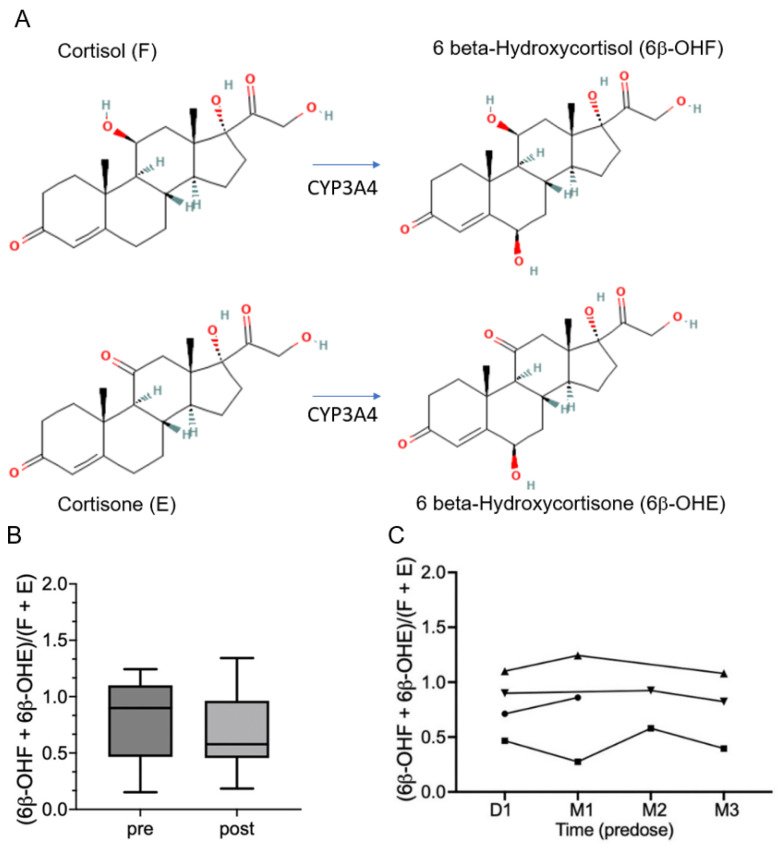
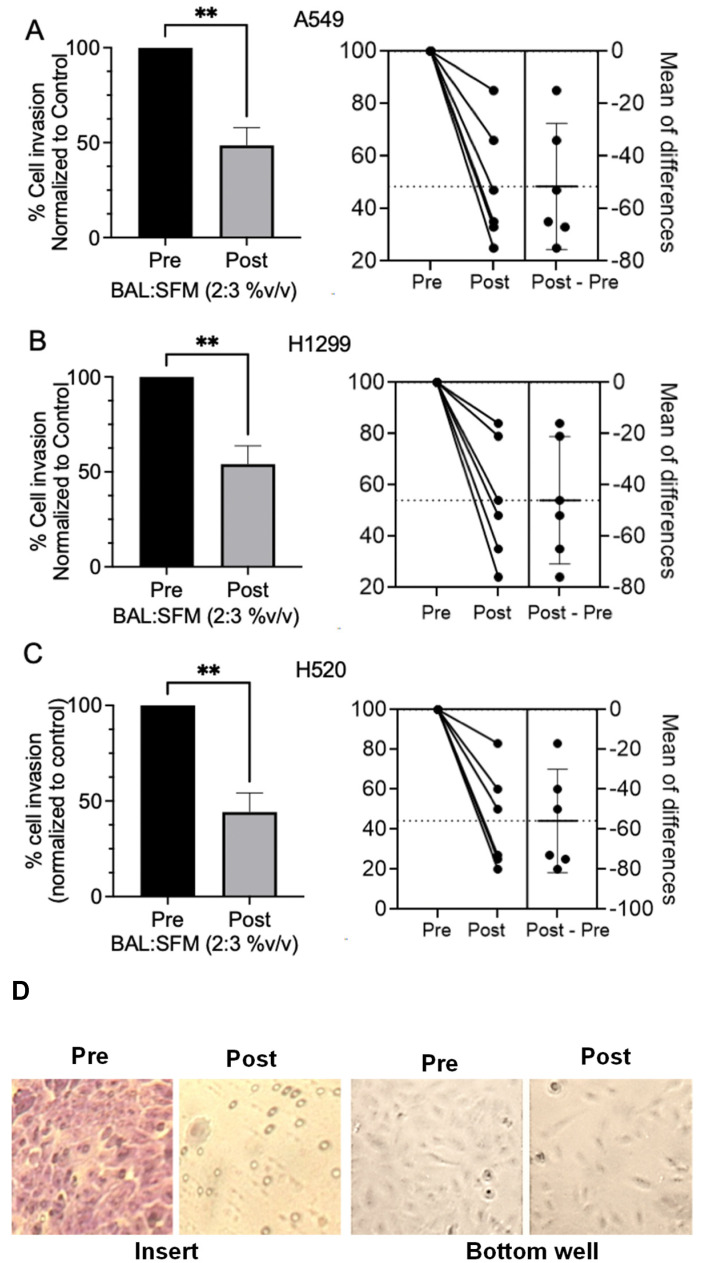
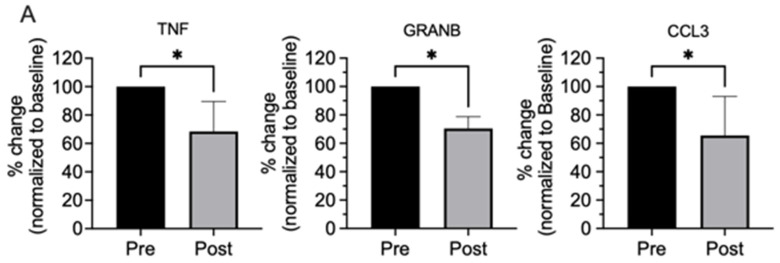
Grape seed procyanidin extract (GSE) is widely used to promote cardiovascular health and has purported anti-inflammatory properties. Chronic inflammation in the lungs caused by environmental toxins such as tobacco smoking plays a pivotal role in lung cancer development. In a modified phase I lung cancer chemoprevention study conducted in heavy active and former smokers using leucoselect phytosome (LP), a standardized grape seed procyanidin extract complexed with soy phospholipids to enhance bioavailability, three months of LP treatment favorably modulated a variety of surrogate endpoint biomarkers, including markers of cell proliferation. In this correlative study, we further analyzed the effects of LP on cytochrome P450 3A4 (CYP3A4) activities by comparing the endogenous conversions of cortisol and cortisone to 6-beta-hydroxycortisol and 6-beta-hydroxycortisone, respectively, before and after LP treatment and the anti-inflammatory effects of LP in the lung microenvironment of these participants by comparing a profile of inflammatory cytokines and chemokines in matched pre- and post-treatment bronchoalveolar lavage (BAL) fluids. LP treatment did not significantly alter CYP3A4 activity, and three months of LP treatment significantly decreased tumor necrosis factor (TNF), C-C Motif Chemokine Ligand 3 (CCL3) and granzyme B in BAL fluids. Furthermore, post-LP-treatment BAL fluids significantly reduced migration/invasion of various human lung neoplastic cells in vitro. Our findings support the anti-inflammatory effects of GSE/LP in the lung microenvironment and its potential utility for reducing cancerizing forces, as well as driving forces for other common respiratory diseases such as chronic obstructive pulmonary disease and asthma, in the lungs of heavy former and active smokers.
葡萄籽原花青素提取物(GSE)被广泛用于促进心血管健康,并据称具有抗炎特性。由吸烟等环境毒素引起的肺部慢性炎症在肺癌发展中起关键作用。在一项针对重度现吸烟者和既往吸烟者进行的改良I期肺癌化学预防研究中,使用了leucoselect植物药(LP),这是一种标准化的葡萄籽原花青素提取物,与大豆磷脂复合以提高生物利用度。三个月的LP治疗对多种替代终点生物标志物产生了有利的调节作用,包括细胞增殖标志物。在这项相关性研究中,我们通过比较LP治疗前后皮质醇和可的松分别内源性转化为6-β-羟基皮质醇和6-β-羟基可的松的情况,进一步分析了LP对细胞色素P450 3A4(CYP3A4)活性的影响,并通过比较配对的治疗前和治疗后支气管肺泡灌洗(BAL)液中炎症细胞因子和趋化因子的谱,分析了LP对这些参与者肺微环境的抗炎作用。LP治疗并未显著改变CYP3A4活性,三个月的LP治疗显著降低了BAL液中的肿瘤坏死因子(TNF)、C-C基序趋化因子配体3(CCL3)和颗粒酶B。此外,LP治疗后的BAL液在体外显著降低了各种人肺肿瘤细胞的迁移/侵袭。我们的研究结果支持了GSE/LP在肺微环境中的抗炎作用及其在减少重度既往吸烟者和现吸烟者肺部致癌因素以及其他常见呼吸道疾病(如慢性阻塞性肺疾病和哮喘)驱动因素方面的潜在效用。