Lee Hyunju, Lee Yongwoo
Department of Physical Therapy, Graduate School, Sahmyook University, Seoul 01795, Republic of Korea.
Department of Physical Therapy, College of Health and Welfare, Sahmyook University, Seoul 01795, Republic of Korea.
Healthcare (Basel). 2024 Dec 4;12(23):2436. doi: 10.3390/healthcare12232436.
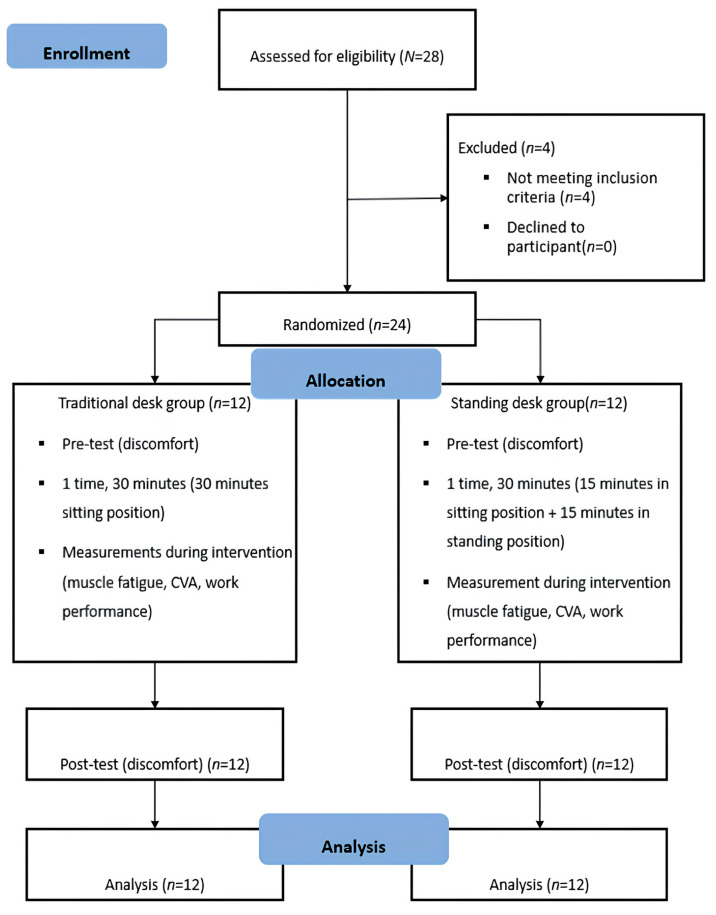
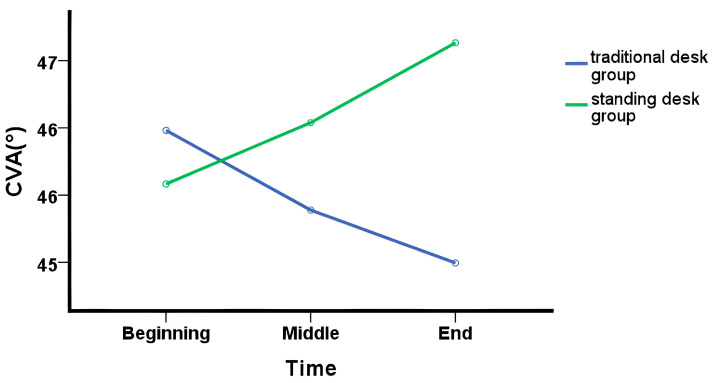
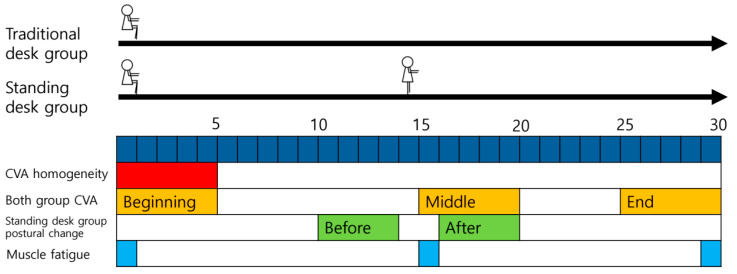
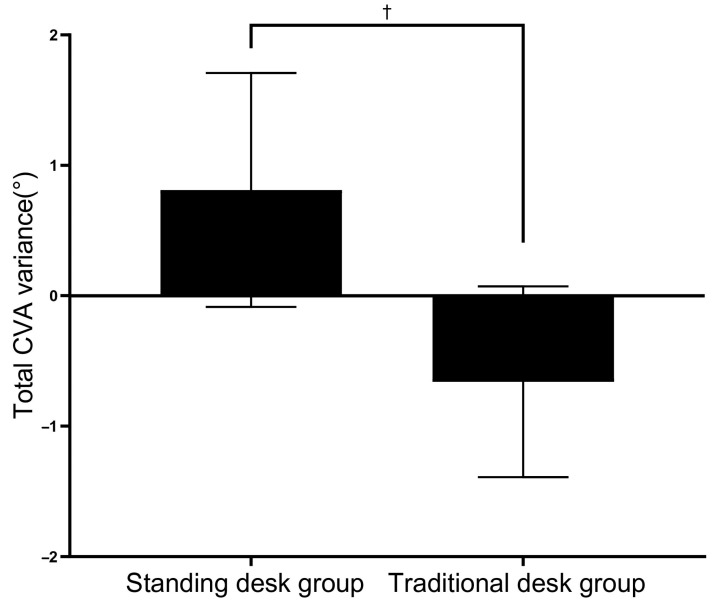
Forward head posture is common among office workers who sit for long periods of time and is one of the main causes of neck pain. This study aimed to assess the effects of utilizing a standing desk on the craniovertebral angle, muscle fatigue, work performance, and discomfort in individuals with forward head posture. Twenty-four participants meeting the inclusion criteria were randomly assigned to either a traditional desk group ( = 12) or a standing desk group ( = 12). Each group engaged in 30 min of computer typing. To evaluate the impact of posture change using a standing desk, pre- and post-experiment discomfort surveys were conducted, and the craniovertebral angle and muscle fatigue were measured throughout the experiment. Work performance was assessed post-experiment based on the work completed by the participants. Intra-group analysis of the craniovertebral angle showed a significant decrease in the traditional desk group ( < 0.05) and a significant increase in the standing desk group ( < 0.05). When comparing the craniovertebral angle between the two groups, a significant difference was observed ( < 0.05). Additionally, significant differences in muscle fatigue, particularly in the levator scapulae muscles, were observed between the two groups ( < 0.05). The traditional desk group reported increased discomfort in the neck and shoulders ( < 0.05). These findings suggest that utilizing a standing desk can positively impact posture, reduce muscle fatigue, and alleviate discomfort in individuals with forward head posture, potentially serving as an intervention to prevent musculoskeletal disorders.
头部前倾姿势在长时间坐着的办公室职员中很常见,是颈部疼痛的主要原因之一。本研究旨在评估使用站立式办公桌对头部前倾姿势个体的颅椎角、肌肉疲劳、工作表现和不适感的影响。24名符合纳入标准的参与者被随机分为传统办公桌组(n = 12)或站立式办公桌组(n = 12)。每组进行30分钟的电脑打字。为了评估使用站立式办公桌对姿势变化的影响,在实验前后进行了不适感调查,并在整个实验过程中测量了颅椎角和肌肉疲劳。实验后根据参与者完成的工作评估工作表现。颅椎角的组内分析显示,传统办公桌组有显著下降(P < 0.05),站立式办公桌组有显著增加(P < 0.05)。比较两组之间的颅椎角时,观察到显著差异(P < 0.05)。此外,两组之间在肌肉疲劳方面存在显著差异,尤其是在肩胛提肌中(P < 0.05)。传统办公桌组报告颈部和肩部的不适感增加(P < 0.05)。这些发现表明,使用站立式办公桌可以对头部前倾姿势个体的姿势产生积极影响,减少肌肉疲劳,并减轻不适感,有可能作为一种预防肌肉骨骼疾病的干预措施。