Nazari Shabnam, Ivanova Tatiana Alexiou, Mishra Rajesh Kumar, Müller Miroslav, Akhbari Mehdi, Hashjin Zohreh Esfahani
Department of Sustainable Technologies, Faculty of Tropical AgriSciences, Czech University of Life Sciences Prague, Kamycka 129, Suchdol, 165 00 Prague, Czech Republic.
Department of Material Science and Manufacturing Technology, Faculty of Engineering, Czech University of Life Sciences Prague, Kamycka 129, Suchdol, 165 00 Prague, Czech Republic.
Materials (Basel). 2024 Nov 21;17(23):5695. doi: 10.3390/ma17235695.
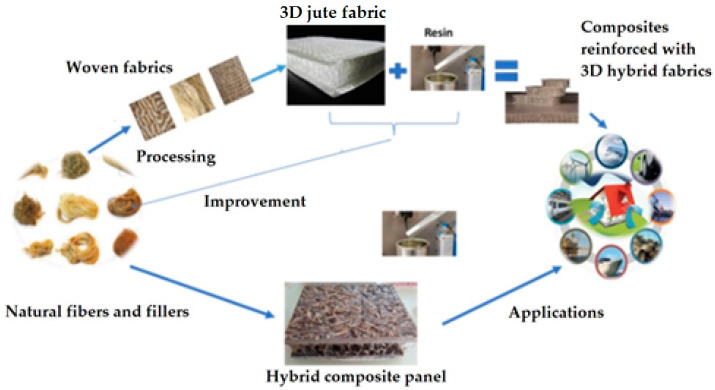
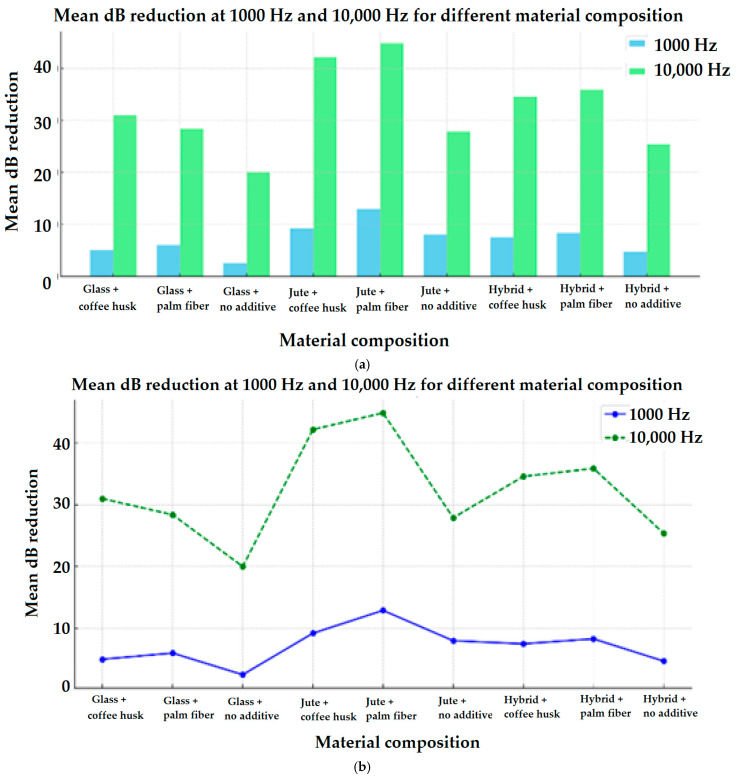
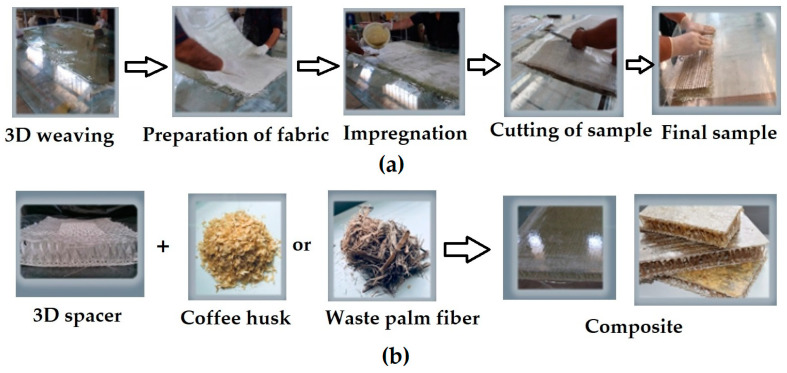
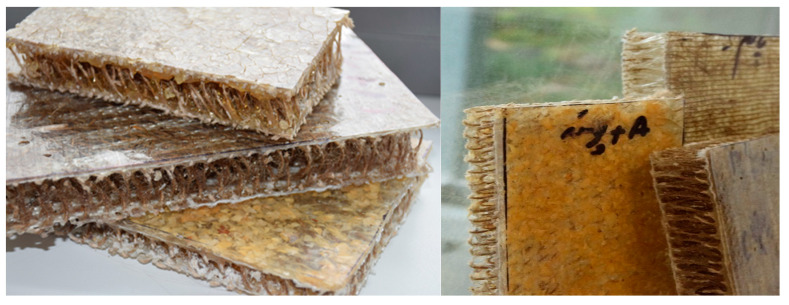
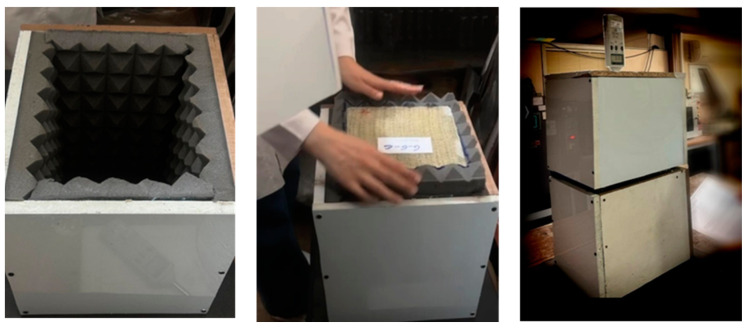
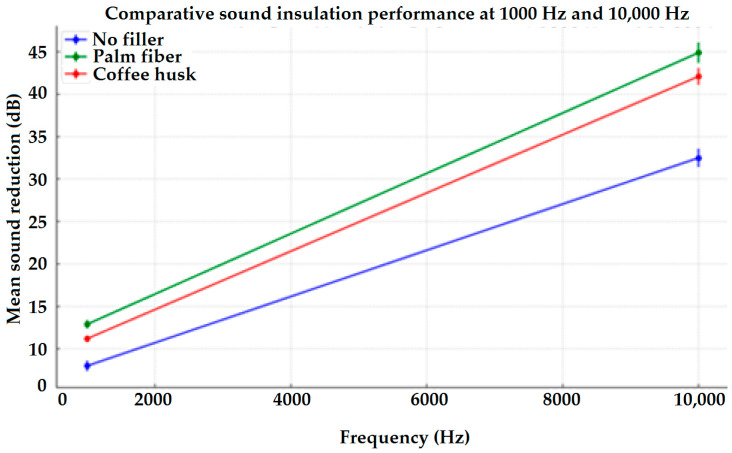
This research investigated the sound insulation performance of 3D woven hybrid fabric-reinforced composites using natural fibers, such as jute, along with E-glass and biomass derived from agro-waste, e.g., coffee husk and waste palm fiber. The composites made from pure E-glass, pure jute, and hybrid glass-jute configurations were tested for sound absorbance at frequencies of 1000 Hz and 10,000 Hz. A sound insulation chamber was used for measuring the sound reduction levels. Results show that the sound insulation performance of the panels was remarkably enhanced with composites containing natural fiber reinforcements. The jute-based composites provided the maximum insulation of sound, with waste palm fiber fillers in particular. At a frequency of 10,000 Hz, a noise reduction reaching 44.9 dB was observed. The highest sound absorption was observed in the 3D woven jute composites with the additive of waste palm fiber, which outperformed the other samples. When comparing the effect of coffee husk and palm fiber as biomass fillers, both exhibited notable improvements in sound insulation, but the palm fiber generally performed better across different samples. Although panels containing palm fiber additives appeared to reduce sound more than those containing coffee husk, statistical analysis revealed no significant difference between the two, indicating that both are efficient and eco-friendly fillers for soundproofing applications. One-way analysis of variance (ANOVA) confirmed the significance of the effect of reinforcing structures and biofillers on acoustic performance. This study demonstrated the possibility of using sustainable green materials for soundproofing applications within various industries.
本研究调查了三维机织混杂织物增强复合材料的隔音性能,该复合材料使用了天然纤维(如黄麻)以及E玻璃和源自农业废弃物的生物质(如咖啡壳和废弃棕榈纤维)。对由纯E玻璃、纯黄麻以及玻璃-黄麻混杂结构制成的复合材料在1000赫兹和10000赫兹频率下的吸声性能进行了测试。使用隔音室来测量降噪水平。结果表明,含有天然纤维增强材料的复合材料显著提高了板材的隔音性能。尤其是基于黄麻的复合材料,其隔音效果最佳,其中添加了废弃棕榈纤维填料。在10000赫兹频率下,观察到降噪达到44.9分贝。在添加了废弃棕榈纤维的三维机织黄麻复合材料中观察到了最高的吸声性能,其性能优于其他样品。在比较咖啡壳和棕榈纤维作为生物质填料的效果时,两者在隔音方面均表现出显著改善,但棕榈纤维在不同样品中总体表现更好。尽管含有棕榈纤维添加剂的板材似乎比含有咖啡壳的板材隔音效果更好,但统计分析表明两者之间没有显著差异,这表明两者都是用于隔音应用的高效且环保的填料。单因素方差分析(ANOVA)证实了增强结构和生物填料对声学性能影响的显著性。本研究证明了在各个行业中使用可持续绿色材料进行隔音应用的可能性。