Ryu Gum-Sung, An Gi-Hong, Yoon Yong-Sik, Kim Ji-Young, Choi Sung
Department of Structural Engineering Research, Korea Institute of Civil Engineering and Building Technology, Goyang 10223, Republic of Korea.
Korea Peninsula Infrastructure Special Committee, Korea Institute of Civil Engineering and Building Technology, Goyang 10223, Republic of Korea.
Materials (Basel). 2024 Nov 26;17(23):5794. doi: 10.3390/ma17235794.
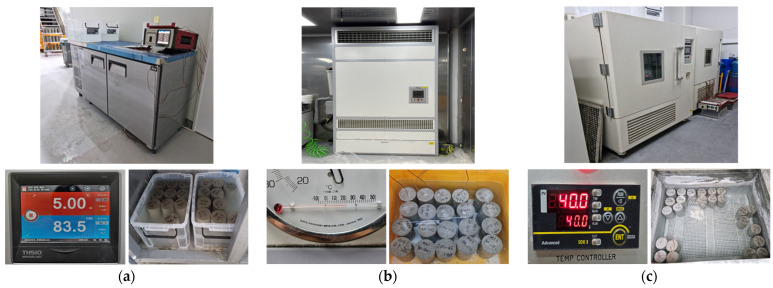
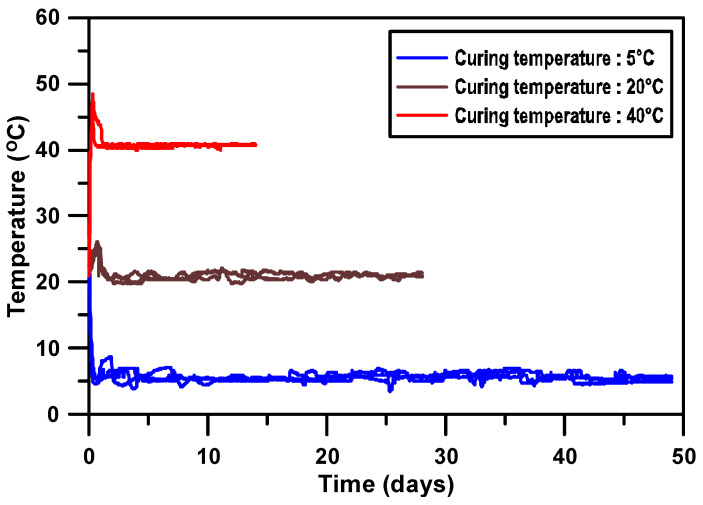
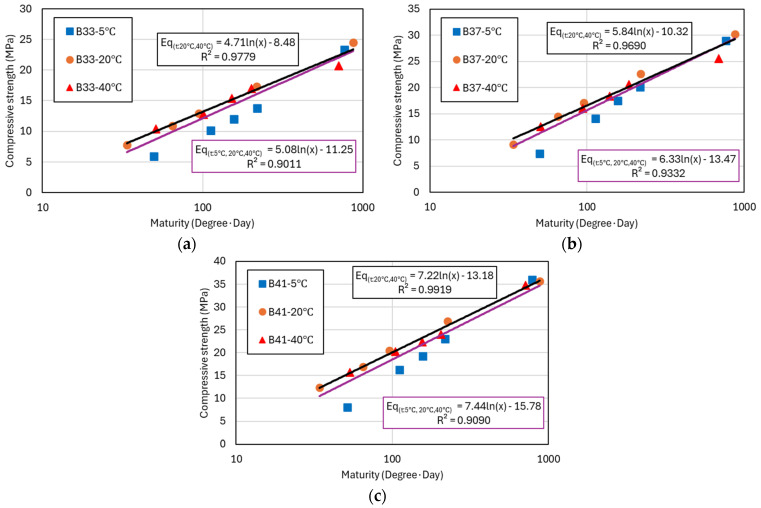
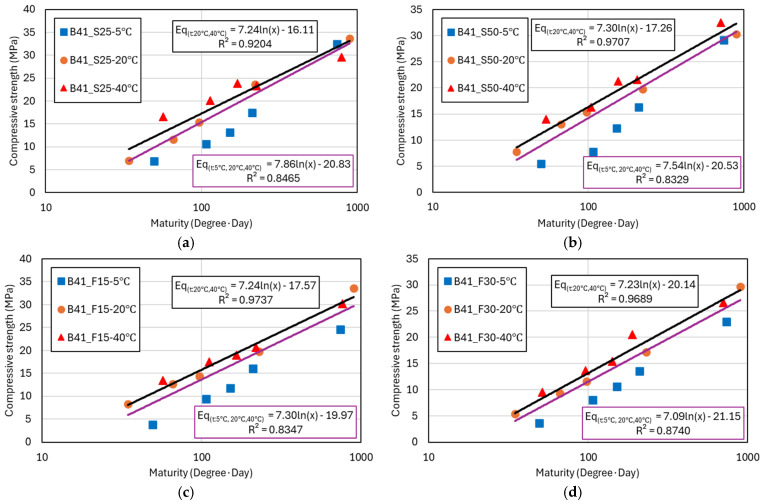
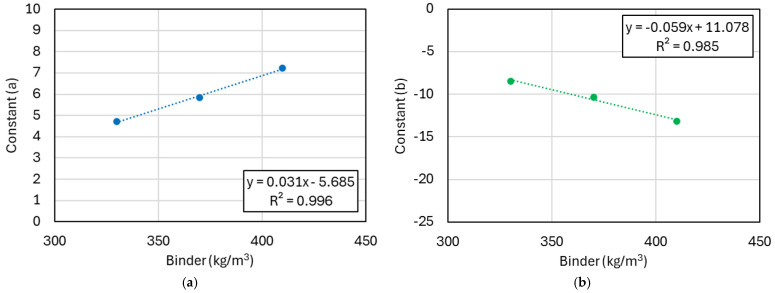
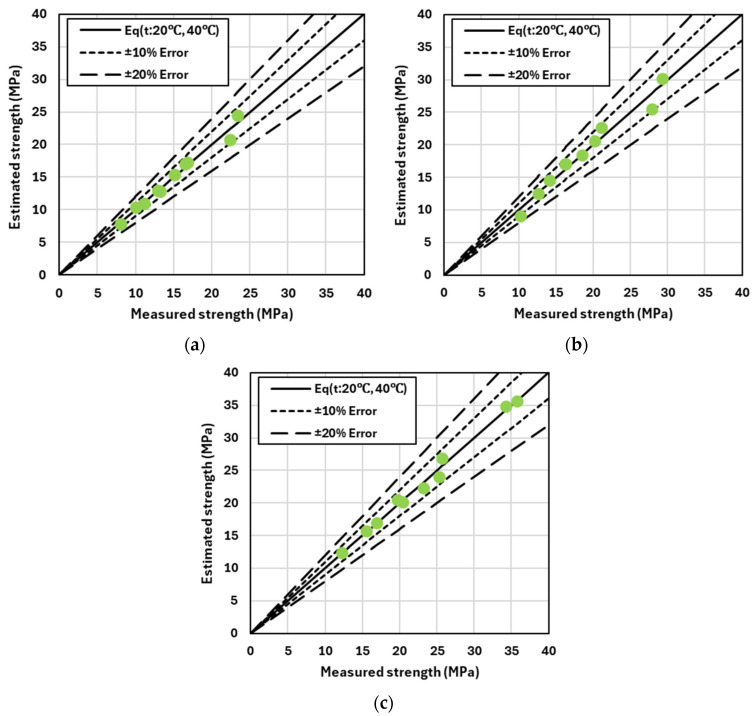
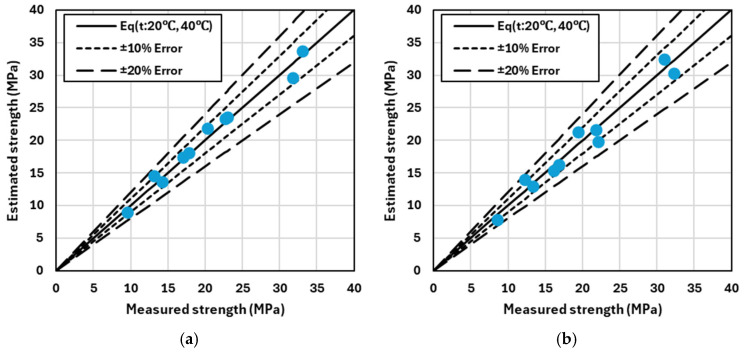
This study aims to systematically analyze the effects of different curing temperatures, unit binder content, and the mixture ratios of ground granulated blast-furnace slag and fly ash based on ordinary Portland cement in binders on the development of concrete compressive strength. Particularly, the study evaluates strength characteristics by calculating the maturity equivalent to 28 days of curing at 20 °C. A model based on the relationship between maturity and strength was applied to predict the compressive strength, and the experimental data were analyzed to derive strength coefficients for each variable. The results showed that at a low temperature of 5 °C, the actual strength was lower than the predicted strength, leading to higher error rates. In contrast, at temperatures of 20 °C and 40 °C, the coefficient of determination (R > 0.90) for the predictive equation was high, and the error rates were reduced to within 10%. The study demonstrates that by combining the maturity method with the strength-maturity relationship, the concrete compressive strength can be effectively predicted under specific curing and binder design conditions.
本研究旨在系统分析不同养护温度、单位胶凝材料用量以及基于普通硅酸盐水泥的胶凝材料中粒化高炉矿渣与粉煤灰的混合比例对混凝土抗压强度发展的影响。具体而言,该研究通过计算相当于在20℃养护28天的成熟度来评估强度特性。应用基于成熟度与强度关系的模型来预测抗压强度,并对实验数据进行分析以得出各变量的强度系数。结果表明,在5℃的低温下,实际强度低于预测强度,导致误差率较高。相比之下,在20℃和40℃的温度下,预测方程的决定系数(R>0.90)较高,误差率降低到10%以内。该研究表明,通过将成熟度方法与强度-成熟度关系相结合,在特定的养护和胶凝材料设计条件下可以有效预测混凝土的抗压强度。