Imran Hamza, Al-Abdaly Nadia Moneem, Shamsa Mohammed Hammodi, Shatnawi Amjed, Ibrahim Majed, Ostrowski Krzysztof Adam
Department of Construction and Project, Al-Karkh University of Science, Baghdad 10081, Iraq.
Department of Civil Engineering, Najaf Technical Institute, Al-Furat Al-Awsat Technical University, Najaf Munazira Str., Najaf 54003, Iraq.
Materials (Basel). 2022 Jan 2;15(1):317. doi: 10.3390/ma15010317.
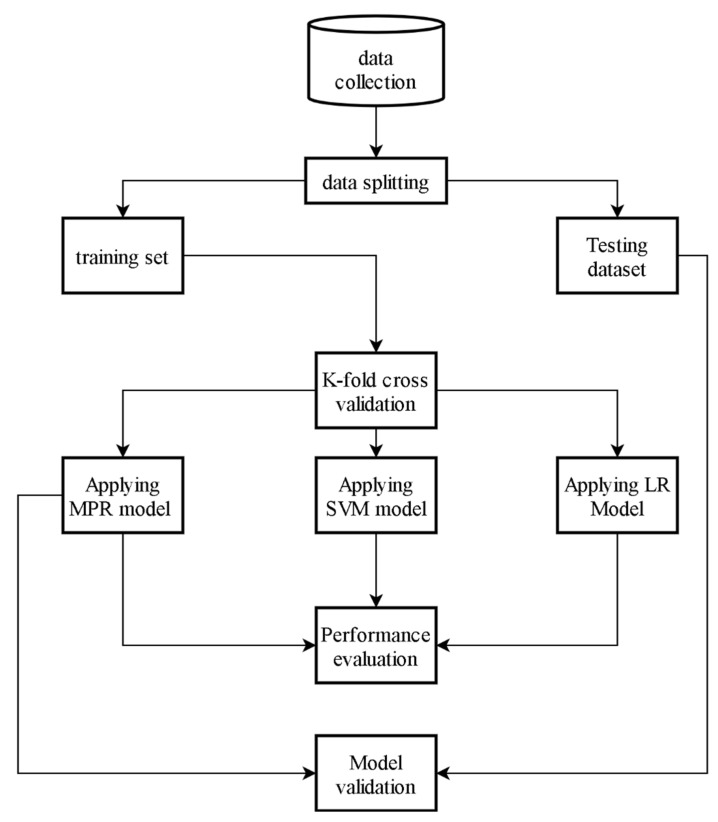
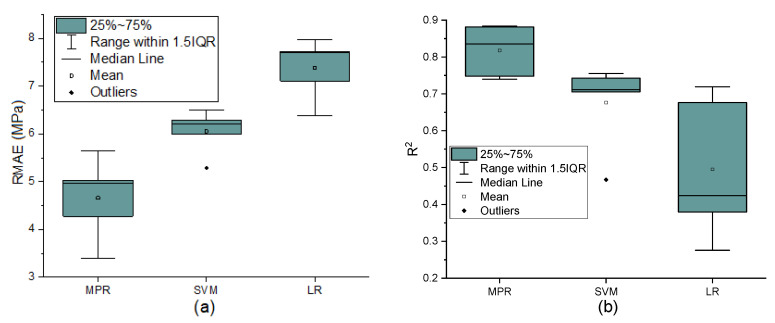
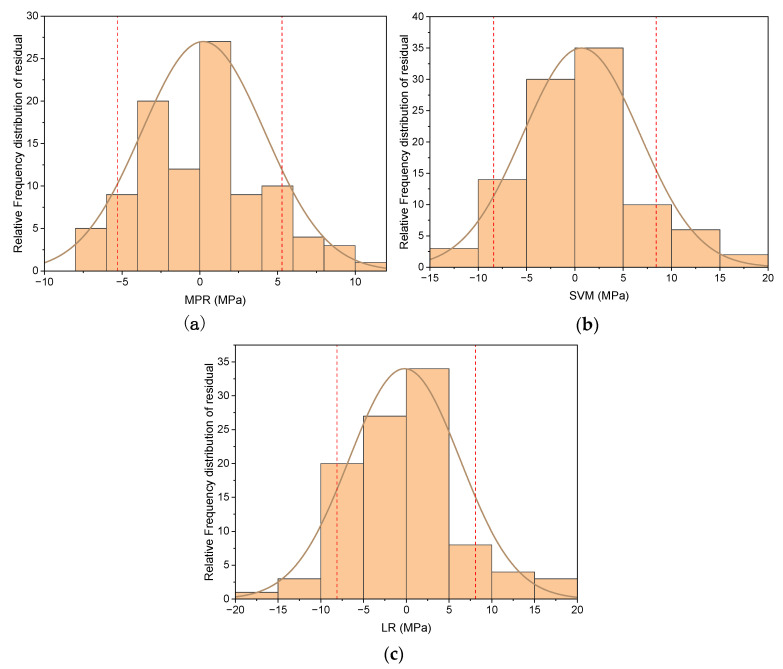
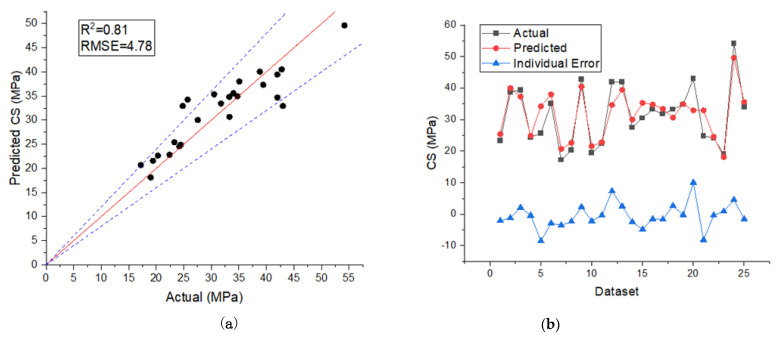
Concrete is the most widely used building material, but it is also a recognized pollutant, causing significant issues for sustainability in terms of resource depletion, energy use, and greenhouse gas emissions. As a result, efforts should be concentrated on reducing concrete's environmental consequences in order to increase its long-term viability. In order to design environmentally friendly concrete mixtures, this research intended to create a prediction model for the compressive strength of those mixtures. The concrete mixtures that were used in this study to build our proposed prediction model are concrete mixtures that contain both recycled aggregate concrete (RAC) and ground granulated blast-furnace slag (GGBFS). A white-box machine learning model known as multivariate polynomial regression (MPR) was developed to predict the compressive strength of eco-friendly concrete. The model was compared with the other two machine learning models, where one is also a white-box machine learning model, namely linear regression (LR), and the other is the black-box machine learning model, which is a support vector machine (SVM). The newly suggested model shows robust estimation capabilities and outperforms the other two models in terms of (coefficient of determination) and RMSE (root mean absolute error) measurements.
混凝土是使用最广泛的建筑材料,但它也是一种公认的污染物,在资源消耗、能源使用和温室气体排放方面给可持续发展带来了重大问题。因此,应集中精力减少混凝土对环境的影响,以提高其长期可行性。为了设计环保型混凝土混合物,本研究旨在创建这些混合物抗压强度的预测模型。本研究中用于构建我们提出的预测模型的混凝土混合物是同时包含再生骨料混凝土(RAC)和粒化高炉矿渣(GGBFS)的混凝土混合物。开发了一种称为多元多项式回归(MPR)的白盒机器学习模型来预测生态友好型混凝土的抗压强度。该模型与其他两种机器学习模型进行了比较,其中一种也是白盒机器学习模型,即线性回归(LR),另一种是黑盒机器学习模型,即支持向量机(SVM)。新提出的模型显示出强大的估计能力,并且在决定系数和均方根误差(RMSE)测量方面优于其他两种模型。