Shoaib Muhammad, Jamshaid Hafsa, Mishra Rajesh Kumar, Iqbal Kashif, Müller Miroslav, Chandan Vijay, Alexiou Ivanova Tatiana
School of Engineering and Technology, National Textile University, Sheikhupura Road, Faisalabad 37610, Pakistan.
Department of Material Science and Manufacturing Technology, Faculty of Engineering, Czech University of Life Sciences Prague, Kamycka 129, Suchdol, 165 00 Prague, Czech Republic.
Materials (Basel). 2024 Nov 27;17(23):5826. doi: 10.3390/ma17235826.
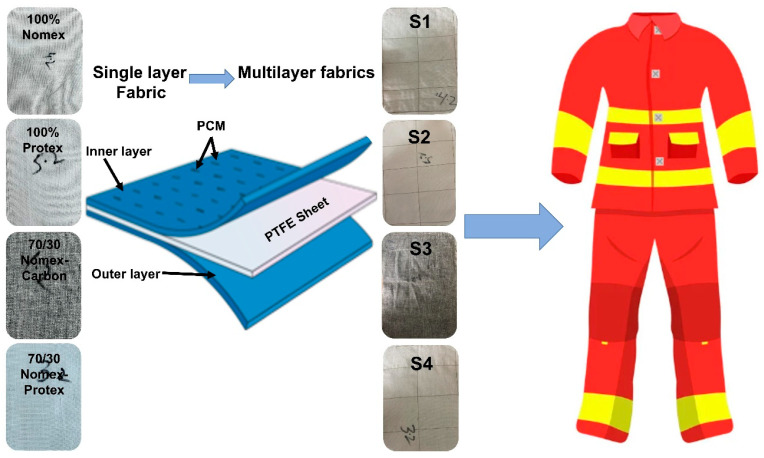
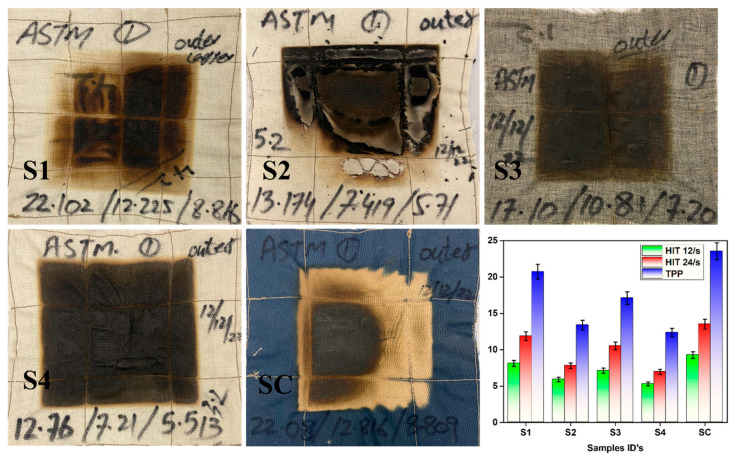
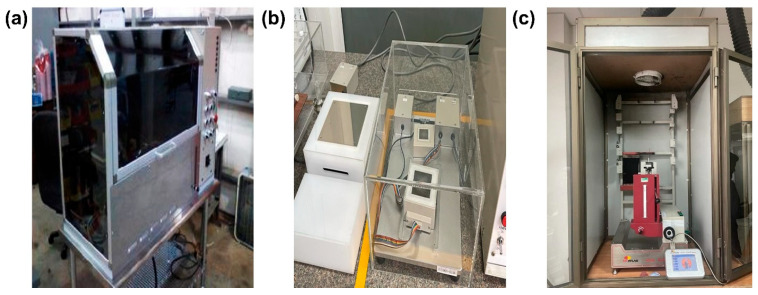
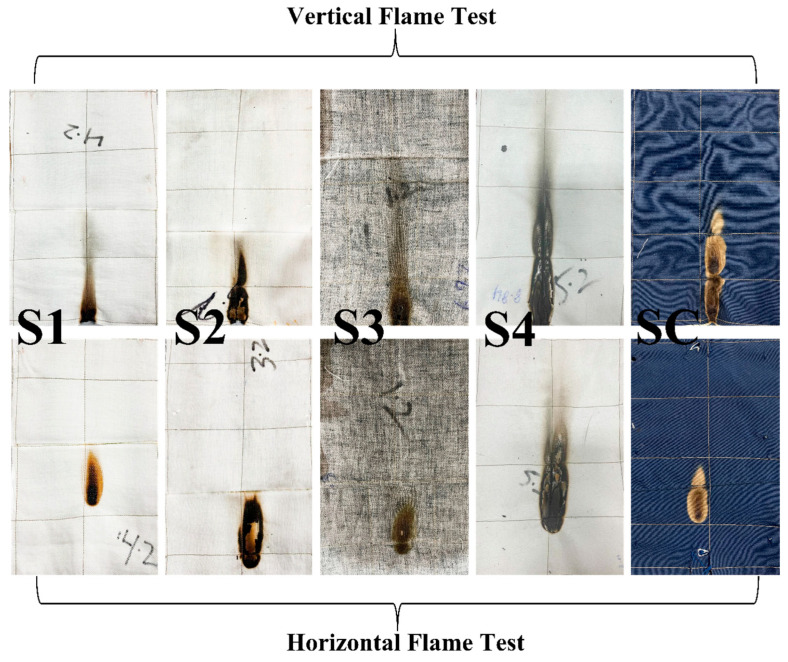
Firefighters need personal protection equipment and protective clothing to be safe and protected when responding to fire incidents. At present, firefighters' suits are developed by using inherently thermal-resistant fibers but pose serious problems related to comfort. In the present research, multilayered fire-fighting fabrics were developed with different fiber blends. Multilayer fire retardant (FR) fabrics with phase change materials (PCMs) inserts were developed and compared with reference multilayer fabrics without PCM. In this context, four fabric samples were chosen to fabricate the multilayer FR fabrics. Properties of multilayer fabrics were investigated, which include physical, thermo-physiological comfort, and flame-resistant performance. The heating process of the clothing was examined using infrared (IR) thermography, differential scanning calorimetry (DSC), thermal protective testing (TPP), and steady-state (Convective and Radiant) heat resistance tests. Areal density and thickness were measured as physical parameters, and air permeability (AP), overall moisture management capacity (OMMC), and thermal conductivity were measured as thermo-physiological comfort characteristics. The inclusion of PCM improved the thermal protection as well as flame resistance significantly. Sample S1 (Nomex + PTFE + Nomex with PCM) demonstrated superior fire resistance, air permeability, and thermal protection, with a 37.3% increase in air permeability as compared to the control sample (SC) by maintaining comfort while offering high thermal resilience. The inclusion of PCM enhanced its thermal regulation, moderating heat transfer. Flame resistance tests confirmed its excellent performance, while thermo-physiological assessments highlighted a well-balanced combination of thermal conductivity and air permeability. This study will help to improve the performance of firefighter protective fabrics and provide guidelines in terms of balancing comfort and performance while designing firefighter protective clothing for different climatic conditions.
消防员在应对火灾事故时需要个人防护装备和防护服来确保安全。目前,消防员制服是采用本质耐热纤维制成的,但存在与舒适性相关的严重问题。在本研究中,开发了具有不同纤维混合物的多层消防织物。开发了带有相变材料(PCM)插入物的多层阻燃(FR)织物,并与没有PCM的参考多层织物进行了比较。在此背景下,选择了四种织物样品来制造多层FR织物。研究了多层织物的性能,包括物理性能、热生理舒适性和阻燃性能。使用红外(IR)热成像、差示扫描量热法(DSC)、热防护测试(TPP)和稳态(对流和辐射)耐热性测试来检查服装的加热过程。测量面密度和厚度作为物理参数,测量透气率(AP)、总体水分管理能力(OMMC)和热导率作为热生理舒适性特征。PCM的加入显著提高了热防护以及阻燃性能。样品S1(含PCM的Nomex + PTFE + Nomex)表现出卓越的耐火性、透气性和热防护性能,与对照样品(SC)相比,透气率提高了37.3%,在保持舒适性的同时具有高回弹性。PCM的加入增强了其热调节能力,减缓了热传递。阻燃测试证实了其优异性能,而热生理评估突出了热导率和透气率的良好平衡组合。本研究将有助于提高消防员防护服面料的性能,并为在为不同气候条件设计消防员防护服时平衡舒适性和性能提供指导。