• 文献检索
  • 文档翻译
  • 深度研究
  • 学术资讯
  • Suppr Zotero 插件Zotero 插件
  • 邀请有礼
  • 套餐&价格
  • 历史记录
应用&插件
Suppr Zotero 插件Zotero 插件浏览器插件Mac 客户端Windows 客户端微信小程序
定价
高级版会员购买积分包购买API积分包
服务
文献检索文档翻译深度研究API 文档MCP 服务
关于我们
关于 Suppr公司介绍联系我们用户协议隐私条款
关注我们

Suppr 超能文献

核心技术专利:CN118964589B侵权必究
粤ICP备2023148730 号-1Suppr @ 2026

文献检索

告别复杂PubMed语法,用中文像聊天一样搜索,搜遍4000万医学文献。AI智能推荐,让科研检索更轻松。

立即免费搜索

文件翻译

保留排版,准确专业,支持PDF/Word/PPT等文件格式,支持 12+语言互译。

免费翻译文档

深度研究

AI帮你快速写综述,25分钟生成高质量综述,智能提取关键信息,辅助科研写作。

立即免费体验

利用二维电子背散射衍射数据对增材制造的哈氏合金X进行三维非均匀微观结构表征

Three-Dimensional Non-Homogeneous Microstructure Representation Using 2D Electron Backscatter Diffraction Data for Additive-Manufactured Hastelloy X.

作者信息

Zaikovska Liene, Ekh Magnus, Gupta Mohit, Moverare Johan

机构信息

Department of Engineering Science, University West, SE-461 86 Trollhättan, Sweden.

Department of Material and Computational Mechanics, Chalmers University of Technology, SE-412 06 Gothenburg, Sweden.

出版信息

Materials (Basel). 2024 Dec 4;17(23):5937. doi: 10.3390/ma17235937.

DOI:10.3390/ma17235937
PMID:39685372
原文链接:https://pmc.ncbi.nlm.nih.gov/articles/PMC11643651/
Abstract

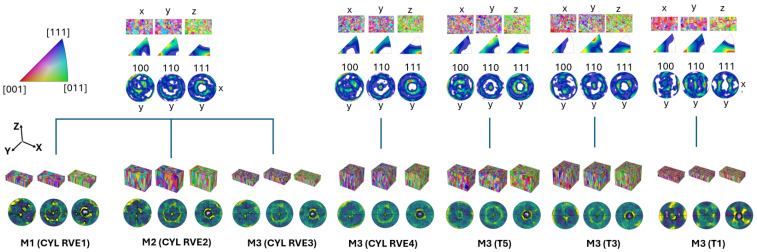
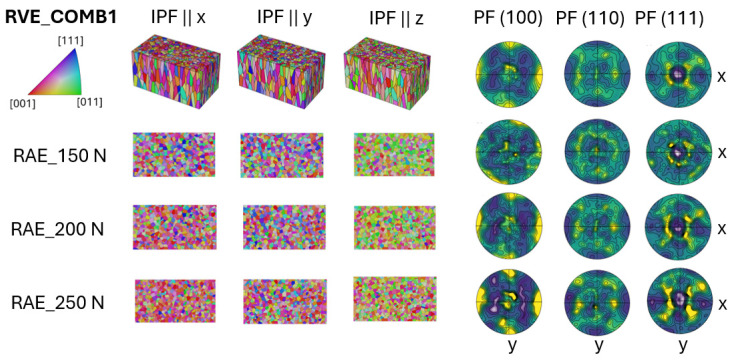
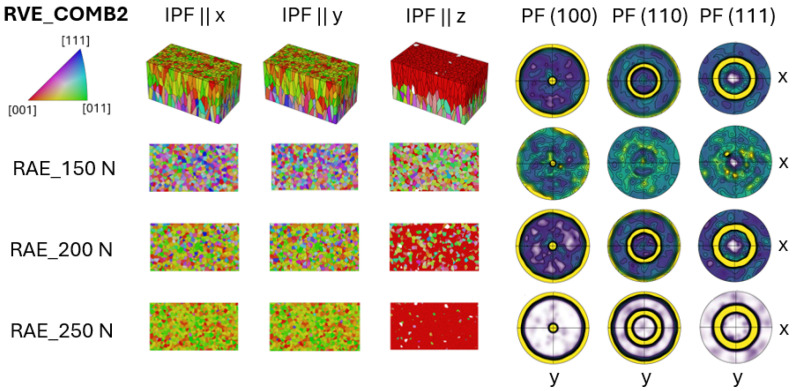
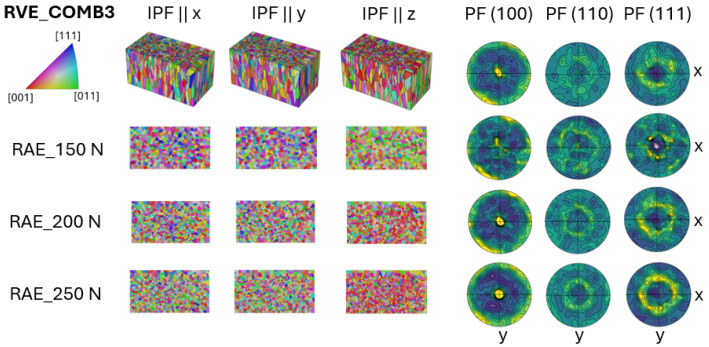
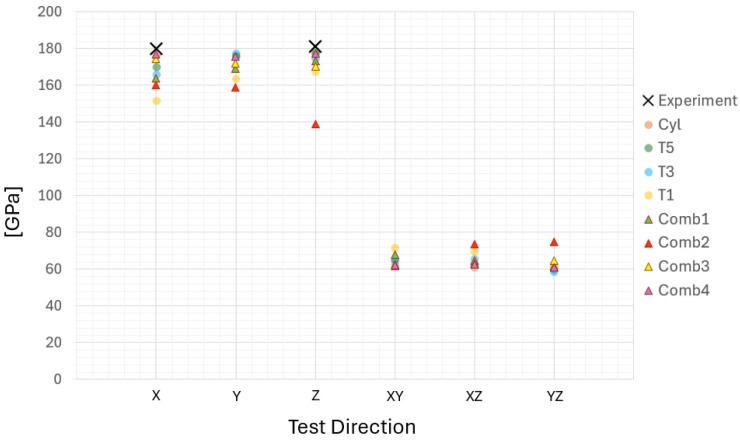
Additive manufacturing (AM) methods like powder bed fusion-laser beam (PBF-LB) enable complex geometry production. However, understanding and predicting the microstructural properties of AM parts remain challenging due to the inherent non-homogeneity introduced during the manufacturing process. This study demonstrates a novel approach for 3D microstructure representation and virtual testing of non-homogeneous AM materials using 2d electron backscatter diffraction (EBSD) data. By employing the representative volume element (RVE) method, we reconstruct the 3D microstructure from 2D EBSD datasets, effectively capturing the grain morphological characteristics of PBF-LB-produced Hastelloy X. Using validated RVE data, we artificially generate combinations of two grain textures to gain deeper insight into locally affected areas, particularly the stress distribution within the interfaces, as well as global material behavior, exploring non-homogeneity. Computational homogenization (CH) utilizing a crystal elasticity finite element (CEFE) method is used to virtually test and predict directional elastic properties, offering insights into relationships between microstructure evolution and property correlation. The experimentally validated results show a strong correlation, with only 0.5-3.5% correlation error for the selected grain tessellation method. This consistency and reliability of the methodology provide high confidence for additional virtual tests predicting the properties of non-homogeneous, artificially generated combined-grain structures.

摘要

诸如粉末床熔融激光束(PBF-LB)之类的增材制造(AM)方法能够生产复杂的几何形状。然而,由于制造过程中引入的固有不均匀性,理解和预测增材制造零件的微观结构特性仍然具有挑战性。本研究展示了一种使用二维电子背散射衍射(EBSD)数据对非均匀增材制造材料进行三维微观结构表征和虚拟测试的新方法。通过采用代表性体积单元(RVE)方法,我们从二维EBSD数据集中重建三维微观结构,有效捕捉了PBF-LB工艺制造的哈氏合金X的晶粒形态特征。利用经过验证的RVE数据,我们人工生成两种晶粒织构的组合,以更深入地了解局部受影响区域,特别是界面内的应力分布以及整体材料行为,探索不均匀性。利用晶体弹性有限元(CEFE)方法的计算均匀化(CH)用于虚拟测试和预测方向弹性性能,深入了解微观结构演变与性能相关性之间的关系。实验验证结果显示出很强的相关性,对于所选的晶粒镶嵌方法,相关误差仅为0.5-3.5%。该方法的这种一致性和可靠性为预测非均匀、人工生成的组合晶粒结构性能的额外虚拟测试提供了高度的信心。
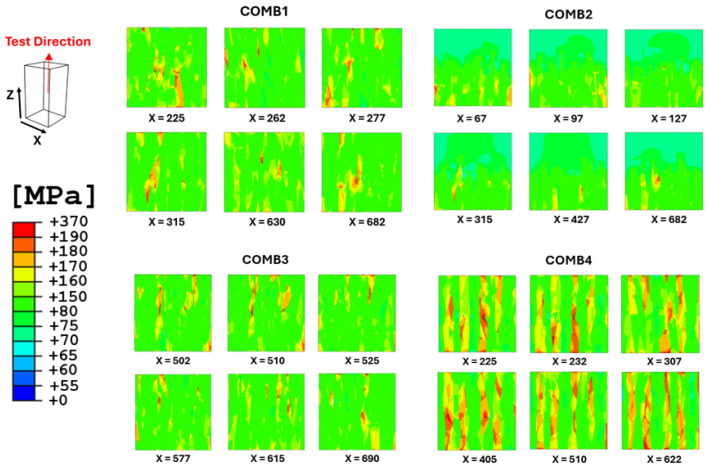
https://cdn.ncbi.nlm.nih.gov/pmc/blobs/2105/11643651/309cc370b612/materials-17-05937-g017.jpg
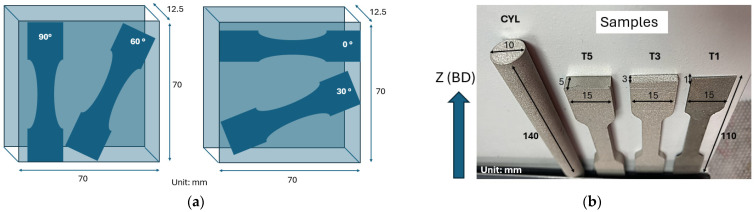
https://cdn.ncbi.nlm.nih.gov/pmc/blobs/2105/11643651/0df6e5872f8c/materials-17-05937-g0A1a.jpg
https://cdn.ncbi.nlm.nih.gov/pmc/blobs/2105/11643651/e87d27cb5ad8/materials-17-05937-g001.jpg
https://cdn.ncbi.nlm.nih.gov/pmc/blobs/2105/11643651/056b3e81fe59/materials-17-05937-g002.jpg
https://cdn.ncbi.nlm.nih.gov/pmc/blobs/2105/11643651/f2eb87402bed/materials-17-05937-g003.jpg
https://cdn.ncbi.nlm.nih.gov/pmc/blobs/2105/11643651/10e13540afb3/materials-17-05937-g004.jpg
https://cdn.ncbi.nlm.nih.gov/pmc/blobs/2105/11643651/ea18177e74f9/materials-17-05937-g005.jpg
https://cdn.ncbi.nlm.nih.gov/pmc/blobs/2105/11643651/3228972443f2/materials-17-05937-g006.jpg
https://cdn.ncbi.nlm.nih.gov/pmc/blobs/2105/11643651/5458264109eb/materials-17-05937-g007.jpg
https://cdn.ncbi.nlm.nih.gov/pmc/blobs/2105/11643651/c78dbbca2b43/materials-17-05937-g008.jpg
https://cdn.ncbi.nlm.nih.gov/pmc/blobs/2105/11643651/64723489678a/materials-17-05937-g009.jpg
https://cdn.ncbi.nlm.nih.gov/pmc/blobs/2105/11643651/e9df6d845e96/materials-17-05937-g010.jpg
https://cdn.ncbi.nlm.nih.gov/pmc/blobs/2105/11643651/45aee7e215fb/materials-17-05937-g011.jpg
https://cdn.ncbi.nlm.nih.gov/pmc/blobs/2105/11643651/070f0d6e70a8/materials-17-05937-g012a.jpg
https://cdn.ncbi.nlm.nih.gov/pmc/blobs/2105/11643651/1fd7a99c3d4e/materials-17-05937-g013.jpg
https://cdn.ncbi.nlm.nih.gov/pmc/blobs/2105/11643651/edd9f3eb88f8/materials-17-05937-g014.jpg
https://cdn.ncbi.nlm.nih.gov/pmc/blobs/2105/11643651/fe4dbf49e8dd/materials-17-05937-g015.jpg
https://cdn.ncbi.nlm.nih.gov/pmc/blobs/2105/11643651/832bcd521c65/materials-17-05937-g016.jpg
https://cdn.ncbi.nlm.nih.gov/pmc/blobs/2105/11643651/309cc370b612/materials-17-05937-g017.jpg
https://cdn.ncbi.nlm.nih.gov/pmc/blobs/2105/11643651/0df6e5872f8c/materials-17-05937-g0A1a.jpg
https://cdn.ncbi.nlm.nih.gov/pmc/blobs/2105/11643651/e87d27cb5ad8/materials-17-05937-g001.jpg
https://cdn.ncbi.nlm.nih.gov/pmc/blobs/2105/11643651/056b3e81fe59/materials-17-05937-g002.jpg
https://cdn.ncbi.nlm.nih.gov/pmc/blobs/2105/11643651/f2eb87402bed/materials-17-05937-g003.jpg
https://cdn.ncbi.nlm.nih.gov/pmc/blobs/2105/11643651/10e13540afb3/materials-17-05937-g004.jpg
https://cdn.ncbi.nlm.nih.gov/pmc/blobs/2105/11643651/ea18177e74f9/materials-17-05937-g005.jpg
https://cdn.ncbi.nlm.nih.gov/pmc/blobs/2105/11643651/3228972443f2/materials-17-05937-g006.jpg
https://cdn.ncbi.nlm.nih.gov/pmc/blobs/2105/11643651/5458264109eb/materials-17-05937-g007.jpg
https://cdn.ncbi.nlm.nih.gov/pmc/blobs/2105/11643651/c78dbbca2b43/materials-17-05937-g008.jpg
https://cdn.ncbi.nlm.nih.gov/pmc/blobs/2105/11643651/64723489678a/materials-17-05937-g009.jpg
https://cdn.ncbi.nlm.nih.gov/pmc/blobs/2105/11643651/e9df6d845e96/materials-17-05937-g010.jpg
https://cdn.ncbi.nlm.nih.gov/pmc/blobs/2105/11643651/45aee7e215fb/materials-17-05937-g011.jpg
https://cdn.ncbi.nlm.nih.gov/pmc/blobs/2105/11643651/070f0d6e70a8/materials-17-05937-g012a.jpg
https://cdn.ncbi.nlm.nih.gov/pmc/blobs/2105/11643651/1fd7a99c3d4e/materials-17-05937-g013.jpg
https://cdn.ncbi.nlm.nih.gov/pmc/blobs/2105/11643651/edd9f3eb88f8/materials-17-05937-g014.jpg
https://cdn.ncbi.nlm.nih.gov/pmc/blobs/2105/11643651/fe4dbf49e8dd/materials-17-05937-g015.jpg
https://cdn.ncbi.nlm.nih.gov/pmc/blobs/2105/11643651/832bcd521c65/materials-17-05937-g016.jpg
https://cdn.ncbi.nlm.nih.gov/pmc/blobs/2105/11643651/309cc370b612/materials-17-05937-g017.jpg

相似文献

1
Three-Dimensional Non-Homogeneous Microstructure Representation Using 2D Electron Backscatter Diffraction Data for Additive-Manufactured Hastelloy X.利用二维电子背散射衍射数据对增材制造的哈氏合金X进行三维非均匀微观结构表征
Materials (Basel). 2024 Dec 4;17(23):5937. doi: 10.3390/ma17235937.
2
Three-Dimensional Columnar Microstructure Representation Using 2D Electron Backscatter Diffraction Data for Additive-Manufactured Haynes282.利用二维电子背散射衍射数据对增材制造的Haynes282进行三维柱状微观结构表征
Materials (Basel). 2024 Apr 4;17(7):1659. doi: 10.3390/ma17071659.
3
EBSD investigation of microstructure and microtexture evolution on additively manufactured TiC-Fe based cermets-Influence of multiple laser scanning.电子背散射衍射(EBSD)对增材制造TiC-Fe基金属陶瓷微观结构和微观织构演变的研究——多次激光扫描的影响
Micron. 2024 May;180:103613. doi: 10.1016/j.micron.2024.103613. Epub 2024 Feb 23.
4
In-Situ Alloy Formation of a WMoTaNbV Refractory Metal High Entropy Alloy by Laser Powder Bed Fusion (PBF-LB/M).通过激光粉末床熔融(PBF-LB/M)原位合金化制备WMoTaNbV难熔金属高熵合金
Materials (Basel). 2021 Jun 4;14(11):3095. doi: 10.3390/ma14113095.
5
Exploring the role of volume energy density in altering microstructure and corrosion behavior of nitinol alloys produced by laser powder bed fusion.探索体积能量密度在改变激光粉末床熔融制备的镍钛诺合金微观结构和腐蚀行为中的作用。
Sci Rep. 2025 Jan 15;15(1):2055. doi: 10.1038/s41598-024-84222-5.
6
Effect of Laser Energy Density on the Microstructure and Texture Evolution of Hastelloy-X Alloy Fabricated by Laser Powder Bed Fusion.激光能量密度对激光粉末床熔融制备的哈氏合金X微观结构和织构演变的影响
Materials (Basel). 2021 Jul 31;14(15):4305. doi: 10.3390/ma14154305.
7
Tailored Time-Temperature Transformation Diagram for IN718 Alloy Obtained via Powder Bed Fusion Additive Manufacturing: Phase Behavior and Precipitation Dynamic.通过粉末床熔融增材制造获得的IN718合金定制时间-温度转变图:相行为与析出动力学
Materials (Basel). 2023 Nov 22;16(23):7280. doi: 10.3390/ma16237280.
8
Three-dimensional microstructural characterization of porous cubic zirconia.多孔立方氧化锆的三维微观结构表征
Micron. 2015 Nov;78:73-78. doi: 10.1016/j.micron.2015.07.004. Epub 2015 Jul 26.
9
Investigation of the Process Optimization for L-PBF Hastelloy X Alloy on Microstructure and Mechanical Properties.激光粉末床熔融法制备哈氏合金X合金的工艺优化对其微观结构和力学性能的研究
Materials (Basel). 2025 Apr 21;18(8):1890. doi: 10.3390/ma18081890.
10
Dataset of process-structure-property feature relationships for AlSi10Mg material fabricated using laser powder bed fusion additive manufacturing.使用激光粉末床熔融增材制造工艺制备的AlSi10Mg材料的工艺-结构-性能特征关系数据集。
Data Brief. 2024 Feb 1;53:110130. doi: 10.1016/j.dib.2024.110130. eCollection 2024 Apr.

本文引用的文献

1
Three-Dimensional Columnar Microstructure Representation Using 2D Electron Backscatter Diffraction Data for Additive-Manufactured Haynes282.利用二维电子背散射衍射数据对增材制造的Haynes282进行三维柱状微观结构表征
Materials (Basel). 2024 Apr 4;17(7):1659. doi: 10.3390/ma17071659.
2
Additive Manufacturing Processes in Medical Applications.医学应用中的增材制造工艺
Materials (Basel). 2021 Jan 3;14(1):191. doi: 10.3390/ma14010191.