Mitra Kishen, Kunte Sameer, Taube Sara, Tian William, Richardson Eric, Frazier-Mills Camille, Fudim Marat
Department of Biomedical Engineering, Duke University, Durham, NC 27708, USA.
Duke University School of Medicine, Durham, NC 27710, USA.
J Clin Med. 2024 Dec 1;13(23):7304. doi: 10.3390/jcm13237304.
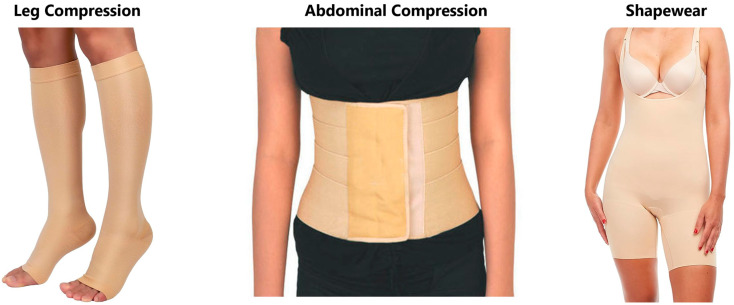
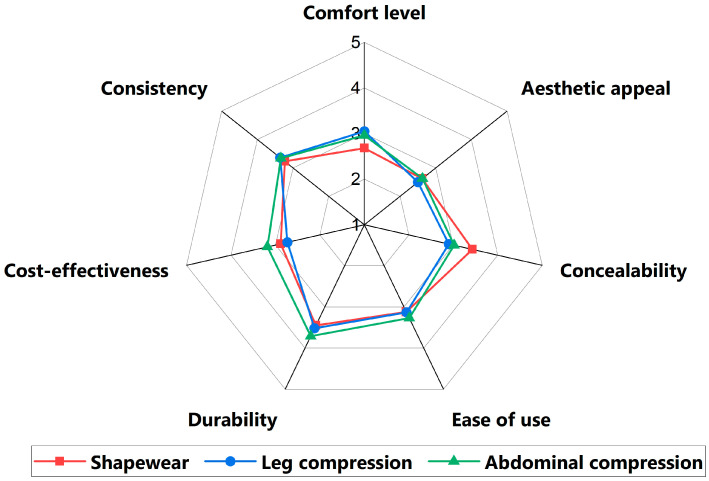
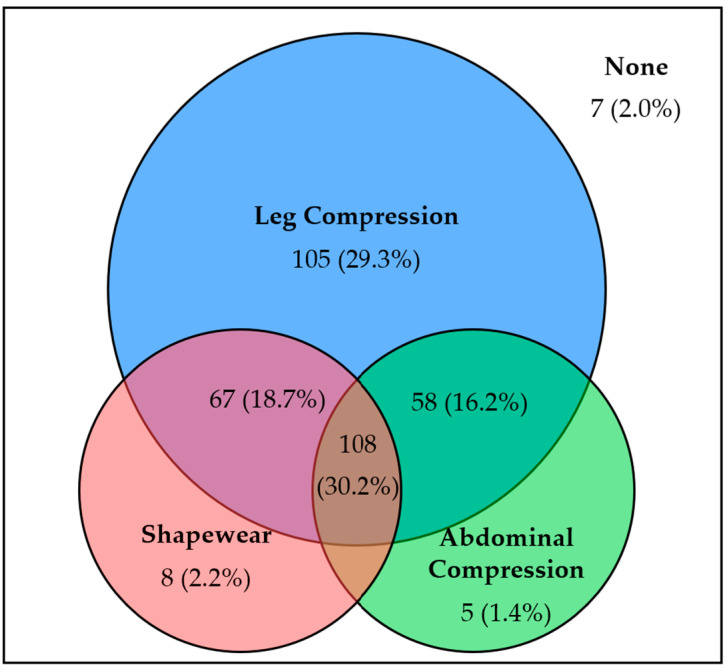
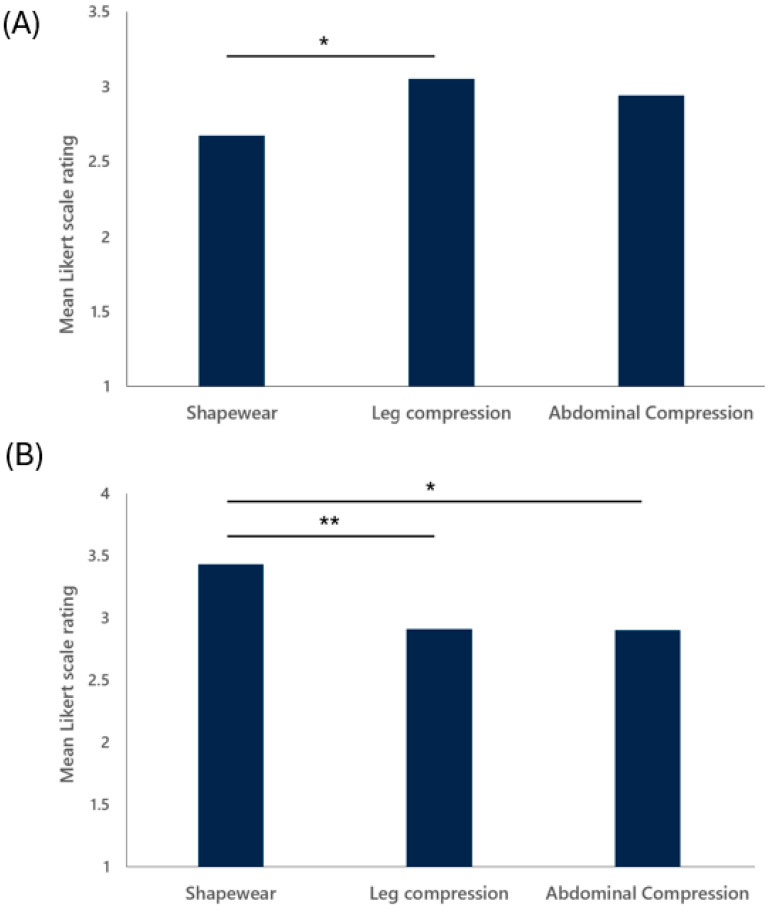
: Patients with postural orthostatic tachycardia syndrome (POTS) or neurogenic orthostatic hypotension (nOH) experience vertigo, confusion, and syncope. Compression garments help reduce venous pooling in these patients, thereby increasing cardiac output. We aimed to determine end-user opinions of compression products intended to alleviate symptoms for POTS and nOH. : This was a survey study sampling participants diagnosed with POTS or nOH. The data collected included demographics, medical history, and compression garments previously used. The participants rated their most frequently used garment across comfort, aesthetic appeal, ease of use, durability, cost-effectiveness, efficacy, and consistency on the Likert scale (1-5). One-way ANOVA was used to compare the design criteria ratings across garments. For all tests α = 0.05. : Of the 330 POTS and 28 nOH participants surveyed (mean age 37.9, mean BMI 27.5, 95.0% women, 90.5% White), 354 (98.9%) reported trying at least one compression garment since their diagnosis. The majority of participants reported using leg compression most frequently rather than shapewear or abdominal compression (65.4% vs. 20.1% vs. 13.4%, respectively). Approximately 67.0% of participants tried multiple product types. Shapewear was reported to have greater concealability compared to abdominal or leg compression garments (mean 3.43 vs. 2.90 vs. 2.91, respectively; < 0.01). Shapewear and abdominal compression were rated to be less comfortable compared to leg compression (2.67 vs. 2.94 vs. 3.05, respectively; = 0.03). : The existing compression products do not fully meet needs of individuals with POTS or nOH, as evidenced by participant ratings on multiple domains. There is potential consumer demand for novel adjustable abdominal compression garments that are low-profile and comfortable when disengaged.
体位性心动过速综合征(POTS)或神经源性直立性低血压(nOH)患者会出现眩晕、意识模糊和晕厥症状。压力衣有助于减少这些患者的静脉淤血,从而增加心输出量。我们旨在确定最终用户对旨在缓解POTS和nOH症状的压力产品的看法。
这是一项对被诊断为POTS或nOH的参与者进行抽样的调查研究。收集的数据包括人口统计学、病史以及先前使用过的压力衣。参与者根据李克特量表(1 - 5)对他们最常用的压力衣在舒适度、美观度、易用性、耐用性、性价比、功效和一致性方面进行评分。使用单因素方差分析来比较不同压力衣的设计标准评分。所有检验的α = 0.05。
在接受调查的330名POTS患者和28名nOH患者中(平均年龄37.9岁,平均BMI 27.5,95.0%为女性,90.5%为白人),354名(98.9%)报告自诊断以来至少尝试过一种压力衣。大多数参与者报告最常使用腿部压力衣,而非塑形衣或腹部压力衣(分别为65.4%、20.1%和13.4%)。约67.0%的参与者尝试过多种产品类型。据报告,与腹部或腿部压力衣相比,塑形衣具有更好的隐蔽性(平均分别为3.43、2.90和2.91;<0.01)。与腿部压力衣相比,塑形衣和腹部压力衣的舒适度评分较低(分别为2.67、2.94和3.05;=0.03)。
参与者在多个领域的评分表明,现有的压力产品不能完全满足POTS或nOH患者的需求。对于新型可调节腹部压力衣存在潜在的消费者需求,这种压力衣在松开时外形低调且穿着舒适。