Rahayu Maya, Hossain Md Biplob, Huda Samsul, Kodera Yuta, Ali Md Arshad, Nogami Yasuyuki
Graduate School of Environmental, Life, Natural Science and Technology, Okayama University, Okayama 700-8530, Japan.
Electrical Engineering Departement, Politeknik Negeri Bandung, Bandung 40559, Indonesia.
Sensors (Basel). 2024 Nov 21;24(23):7428. doi: 10.3390/s24237428.
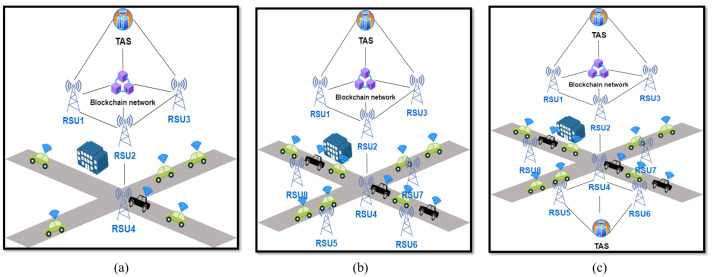
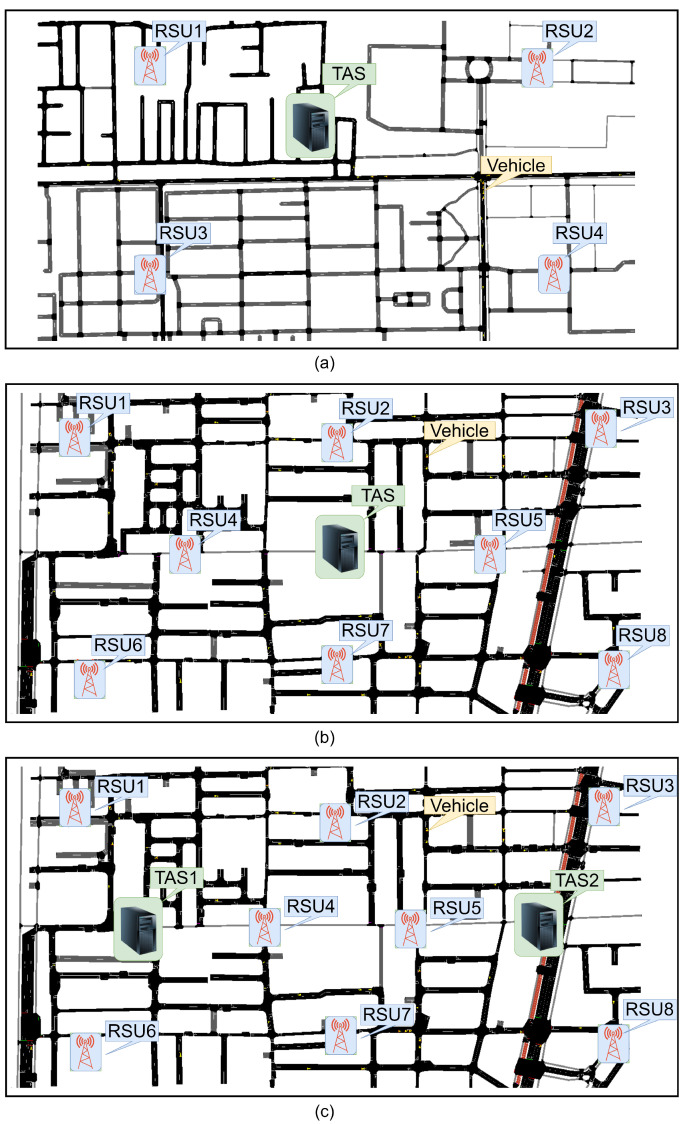
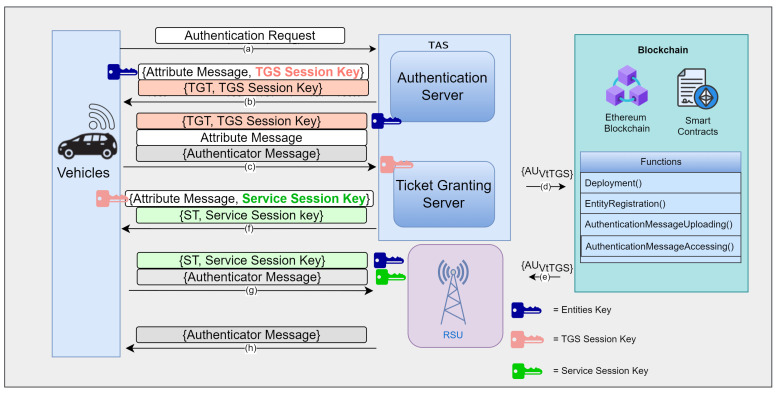
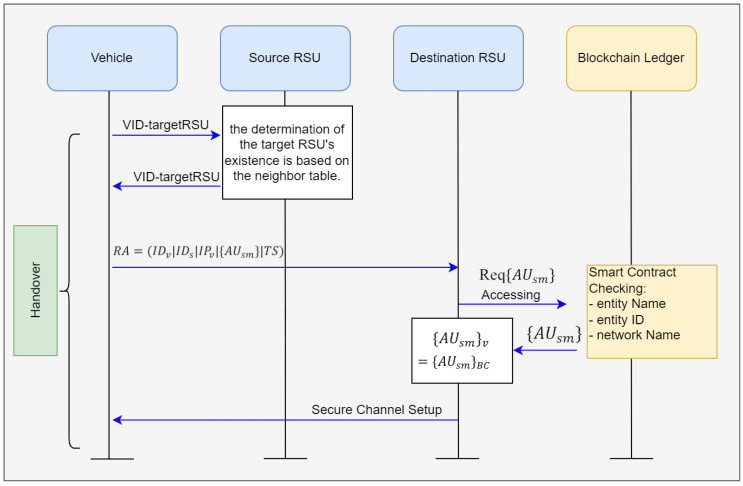
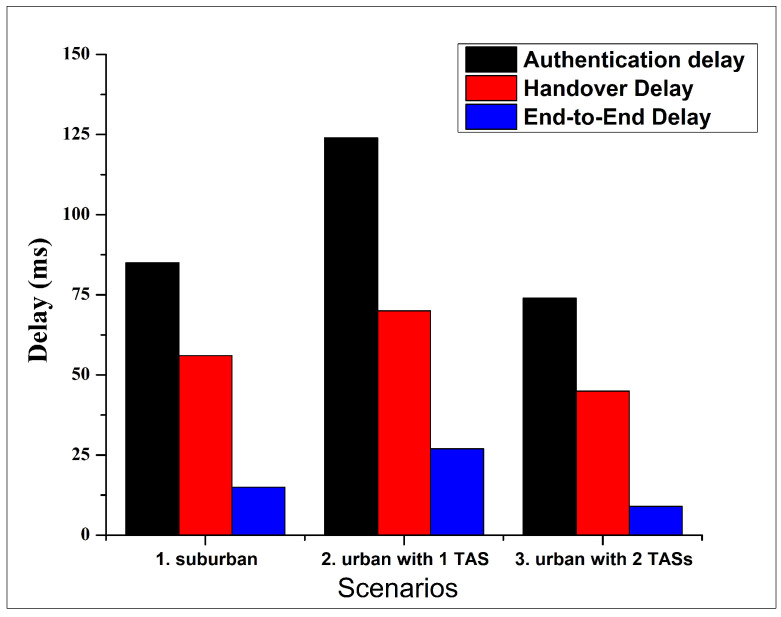
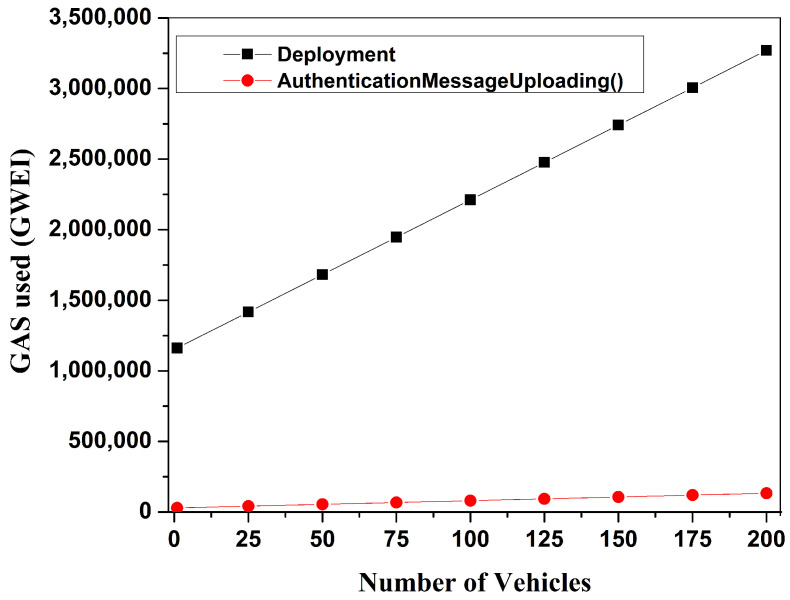
Vehicular Ad-Hoc Networks (VANETs) play an essential role in the intelligent transportation era, furnishing users with essential roadway data to facilitate optimal route selection and mitigate the risk of accidents. However, the network exposure makes VANETs susceptible to cyber threats, making authentication crucial for ensuring security and integrity. Therefore, joining entity verification is essential to ensure the integrity and security of communication in VANETs. However, to authenticate the entities, authentication time should be minimized to guarantee fast and secure authentication procedures. We propose an authentication system for VANETs using blockchain and Kerberos for storing authentication messages in a blockchain ledger accessible to Trusted Authentication Servers (TASs) and Roadside Units (RSUs). We evaluate the system in three diverse network scenarios: suburban, urban with 1 TAS, and urban with 2 TASs. The findings reveal that this proposal is applicable in diverse network scenarios to fulfill the network requirements, including authentication, handover, and end-to-end delay, considering an additional TAS for an increasing number of vehicles. The system is also practicable in storing the authentication message in blockchain considering the gas values and memory size for all scenarios.
车载自组网(VANETs)在智能交通时代发挥着至关重要的作用,为用户提供重要的道路数据,以促进最佳路线选择并降低事故风险。然而,网络暴露使VANETs容易受到网络威胁,这使得认证对于确保安全性和完整性至关重要。因此,加入实体验证对于确保VANETs通信的完整性和安全性至关重要。然而,为了对实体进行认证,应将认证时间减至最短,以保证快速且安全的认证过程。我们提出了一种用于VANETs的认证系统,该系统使用区块链和Kerberos,将认证消息存储在可信认证服务器(TASs)和路边单元(RSUs)可访问的区块链账本中。我们在三种不同的网络场景中评估该系统:郊区、有1个TAS的城市以及有2个TAS的城市。研究结果表明,考虑到随着车辆数量增加额外增加一个TAS,该方案适用于各种网络场景,以满足网络需求,包括认证、切换和端到端延迟。考虑到所有场景的燃气值和内存大小,该系统在将认证消息存储在区块链中也是可行的。