
基于粒子群优化极限学习机模型的埋地钢管爆破振动速度预测
Prediction of Blast Vibration Velocity of Buried Steel Pipe Based on PSO-LSSVM Model.
作者信息
Zhang Hongyu, Tu Shengwu, Nie Senlin, Ming Weihua
机构信息
Hubei Key Laboratory of Blasting Engineering, Jianghan University, Wuhan 430056, China.
State Key Laboratory of Precision Blasting, Jianghan University, Wuhan 430056, China.
出版信息
Sensors (Basel). 2024 Nov 21;24(23):7437. doi: 10.3390/s24237437.
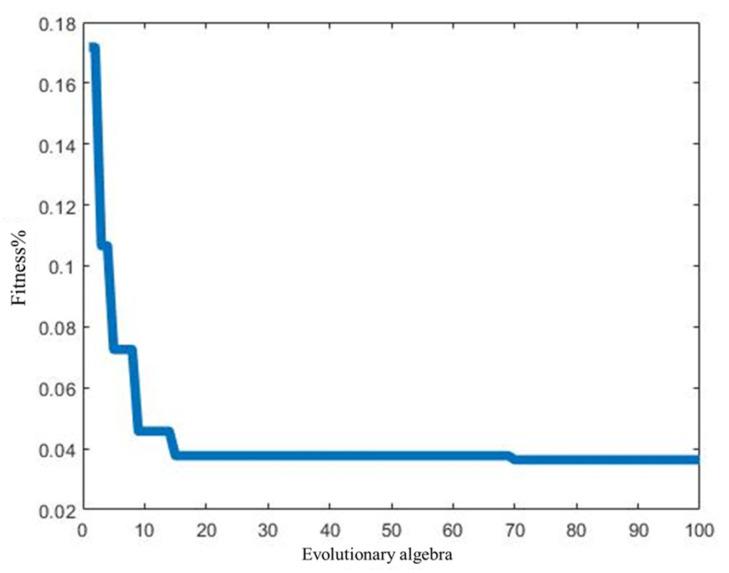
In order to ensure the safe operation of adjacent buried pipelines under blast vibration, it is of great practical engineering significance to accurately predict the peak vibration velocity ofburied pipelines under blasting loads. Relying on the test results of the buried steel pipe blast model test, a sensitivity analysis of relevant influencing factors was carried out by using the gray correlation analysis method. A least squares support vector machine (LS-SVM) model was established to predict the peak vibration velocity of the pipeline and determine the best parameter combination in the LS-SVM model through a local particle swarm optimization (PSO), and the results of the PSO-LSSVM model were predicted. These were compared with BP neural network model and Sa's empirical formula. The results show that the fitting correlation coefficient (R2), root mean square error (RMSE), average relative error (MRE), and Nash coefficient (NSE) of the PSO-LSSVM model for the prediction of pipeline peak vibration velocity are 91.51%, 2.95%, 8.69%, and 99.03%, showing that the PSO-LSSVM model has a higher prediction accuracy and better generalization ability, which provides a new idea for the vibration velocity prediction of buried pipelines under complex blasting conditions.
为确保相邻埋地管道在爆破振动下的安全运行,准确预测爆破荷载作用下埋地管道的峰值振动速度具有重大的实际工程意义。依托埋地钢管爆破模型试验的测试结果,采用灰色关联分析法对相关影响因素进行敏感性分析。建立了最小二乘支持向量机(LS-SVM)模型来预测管道的峰值振动速度,并通过局部粒子群优化算法(PSO)确定LS-SVM模型中的最佳参数组合,进而对PSO-LSSVM模型的结果进行预测。将这些结果与BP神经网络模型和萨氏经验公式的结果进行比较。结果表明,PSO-LSSVM模型预测管道峰值振动速度的拟合相关系数(R2)、均方根误差(RMSE)、平均相对误差(MRE)和纳什系数(NSE)分别为91.51%、2.95%、8.69%和99.03%,表明PSO-LSSVM模型具有较高的预测精度和较好的泛化能力,为复杂爆破条件下埋地管道振动速度的预测提供了新思路。



 Zotero 插件