Wang Shaoxin, Wang Zuolei, Liu Dongxu, Dong Peng, Min Jian, Luo Ziren, Qi Keqi, Lei Jungang
Center for Gravitational Wave Experiment, National Microgravity Laboratory, Institute of Mechanics, Chinese Academy of Sciences (CAS), Beijing 100190, China.
Taiji Laboratory for Gravitational Wave Universe (Beijing/Hangzhou), University of Chinese Academy of Sciences (UCAS), Beijing 100049, China.
Sensors (Basel). 2024 Dec 6;24(23):7816. doi: 10.3390/s24237816.
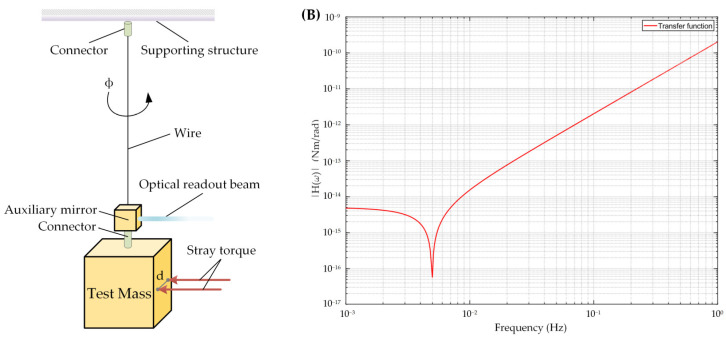
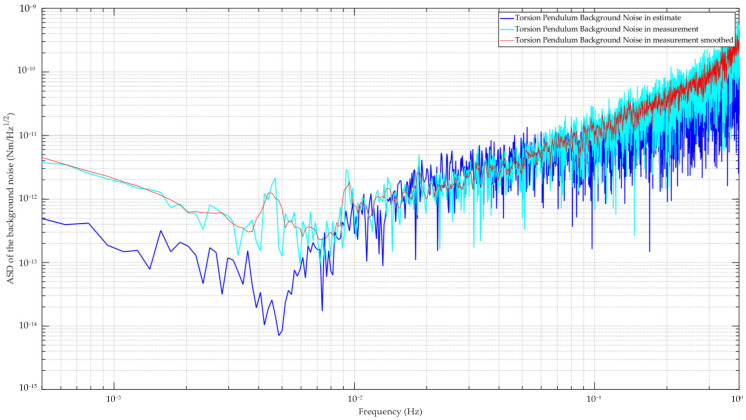
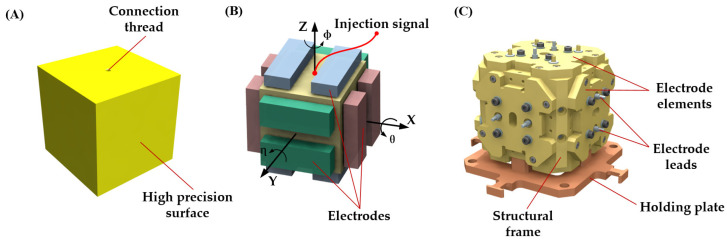
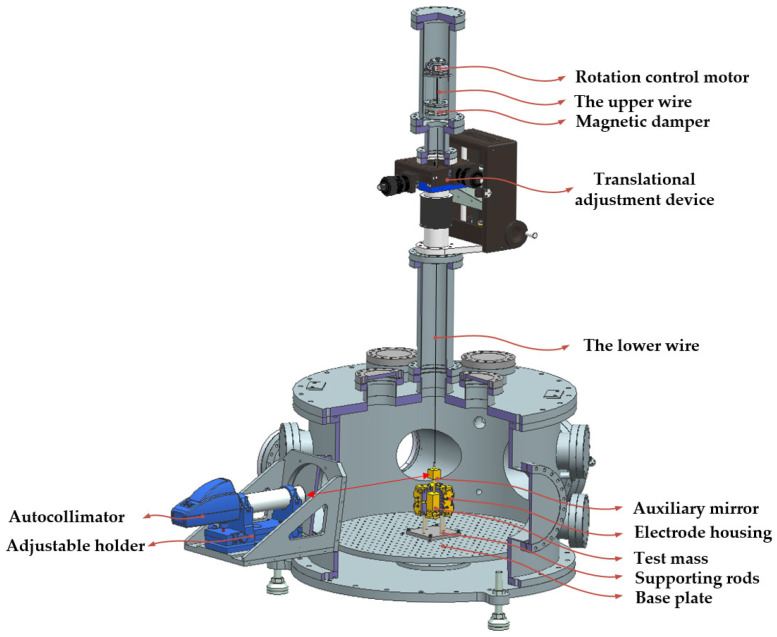
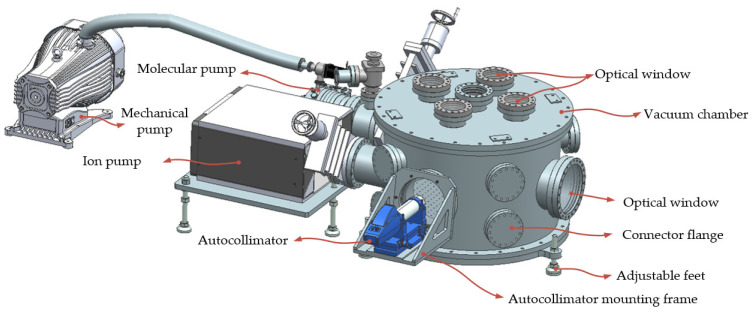
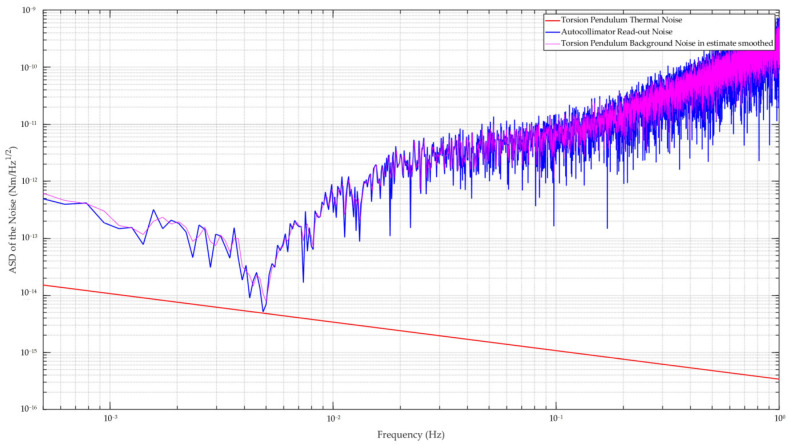
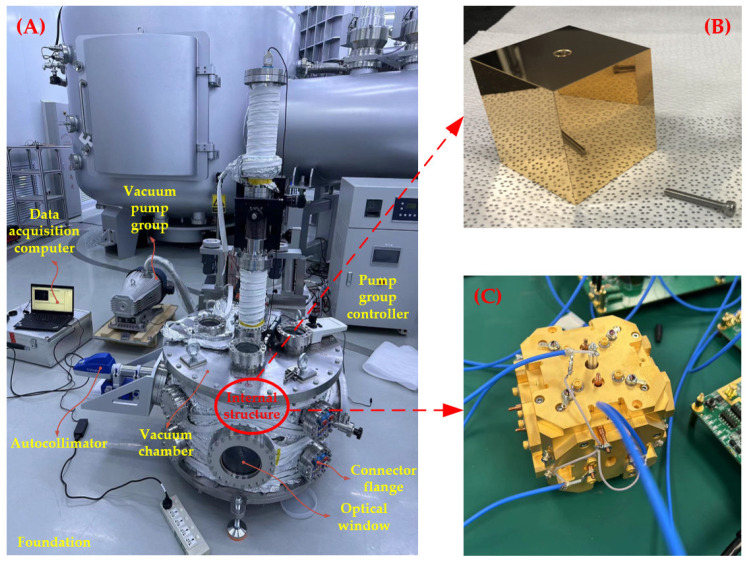
The precise movement of the test mass along a geodesic is crucial for gravitational wave detection in space. To maintain this motion, the core payload-inertial sensor incorporates multiple functional units designed to mitigate various sources of stray force noise affecting the test mass. Understanding the limits of these noise sources is essential for enhancing the inertial sensor system design. Additionally, thorough ground-based verification of these functional units is necessary to ensure their reliability for space missions. To address these challenges, we developed a low-frequency torsion pendulum apparatus that utilizes a commercial autocollimator as the optical readout element for testing this type of space inertial sensor. This paper provides a comprehensive overview of the apparatus's operating principle, structural characteristics, and the results of laboratory tests of its background noise. Experimental data demonstrate that the torsion pendulum achieves a sensitivity of 1 × 10 Nm/Hz within the measurement band from 1 mHz to 0.1 Hz, confirming its suitability for various inertial sensor tests. Furthermore, the insights gained from constructing the torsion pendulum will inform future system upgrades.
测试质量块沿测地线的精确运动对于空间引力波探测至关重要。为维持这种运动,核心有效载荷惯性传感器包含多个功能单元,这些功能单元旨在减轻影响测试质量块的各种杂散力噪声源。了解这些噪声源的极限对于改进惯性传感器系统设计至关重要。此外,对这些功能单元进行全面的地面验证对于确保其在太空任务中的可靠性是必要的。为应对这些挑战,我们开发了一种低频扭摆装置,该装置利用商用自准直仪作为光学读出元件来测试此类空间惯性传感器。本文全面概述了该装置的工作原理、结构特点及其背景噪声的实验室测试结果。实验数据表明,扭摆在1毫赫兹至0.1赫兹的测量频段内实现了1×10牛米/赫兹的灵敏度,证实了其适用于各种惯性传感器测试。此外,构建扭摆所获得的见解将为未来的系统升级提供参考。