Xi Xinsheng, Yan Guanghui, Guo Baihong, Jin Gang, Guo Chenming, Feng Bin
Department of Urology, Gansu Provincial Hospital, Lanzhou, China.
Department of Ophthalmology, The First Hospital of Lanzhou University, Lanzhou, China.
Medicine (Baltimore). 2024 Dec 13;103(50):e40939. doi: 10.1097/MD.0000000000040939.
Pheochromocytomas typically arise in the adrenal medulla, whereas ectopic pheochromocytomas/paragangliomas commonly occur near the abdominal aorta, bladder, mediastinum, and head. Diaphragmatic pheochromocytomas are exceedingly rare, and there is limited surgical experience with their treatment.
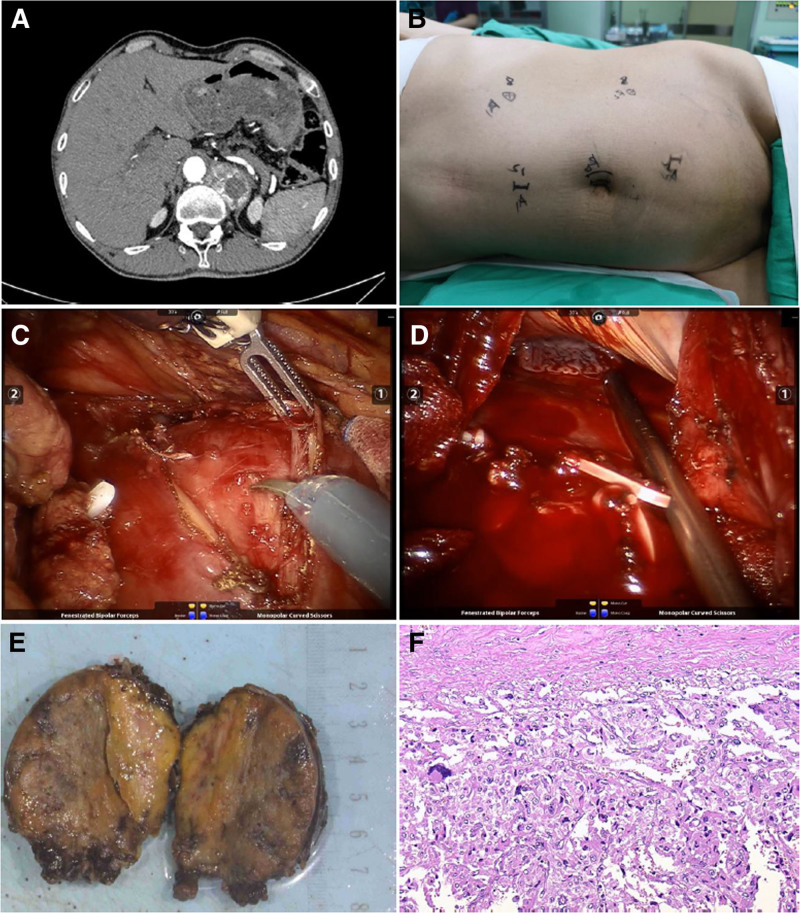
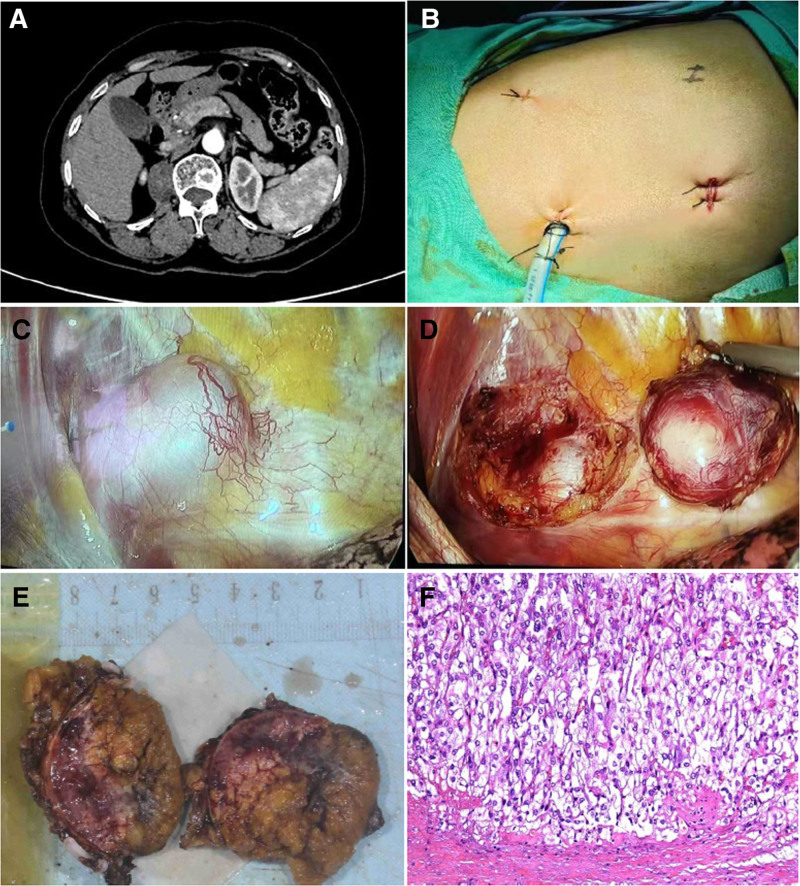
In Case A, the subject is a 45-year-old male, while in Case B, the subject is a 59-year-old female. Both patients present with a history of paroxysmal hypertension. Computed tomography imaging revealed the presence of diaphragmatic tumors in both patients. The tumor in Case A was observed in the left diaphragm, while the tumor in Case B was located in the right diaphragm.
Two patients were diagnosed with diaphragmatic pheochromocytoma on the basis of disease progression, imaging, endocrinological assessment and postoperative histopathological examination.
Both patients received the same standardized preoperative preparation, which included hypotensive therapy and intravenous rehydration. Subsequently, Case A underwent a transabdominal robotic laparoscopic surgical resection, while Case B underwent a transthoracic thoracoscopic surgical resection.
Both patients demonstrated a favorable recovery trajectory and exhibited stable blood pressure at the 3-month follow-up.
This report serves to remind the reader that the transthoracic approach to diaphragmatic pheochromocytoma may prove to be more advantageous than the transperitoneal approach. Additionally, precise preoperative localization of the tumor and careful intraoperative monitoring and assessment are imperative to achieve favorable outcomes.
嗜铬细胞瘤通常起源于肾上腺髓质,而异位嗜铬细胞瘤/副神经节瘤常见于腹主动脉、膀胱、纵隔和头部附近。膈部嗜铬细胞瘤极为罕见,其治疗的手术经验有限。
病例A为一名45岁男性,病例B为一名59岁女性。两名患者均有阵发性高血压病史。计算机断层扫描成像显示两名患者均存在膈部肿瘤。病例A的肿瘤位于左膈,病例B的肿瘤位于右膈。
根据疾病进展、影像学、内分泌评估及术后组织病理学检查,两名患者均被诊断为膈部嗜铬细胞瘤。
两名患者均接受了相同的标准化术前准备,包括降压治疗和静脉补液。随后,病例A接受了经腹机器人腹腔镜手术切除,病例B接受了经胸胸腔镜手术切除。
两名患者恢复情况良好,在3个月随访时血压稳定。
本报告旨在提醒读者,对于膈部嗜铬细胞瘤,经胸手术方法可能比经腹手术方法更具优势。此外,术前精确的肿瘤定位以及术中仔细的监测和评估对于取得良好疗效至关重要。