He Chongwu, Peng Meixi, Zeng Xiaoqiang, Dong Hanzhi, Sun Zhengkui, Xu Jiawei, Liu Manran, Liu Liyan, Huang Yanxiao, Peng Zhiqiang, Qiu Yu-An, Jiang Chunling, Xu Bin, Yu Tenghua
Department of Breast Surgery, Jiangxi Cancer Hospital, The Second Affiliated Hospital of Nanchang Medical College, Jiangxi Clinical Research Center for Cancer, JXHC Key Laboratory of Tumor Microenvironment and Immunoregulation, Jiangxi Key Laboratory of Tumour Metastasis of Jiangxi Health Commission, Nanchang, China.
Department of Radiological Medicine, School of Basic Medical Sciences, Chongqing Medical University, Chongqing, China.
Clin Transl Med. 2024 Dec;14(12):e70131. doi: 10.1002/ctm2.70131.
Triple-negative breast cancer (TNBC) is a particularly aggressive type of breast cancer, known for its lack of effective treatments and unfavorable prognosis. The G protein-coupled estrogen receptor (GPER), a novel estrogen receptor, is linked to increased malignancy in various cancers. However, its involvement in the metabolic regulation of cancer-associated fibroblasts (CAFs), a key component in the tumour microenvironment, remains largely unexplored. This study investigates how GPER influences the metabolic interaction between CAFs and TNBC cells, aiming to identify potential therapeutic targets.
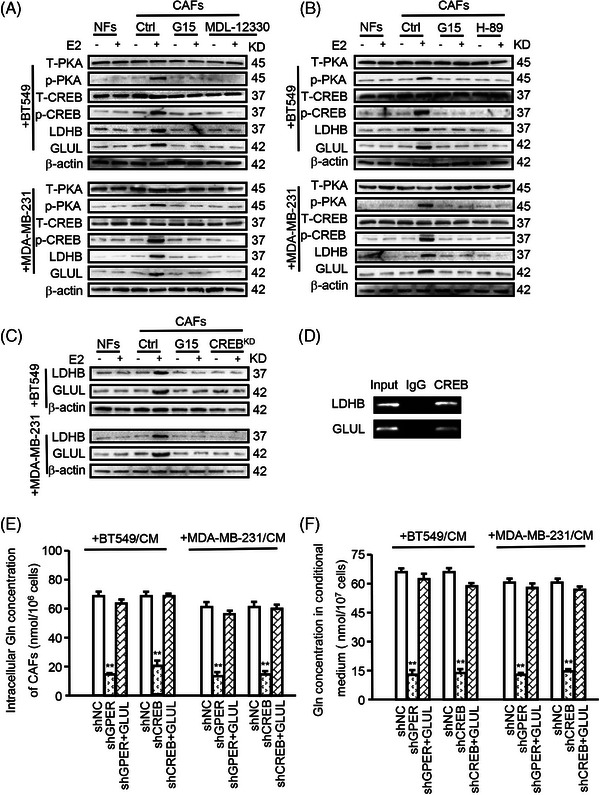
The co-culture system is performed to examine the interaction between CAFs and TNBC cells, with a focus on GPER-mediated glutamine production and release by CAFs and its subsequent uptake and utilization by TNBC cells. The definite roles of microenvironmental GPER/cAMP/PKA/CREB signalling in regulating the expression of glutamine synthetase (GLUL) and lactate dehydrogenase B (LDHB) are further investigated.
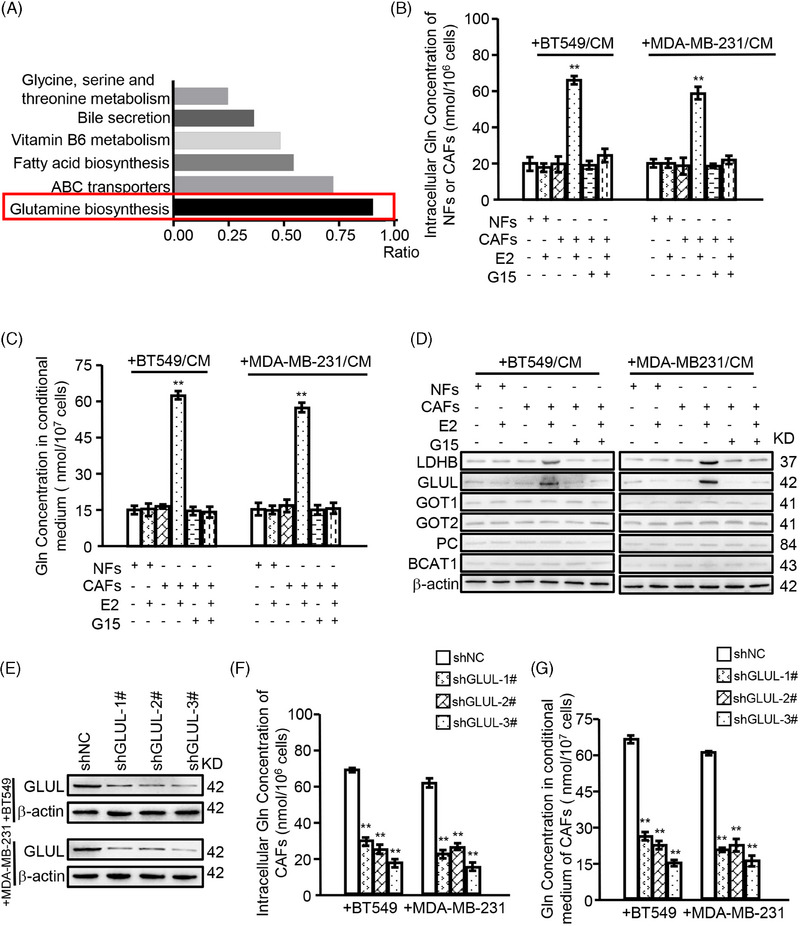
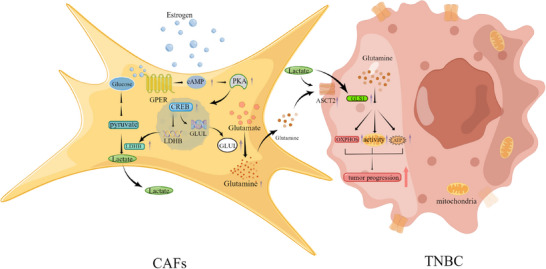
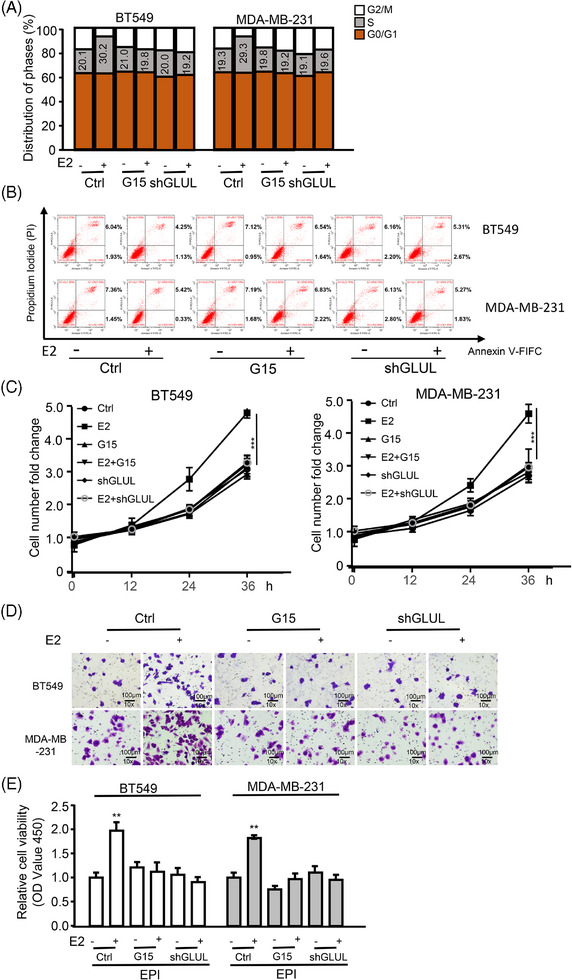
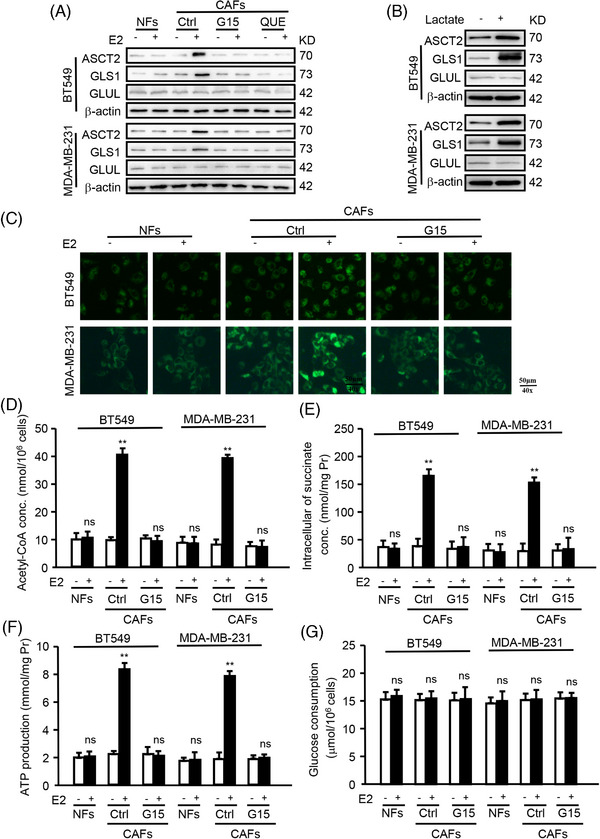
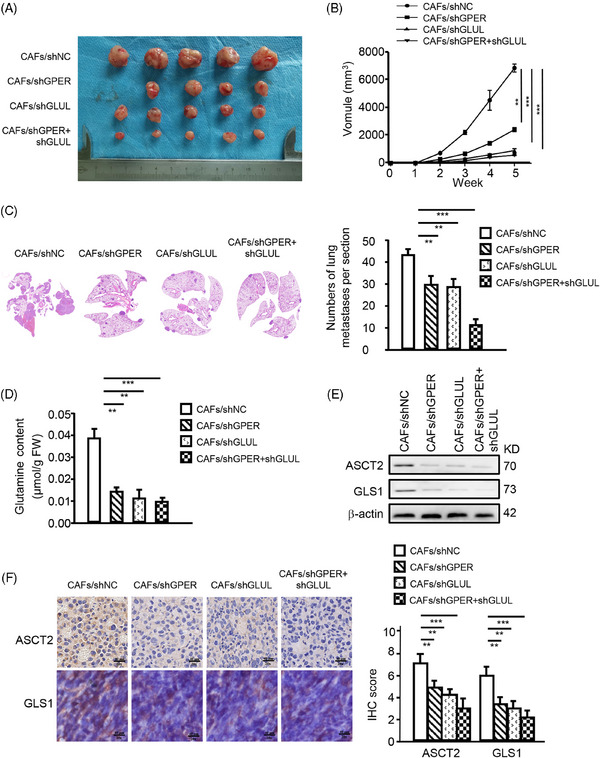
Our findings reveal that estrogen-activated GPER in CAFs significantly upregulates the expression of GLUL and LDHB, leading to increased glutamine production. This glutamine is then secreted into the extracellular matrix and absorbed by TNBC cells, enhancing their viability, motility, and chemoresistance both in vitro and in vivo. TNBC cells further metabolize the glutamine through the glutamine transporter (ASCT2) and glutaminase (GLS1) axes, which, in turn, promote mitochondrial activity and tumour progression.
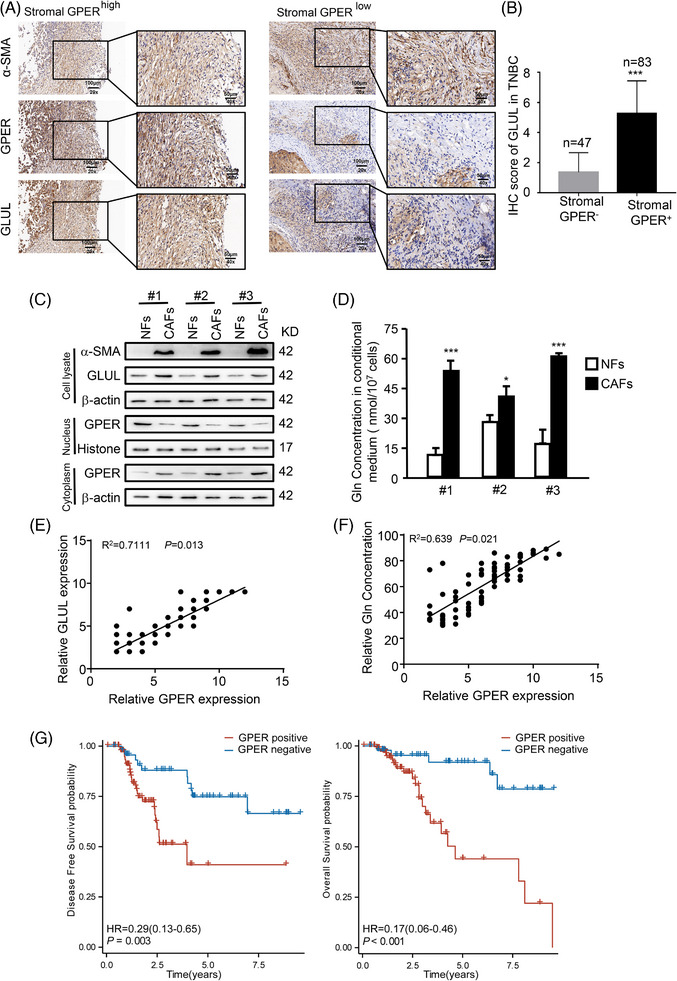
The study identifies GPER as a critical mediator of metabolic coupling between CAFs and TNBC cells, primarily through glutamine metabolism. Targeting the estrogen/GPER/glutamine signalling axis in CAFs offers a promising therapeutic strategy to inhibit TNBC progression and improve patient outcomes. This novel insight into the tumour microenvironment highlights the potential of metabolic interventions in treating TNBC.
Estrogen-activated GPER in CAFs enhances GLUL and LDHB expression via the cAMP/PKA/CREB signalling, facilitating glutamine production and utilization. Microenvironmental GPER-induced glutamine serves as a crucial mediator of metabolic coupling between CAFs and TNBC cells, boosting tumour progression by enhancing mitochondrial function. Targeting the glutamine metabolic coupling triggered by estrogen/GPER/GLUL signalling in CAFs is a promising therapeutic strategy for TNBC treatment.
三阴性乳腺癌(TNBC)是一种侵袭性特别强的乳腺癌类型,因其缺乏有效治疗方法且预后不佳而闻名。G蛋白偶联雌激素受体(GPER)是一种新型雌激素受体,与多种癌症的恶性程度增加有关。然而,其在肿瘤微环境的关键组成部分——癌症相关成纤维细胞(CAF)的代谢调节中的作用,在很大程度上仍未得到探索。本研究调查了GPER如何影响CAF与TNBC细胞之间的代谢相互作用,旨在确定潜在的治疗靶点。
采用共培养系统来检测CAF与TNBC细胞之间的相互作用,重点关注GPER介导的CAF产生和释放谷氨酰胺以及TNBC细胞随后对其摄取和利用的情况。进一步研究微环境中的GPER/cAMP/PKA/CREB信号在调节谷氨酰胺合成酶(GLUL)和乳酸脱氢酶B(LDHB)表达中的具体作用。
我们的研究结果表明,CAF中雌激素激活的GPER显著上调GLUL和LDHB的表达,导致谷氨酰胺生成增加。然后这种谷氨酰胺被分泌到细胞外基质中并被TNBC细胞吸收,在体外和体内均增强了它们的活力、迁移能力和化疗耐药性。TNBC细胞通过谷氨酰胺转运体(ASCT2)和谷氨酰胺酶(GLS1)轴进一步代谢谷氨酰胺,这反过来又促进了线粒体活性和肿瘤进展。
该研究确定GPER是CAF与TNBC细胞之间代谢偶联的关键介质,主要通过谷氨酰胺代谢实现。靶向CAF中的雌激素/GPER/谷氨酰胺信号轴提供了一种有前景的治疗策略,可抑制TNBC进展并改善患者预后。这种对肿瘤微环境的新见解突出了代谢干预在治疗TNBC中的潜力。
CAF中雌激素激活的GPER通过cAMP/PKA/CREB信号增强GLUL和LDHB表达,促进谷氨酰胺的产生和利用。微环境中GPER诱导的谷氨酰胺是CAF与TNBC细胞之间代谢偶联的关键介质,通过增强线粒体功能促进肿瘤进展。靶向CAF中由雌激素/GPER/GLUL信号触发的谷氨酰胺代谢偶联是TNBC治疗的一种有前景的治疗策略。