Roe James M, Vidal-Piñeiro Didac, Sørensen Øystein, Grydeland Håkon, Leonardsen Esten H, Iakunchykova Olena, Pan Mengyu, Mowinckel Athanasia, Strømstad Marie, Nawijn Laura, Milaneschi Yuri, Andersson Micael, Pudas Sara, Bråthen Anne Cecilie Sjøli, Kransberg Jonas, Falch Emilie Sogn, Øverbye Knut, Kievit Rogier A, Ebmeier Klaus P, Lindenberger Ulman, Ghisletta Paolo, Demnitz Naiara, Boraxbekk Carl-Johan, Drevon Christian A, Penninx Brenda, Bertram Lars, Nyberg Lars, Walhovd Kristine B, Fjell Anders M, Wang Yunpeng
Center for Lifespan Changes in Brain and Cognition (LCBC), Department of Psychology, University of Oslo, Oslo, Norway.
Norwegian Centre for Mental Disorders Research (NORMENT), Oslo University Hospital & Institute of Clinical Medicine, University of Oslo, Oslo, Norway.
Nat Commun. 2024 Dec 17;15(1):10651. doi: 10.1038/s41467-024-53548-z.
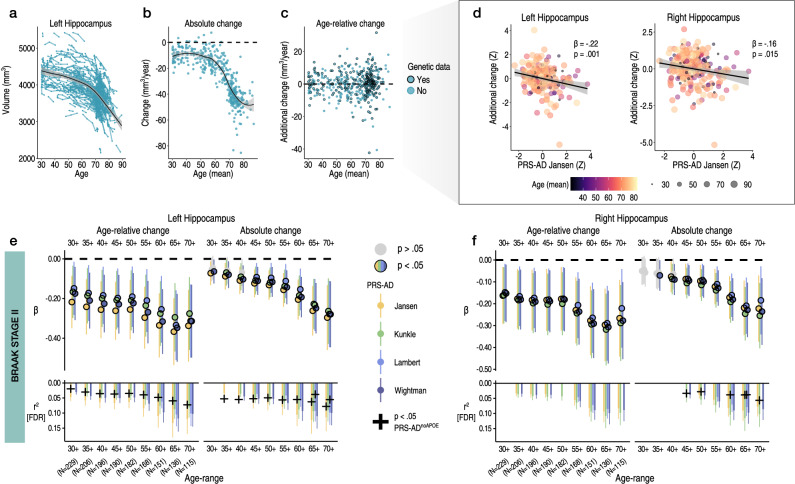
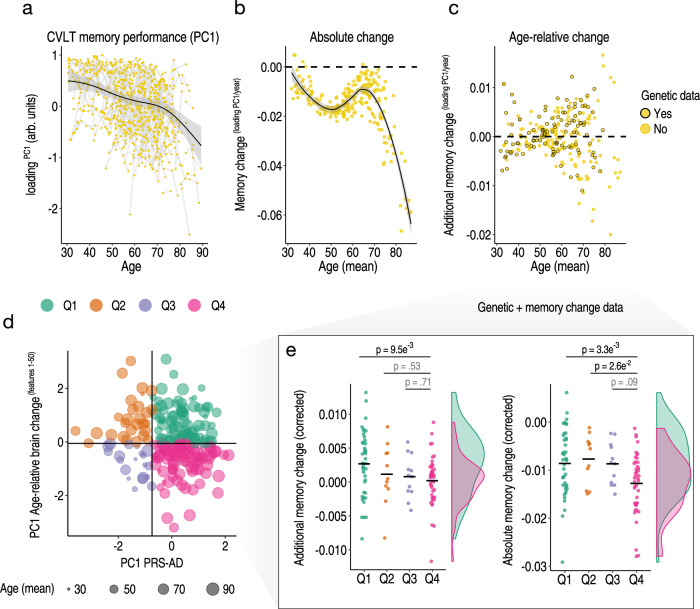
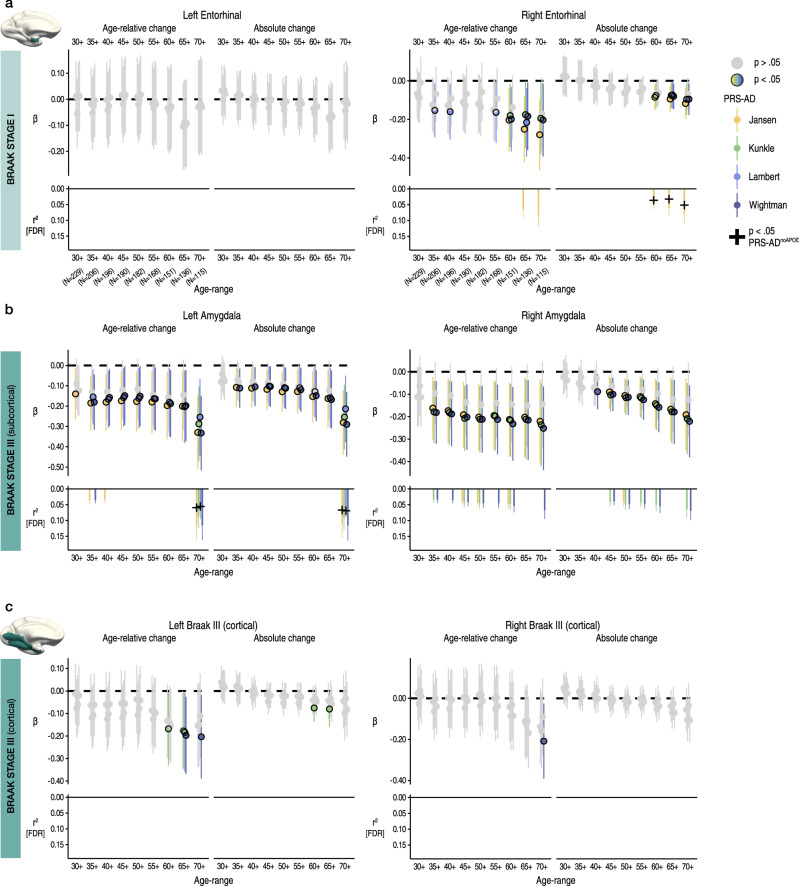
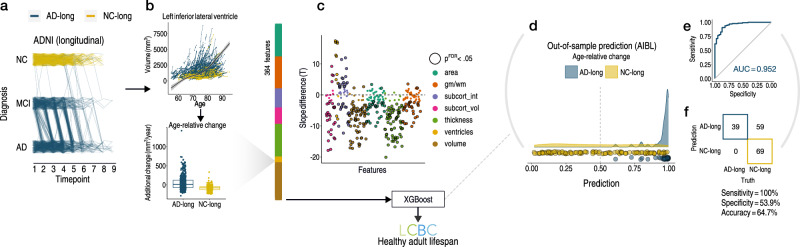
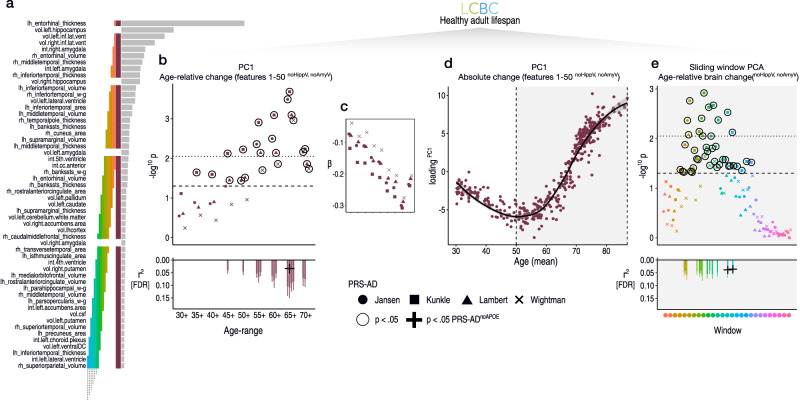
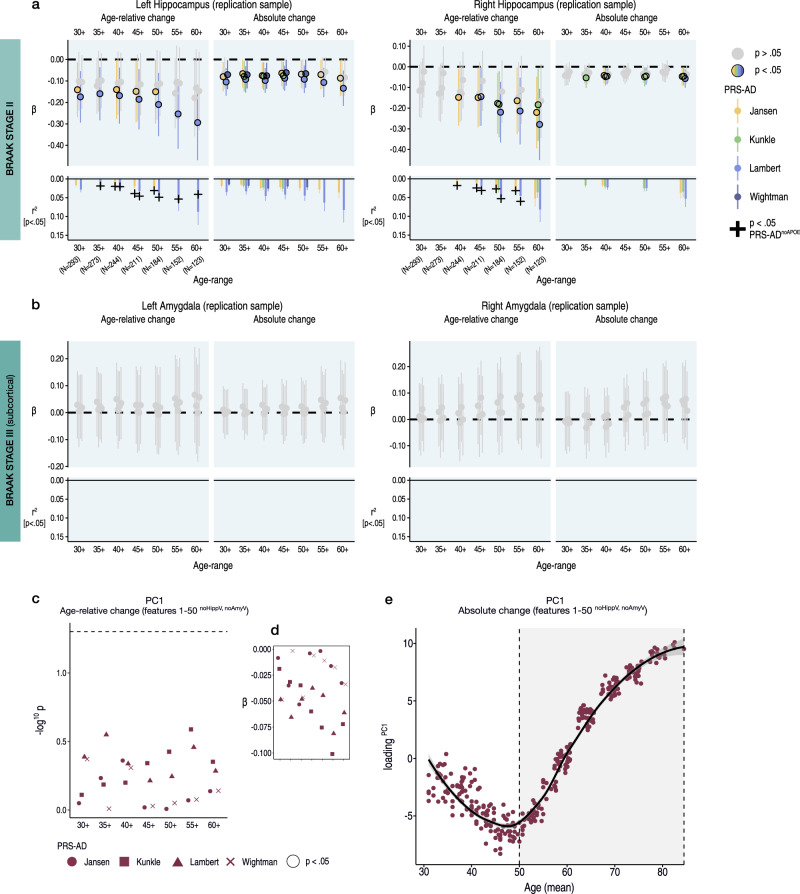
Throughout adulthood and ageing our brains undergo structural loss in an average pattern resembling faster atrophy in Alzheimer's disease (AD). Using a longitudinal adult lifespan sample (aged 30-89; 2-7 timepoints) and four polygenic scores for AD, we show that change in AD-sensitive brain features correlates with genetic AD-risk and memory decline in healthy adults. We first show genetic risk links with more brain loss than expected for age in early Braak regions, and find this extends beyond APOE genotype. Next, we run machine learning on AD-control data from the Alzheimer's Disease Neuroimaging Initiative using brain change trajectories conditioned on age, to identify AD-sensitive features and model their change in healthy adults. Genetic AD-risk linked with multivariate change across many AD-sensitive features, and we show most individuals over age ~50 are on an accelerated trajectory of brain loss in AD-sensitive regions. Finally, high genetic risk adults with elevated brain change showed more memory decline through adulthood, compared to high genetic risk adults with less brain change. Our findings suggest quantitative AD risk factors are detectable in healthy individuals, via a shared pattern of ageing- and AD-related neurodegeneration that occurs along a continuum and tracks memory decline through adulthood.
在整个成年期和衰老过程中,我们的大脑会经历结构上的损失,其平均模式类似于阿尔茨海默病(AD)中更快的萎缩。我们使用一个纵向的成年寿命样本(年龄在30-89岁之间;有2-7个时间点)以及四个AD多基因评分,表明对AD敏感的大脑特征变化与健康成年人的遗传AD风险和记忆衰退相关。我们首先表明,遗传风险与早期Braak区域中比预期年龄更多的脑容量损失有关,并且发现这种关联超出了APOE基因型。接下来,我们对来自阿尔茨海默病神经影像倡议(Alzheimer's Disease Neuroimaging Initiative)的AD对照数据进行机器学习,使用以年龄为条件的脑变化轨迹,以识别对AD敏感的特征并对其在健康成年人中的变化进行建模。遗传AD风险与许多对AD敏感的特征的多变量变化相关,并且我们表明大多数年龄超过约50岁的个体在对AD敏感区域的脑容量损失上处于加速轨迹。最后,与脑变化较少的高遗传风险成年人相比,脑变化升高的高遗传风险成年人在成年期表现出更多的记忆衰退。我们的研究结果表明,通过一种与衰老和AD相关的神经退行性变的共享模式,可以在健康个体中检测到定量的AD风险因素,这种模式沿着一个连续体发生,并在成年期跟踪记忆衰退。