Muñoz-Martín Noelia, Simon-Chica Ana, Díaz-Díaz Covadonga, Cadenas Vanessa, Temiño Susana, Esteban Isaac, Ludwig Andreas, Schormair Barbara, Winkelmann Juliane, Olejnickova Veronika, Sedmera David, Filgueiras-Rama David, Torres Miguel
Cardiovascular Regeneration Program, Centro Nacional de Investigaciones Cardiovasculares (CNIC), 3 Melchor Fernández Almagro, Madrid 28029, Spain.
Novel Arrhythmogenic Mechanisms Program, Centro Nacional de Investigaciones Cardiovasculares (CNIC), 3 Melchor Fernández Almagro, Madrid 28029, Spain.
Cardiovasc Res. 2025 Apr 22;121(2):311-323. doi: 10.1093/cvr/cvae258.
The cardiac conduction system (CCS) is progressively specified during development by interactions among a discrete number of transcription factors (TFs) that ensure its proper patterning and the emergence of its functional properties. Meis genes encode homeodomain TFs with multiple roles in mammalian development. In humans, Meis genes associate with congenital cardiac malformations and alterations of cardiac electrical activity; however, the basis for these alterations has not been established. Here, we studied the role of Meis TFs in cardiomyocyte development and function during mouse development and adult life.
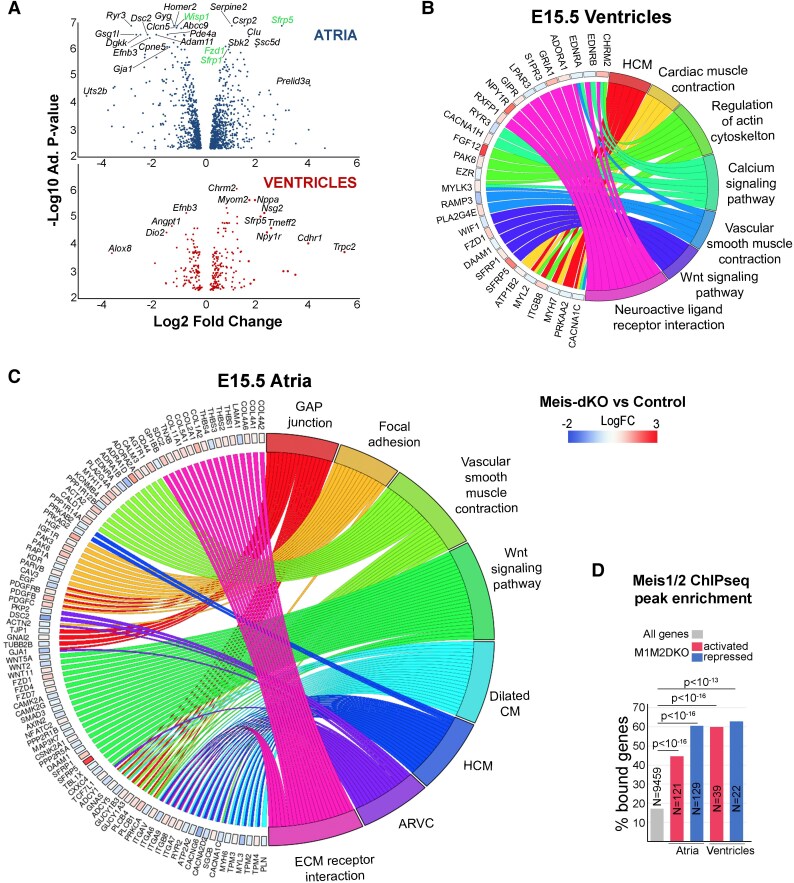
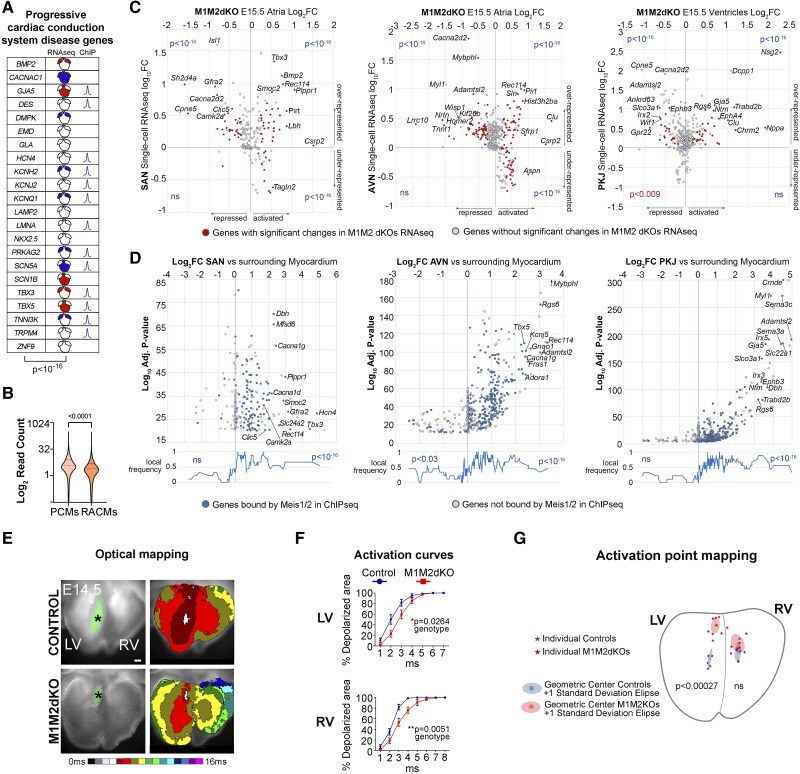
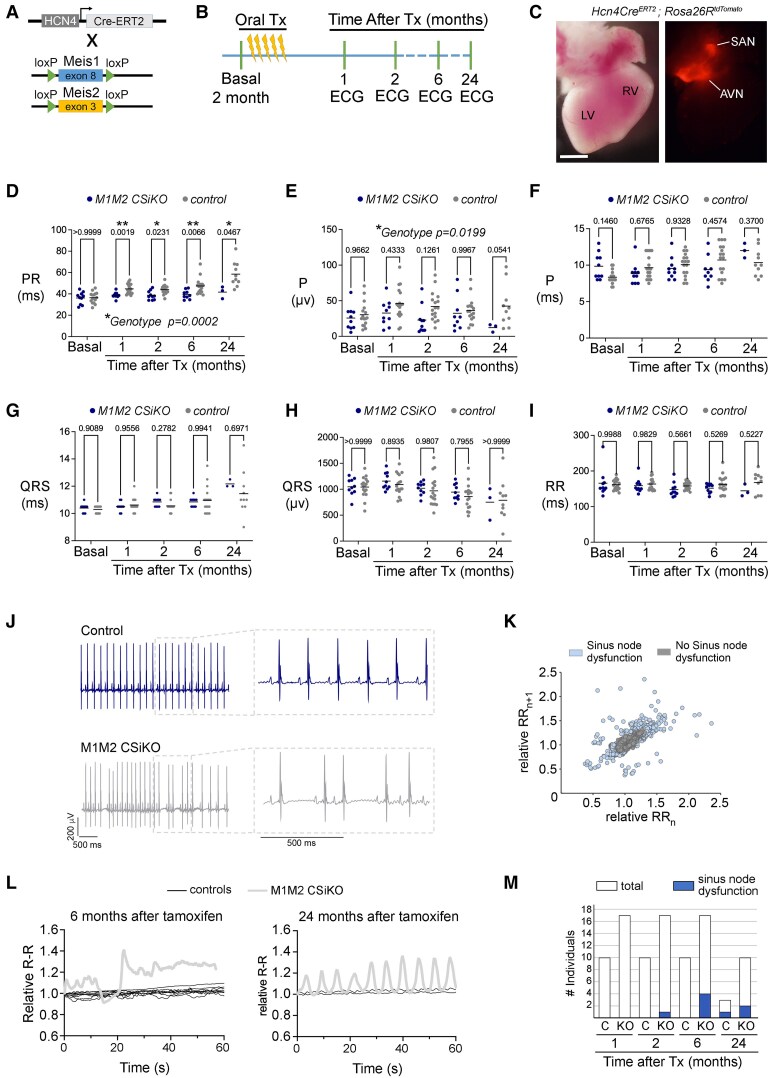
We studied Meis1 and Meis2 conditional deletion mouse models that allowed cardiomyocyte-specific elimination of Meis function during development and inducible elimination of Meis function in cardiomyocytes of the adult CCS. We studied cardiac anatomy, contractility, and conduction. We report that Meis factors are global regulators of cardiac conduction, with a predominant role in the CCS. While constitutive Meis deletion in cardiomyocytes led to congenital malformations of the arterial pole and atria, as well as defects in ventricular conduction, Meis elimination in cardiomyocytes of the adult CCS produced sinus node dysfunction and delayed atrio-ventricular conduction. Molecular analyses unravelled Meis-controlled molecular pathways associated with these defects. Finally, we studied in transgenic mice the activity of a Meis1 human enhancer related to an single-nucleotide polymorphism (SNP) associated by Genome-wide association studies (GWAS) to PR (P and R waves of the electrocardiogram) elongation and found that the transgene drives expression in components of the atrio-ventricular conduction system.
Our study identifies Meis TFs as essential regulators of the establishment of cardiac conduction function during development and its maintenance during adult life. In addition, we generated animal models and identified molecular alterations that will ease the study of Meis-associated conduction defects and congenital malformations in humans.
心脏传导系统(CCS)在发育过程中通过少数转录因子(TFs)之间的相互作用逐步确定,这些转录因子确保其正确的模式形成及其功能特性的出现。Meis基因编码在哺乳动物发育中具有多种作用的同源结构域TFs。在人类中,Meis基因与先天性心脏畸形和心脏电活动改变有关;然而,这些改变的基础尚未确定。在此,我们研究了Meis TFs在小鼠发育和成年期心肌细胞发育及功能中的作用。
我们研究了Meis1和Meis2条件性缺失小鼠模型,该模型允许在发育过程中特异性消除心肌细胞中的Meis功能,并在成年CCS的心肌细胞中诱导消除Meis功能。我们研究了心脏解剖结构、收缩性和传导。我们报告Meis因子是心脏传导的全局调节因子,在CCS中起主要作用。虽然心肌细胞中组成型Meis缺失导致动脉极和心房的先天性畸形以及心室传导缺陷,但成年CCS心肌细胞中Meis的消除导致窦房结功能障碍和房室传导延迟。分子分析揭示了与这些缺陷相关的Meis控制的分子途径。最后,我们在转基因小鼠中研究了与全基因组关联研究(GWAS)关联的单核苷酸多态性(SNP)相关的Meis1人类增强子的活性,该SNP与PR(心电图的P波和R波)延长有关,发现转基因驱动房室传导系统成分中的表达。
我们的研究确定Meis TFs是发育过程中心脏传导功能建立及其在成年期维持的关键调节因子。此外,我们生成了动物模型并确定了分子改变,这将有助于研究人类中与Meis相关的传导缺陷和先天性畸形。