Campbell Adana-Christine, Kuonqui Kevin G, Ashokan Gopika, Rubin Jonathan, Shin Jinyeon, Pollack Bracha L, Roberts Arielle, Sarker Ananta, Park Hyeung Ju, Kataru Raghu P, Barrio Andrea V, Mehrara Babak J
Plastic and Reconstructive Surgery, Department of Surgery, Memorial Sloan Kettering Cancer Center, New York, NY, United States.
Front Physiol. 2024 Dec 3;15:1510389. doi: 10.3389/fphys.2024.1510389. eCollection 2024.
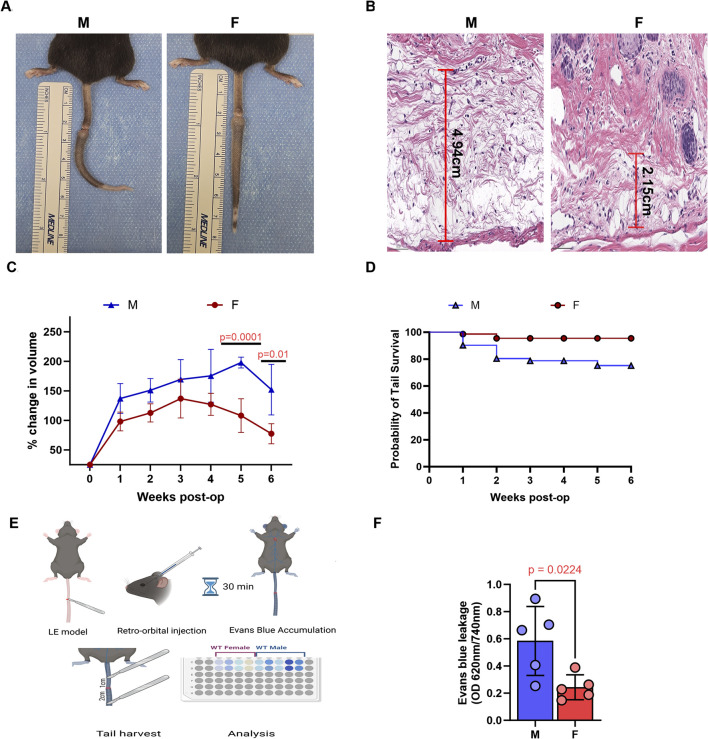
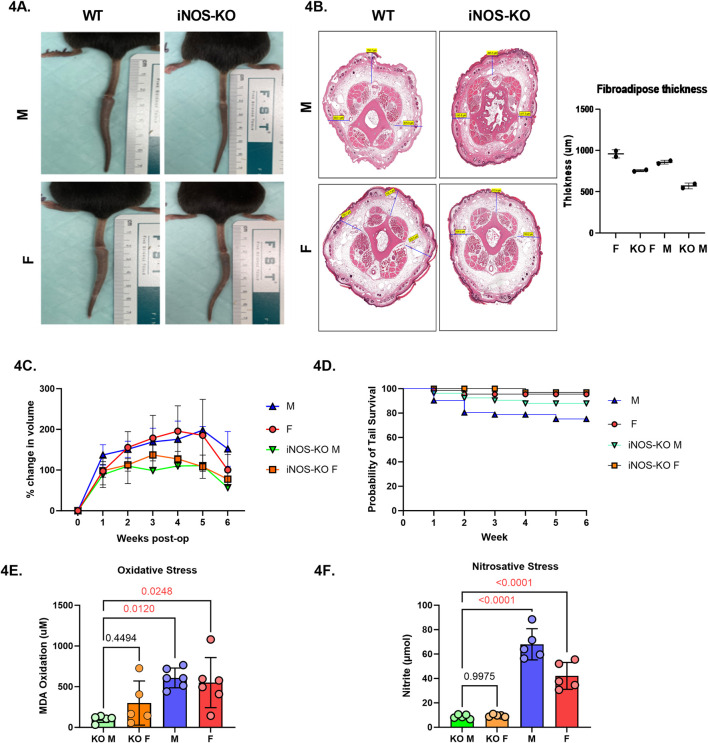
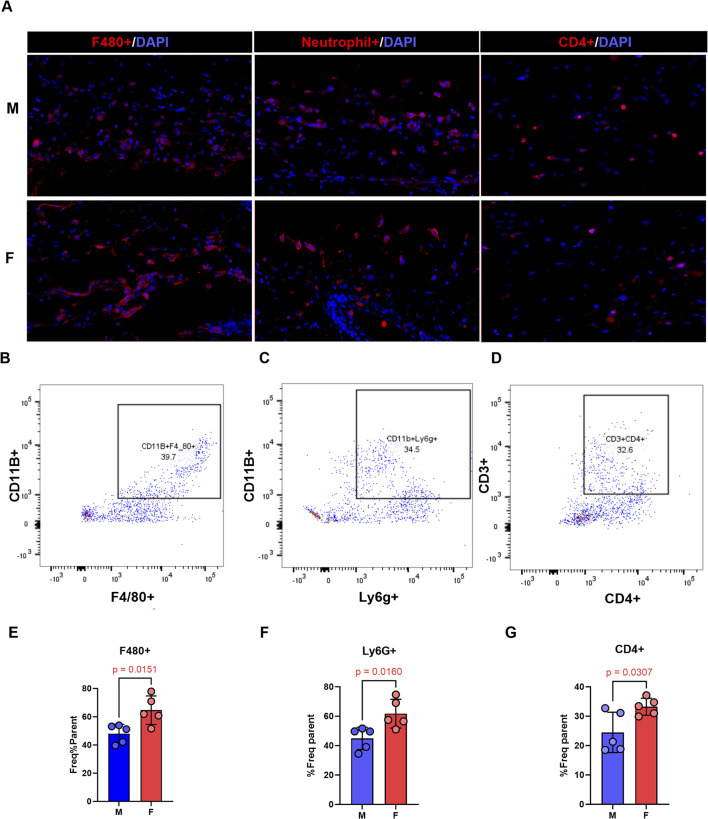
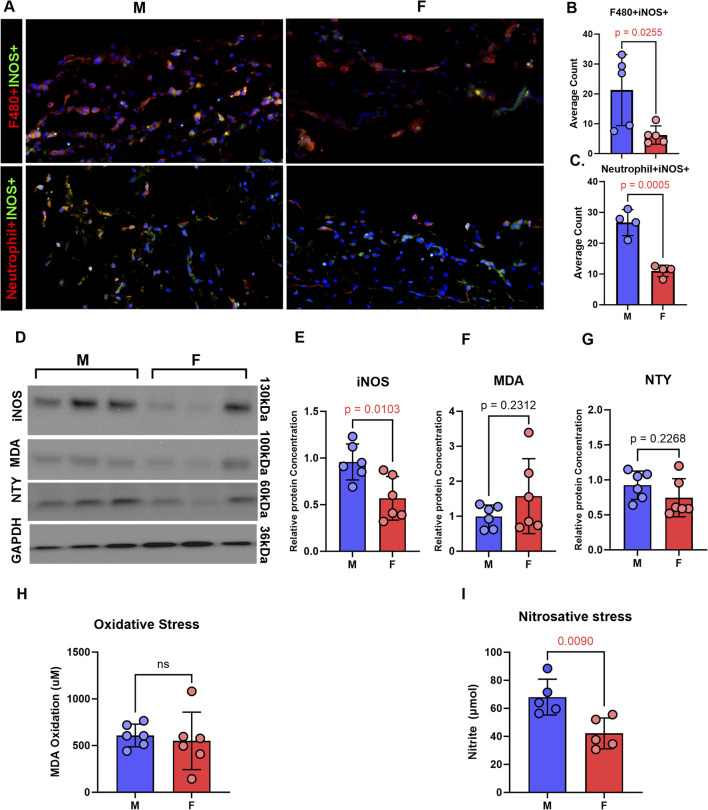
Secondary lymphedema is a common complication following surgical treatment of solid tumors. Although more prevalent in women due to higher breast cancer rates, men also develop lymphedema, often with more severe manifestations. Despite these differences in clinical presentation, the cellular mechanisms underlying sex differences are poorly understood. Previous studies have shown that inducible nitric oxide synthase (iNOS) expression by inflammatory cells is an important regulator of lymphatic pumping and leakiness in lymphedema and that lymphatic endothelial cells are highly sensitive to nitrosative stress. Based on this rationale, we used a mouse tail model of lymphedema to study the role of nitric oxide in sex-related differences in disease severity. Consistent with clinical findings, we found that male mice have significantly worse tail edema and higher rates of tail necrosis compared with female mice following tail skin/lymphatic excision (p = 0.001). Our findings correlated with increased tissue infiltration of iNOS + inflammatory cells, increased iNOS protein expression, and increased nitrosative stress in male mouse lymphedematous skin tissues (p < 0.05). Importantly, transgenic male mice lacking the iNOS gene (iNOS-KO) displayed markedly reduced swelling, inflammation, and tissue necrosis rates, whereas no differences were observed between wild-type and iNOS-KO female mice. Overall, our results indicate that iNOS-mediated nitric oxide production contributes to sex-based differences in secondary lymphedema severity, emphasizing the need to consider sex as a biological variable in lymphedema research.
继发性淋巴水肿是实体瘤手术治疗后常见的并发症。虽然由于乳腺癌发病率较高,女性中更为普遍,但男性也会发生淋巴水肿,且往往表现更为严重。尽管临床表现存在这些差异,但性别差异背后的细胞机制却知之甚少。先前的研究表明,炎症细胞诱导型一氧化氮合酶(iNOS)的表达是淋巴水肿中淋巴泵功能和渗漏的重要调节因子,且淋巴管内皮细胞对亚硝化应激高度敏感。基于这一理论基础,我们使用小鼠尾部淋巴水肿模型来研究一氧化氮在疾病严重程度的性别相关差异中的作用。与临床研究结果一致,我们发现,在进行尾部皮肤/淋巴管切除术后,雄性小鼠的尾部水肿明显更严重,尾部坏死率更高,与雌性小鼠相比差异显著(p = 0.001)。我们的研究结果与雄性小鼠淋巴水肿皮肤组织中iNOS + 炎症细胞的组织浸润增加、iNOS蛋白表达增加以及亚硝化应激增加相关(p < 0.05)。重要的是,缺乏iNOS基因的转基因雄性小鼠(iNOS-KO)肿胀、炎症和组织坏死率明显降低,而野生型和iNOS-KO雌性小鼠之间未观察到差异。总体而言,我们的结果表明,iNOS介导的一氧化氮生成导致继发性淋巴水肿严重程度的性别差异,强调在淋巴水肿研究中需要将性别作为一个生物学变量来考虑。