Baik Jung Eun, Park Hyeung Ju, Kataru Raghu P, Savetsky Ira L, Ly Catherine L, Shin Jinyeon, Encarnacion Elizabeth M, Cavali Michele R, Klang Mark G, Riedel Elyn, Coriddi Michelle, Dayan Joseph H, Mehrara Babak J
Plastic and Reconstructive Surgery Service, Department of Surgery, Memorial Sloan Kettering Cancer Center, New York, New York.
Clin Transl Med. 2022 Jun;12(6):e758. doi: 10.1002/ctm2.758.
Secondary lymphedema is a common complication of cancer treatment, and previous studies have shown that the expression of transforming growth factor-beta 1 (TGF-β1), a pro-fibrotic and anti-lymphangiogenic growth factor, is increased in this disease. Inhibition of TGF-β1 decreases the severity of the disease in mouse models; however, the mechanisms that regulate this improvement remain unknown.
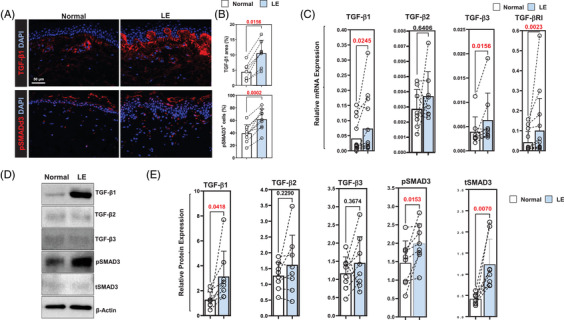
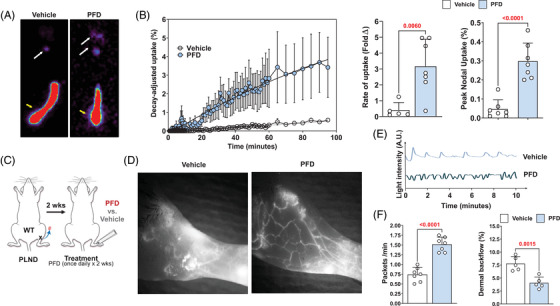
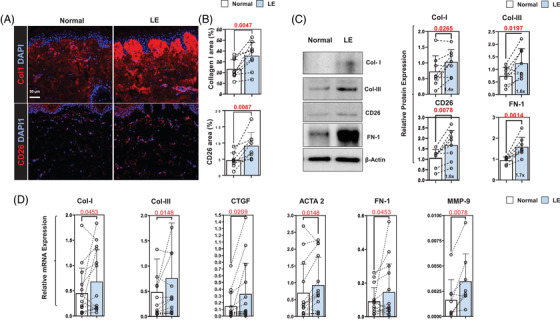
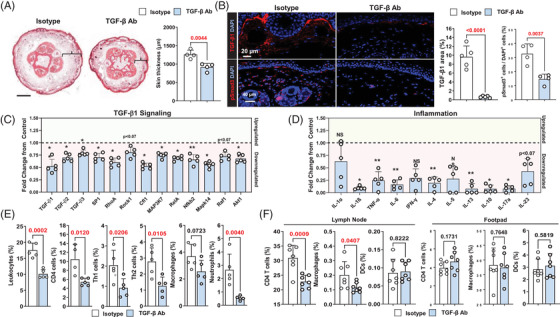
Expression of TGF-β1 and extracellular matrix molecules (ECM) was assessed in biopsy specimens from patients with unilateral breast cancer-related lymphedema (BCRL). The effects of TGF-β1 inhibition using neutralizing antibodies or a topical formulation of pirfenidone (PFD) were analyzed in mouse models of lymphedema. We also assessed the direct effects of TGF-β1 on lymphatic endothelial cells (LECs) using transgenic mice that expressed a dominant-negative TGF-β receptor selectively on LECs (LEC ).
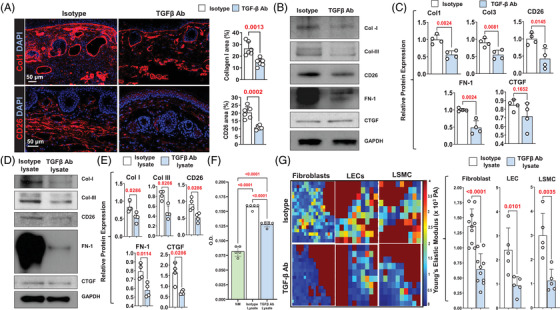
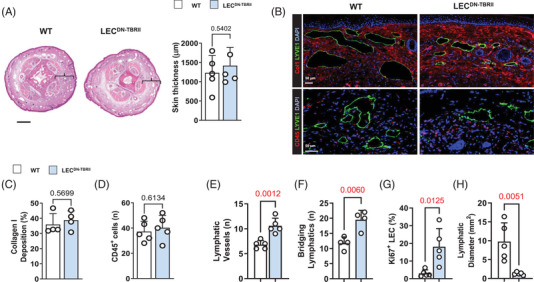
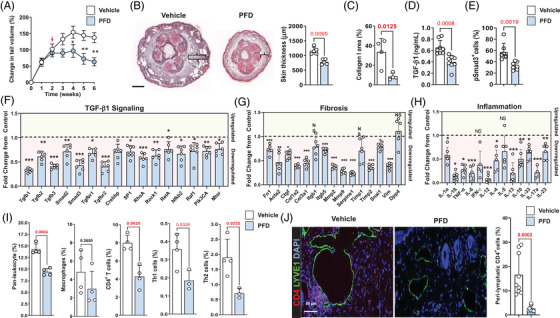
The expression of TGF-β1 and ECM molecules is significantly increased in BCRL skin biopsies. Inhibition of TGF-β1 in mouse models of lymphedema using neutralizing antibodies or with topical PFD decreased ECM deposition, increased the formation of collateral lymphatics, and inhibited infiltration of T cells. In vitro studies showed that TGF-β1 in lymphedematous tissues increases fibroblast, lymphatic endothelial cell (LEC), and lymphatic smooth muscle cell stiffness. Knockdown of TGF-β1 responsiveness in LEC resulted in increased lymphangiogenesis and collateral lymphatic formation; however, ECM deposition and fibrosis persisted, and the severity of lymphedema was indistinguishable from controls.
Our results show that TGF-β1 is an essential regulator of ECM deposition in secondary lymphedema and that inhibition of this response is a promising means of treating lymphedema.
继发性淋巴水肿是癌症治疗的常见并发症,既往研究表明,促纤维化和抗淋巴管生成生长因子转化生长因子-β1(TGF-β1)在该疾病中表达增加。在小鼠模型中,抑制TGF-β1可降低疾病严重程度;然而,调节这种改善的机制尚不清楚。
评估单侧乳腺癌相关淋巴水肿(BCRL)患者活检标本中TGF-β1和细胞外基质分子(ECM)的表达。在淋巴水肿小鼠模型中分析使用中和抗体或吡非尼酮(PFD)局部制剂抑制TGF-β1的效果。我们还使用在淋巴管内皮细胞(LEC)上选择性表达显性负性TGF-β受体的转基因小鼠,评估TGF-β1对淋巴管内皮细胞(LEC)的直接作用。
BCRL皮肤活检中TGF-β1和ECM分子的表达显著增加。在淋巴水肿小鼠模型中,使用中和抗体或局部PFD抑制TGF-β1可减少ECM沉积,增加侧支淋巴管形成,并抑制T细胞浸润。体外研究表明,淋巴水肿组织中的TGF-β1可增加成纤维细胞、淋巴管内皮细胞(LEC)和淋巴管平滑肌细胞的硬度。敲低LEC中TGF-β1的反应性可导致淋巴管生成增加和侧支淋巴管形成;然而,ECM沉积和纤维化持续存在,淋巴水肿的严重程度与对照组无差异。
我们的结果表明,TGF-β1是继发性淋巴水肿中ECM沉积的重要调节因子,抑制这种反应是治疗淋巴水肿的一种有前景的方法。