Hattori Keiichiro, Makishima Kenichi, Suma Sakurako, Abe Yoshiaki, Suehara Yasuhito, Sakamoto Tatsuhiro, Kurita Naoki, Ishii Ryota, Matsuoka Ryota, Matsuda Masahide, Tsurubuchi Takao, Nishikawa Ryo, Tanaka Shota, Mukasa Akitake, Narita Yoshitaka, Ichimura Koichi, Nagane Motoo, Takano Shingo, Mathis Bryan J, Ishikawa Eiichi, Matsubara Daisuke, Chiba Shigeru, Sakata-Yanagimoto Mamiko
Department of Hematology Institute of Medicine University of Tsukuba Tsukuba Japan.
Department of Hematology University of Tsukuba Hospital Tsukuba Japan.
EJHaem. 2024 Nov 14;5(6):1201-1214. doi: 10.1002/jha2.1046. eCollection 2024 Dec.
Primary central nervous system lymphoma (PCNSL) is a rare lymphoid malignancy. Systemic profiling of the PCNSL tumor microenvironment (TME) was previously conducted through gene expression analysis. We investigated the prognostic impact of TME on survival to establish novel prognostic biomarkers in PCNSL patients.
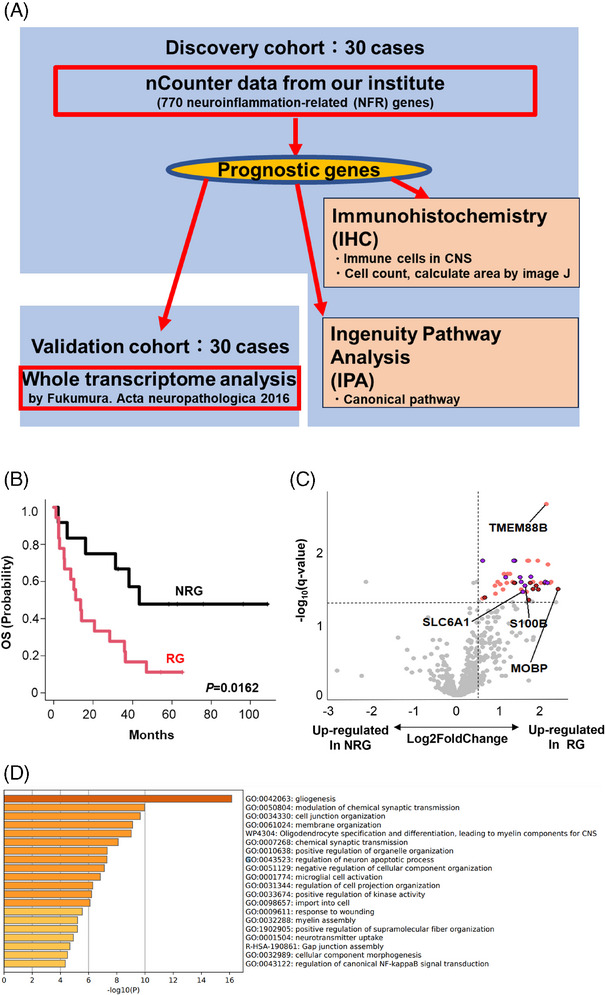
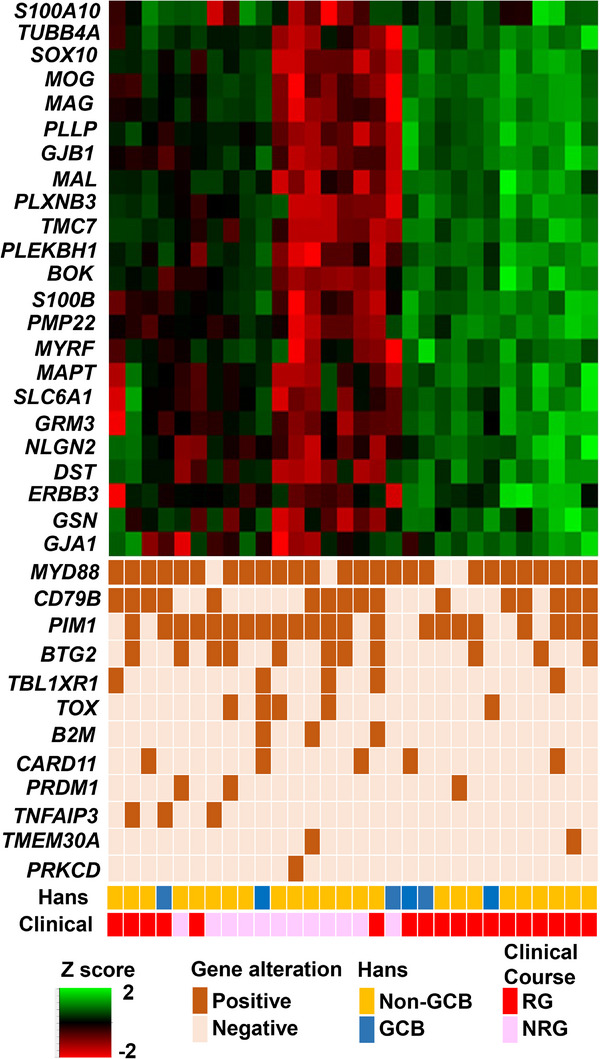
We analyzed expression levels of 770 neuroinflammation-related (NFR) genes via NanoString nCounter technology in tumor samples from 30 PCNSL patients. Genes related to the "recurrence group (RG)" or "non-recurrence group (NRG)" were identified and validated using whole transcriptomic analysis of an independent PCNSL cohort ( = 30).
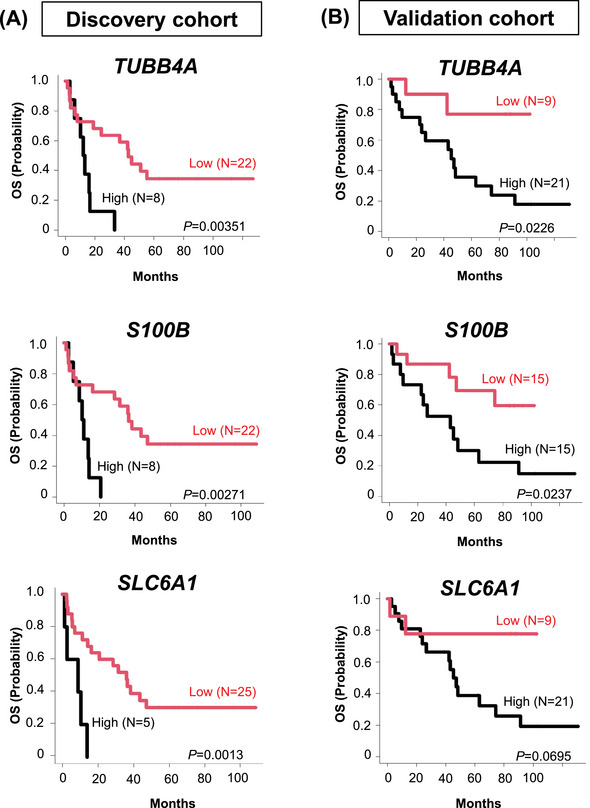
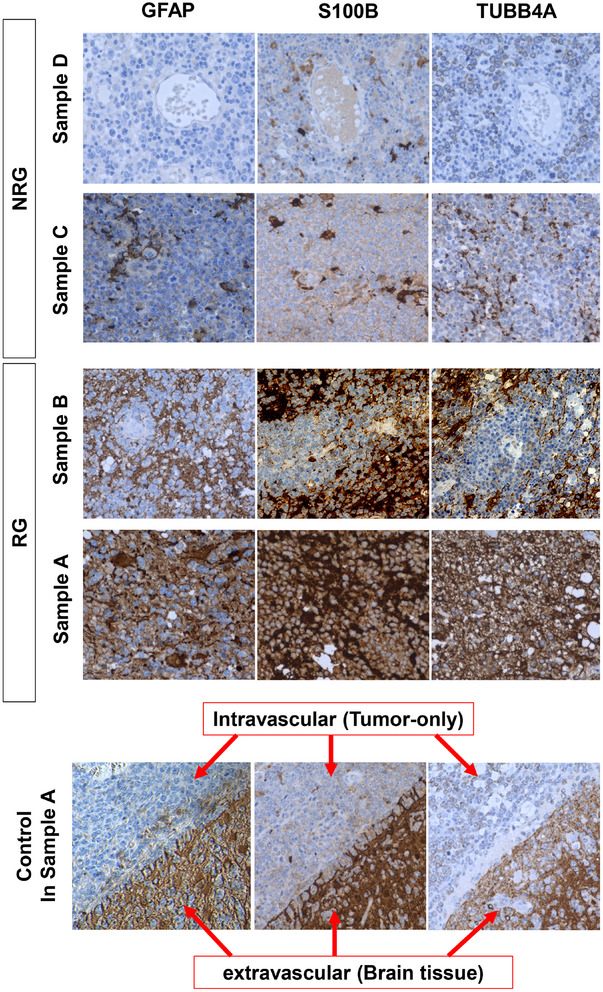
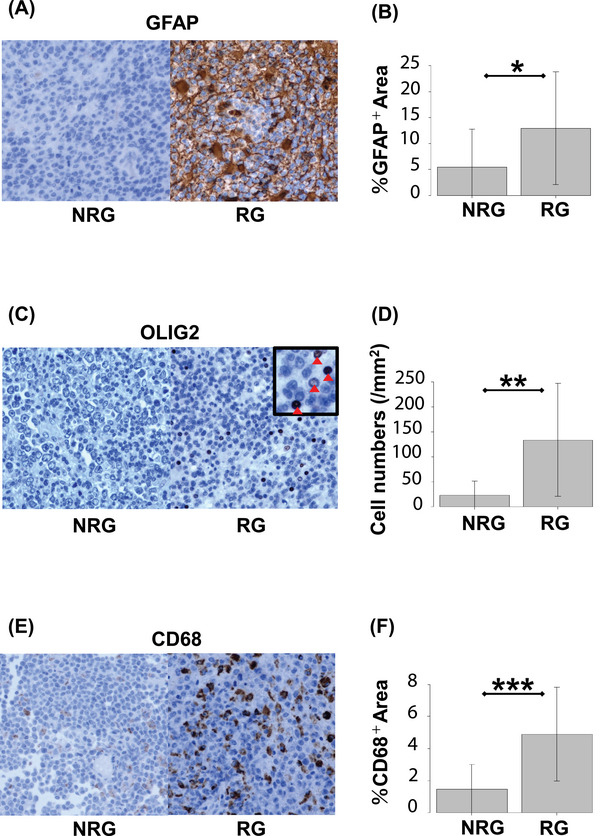
Forty-five of 770 NFR genes were highly expressed in the RG (3-year overall survival (OS, 22.2%), compared with the NRG group (3-year OS 66.7%). Signatures related to glial cells were enriched in the RG-associated gene set. Multivariate analysis revealed that high expressions of ( = 0.028, HR: 3.88), ( = 0.046, HR: 3.093), and ( = 0.034, HR: 3.765) were significantly related to death. Expression levels of these three genes were also significantly associated with poor OS in the validation cohort. Immunohistochemical staining against TUBB4A, S100B, and proteins specific to glial cells (GFAP, OLIG2, and CD68) revealed significantly higher positivity in RG glial cells.
These data suggest that TME-related genes play a crucial role in the pathogenesis of PCNSL, complementing the well-known involvement of the NF-kB signaling pathway. TME targeting, especially glial cell-specific proteins, may thus open new and complementary avenues of therapy for all stages of PCNSL.
原发性中枢神经系统淋巴瘤(PCNSL)是一种罕见的淋巴恶性肿瘤。先前通过基因表达分析对PCNSL肿瘤微环境(TME)进行了系统分析。我们研究了TME对生存的预后影响,以建立PCNSL患者新的预后生物标志物。
我们通过NanoString nCounter技术分析了30例PCNSL患者肿瘤样本中770个神经炎症相关(NFR)基因的表达水平。使用独立PCNSL队列(n = 30)的全转录组分析来鉴定和验证与“复发组(RG)”或“非复发组(NRG)”相关的基因。
770个NFR基因中的45个在RG中高表达(3年总生存率(OS)为22.2%),相比之下NRG组为(3年OS为66.7%)。与神经胶质细胞相关的特征在RG相关基因集中富集。多变量分析显示,TUBB4A(P = 0.028,HR:3.88)、S100B(P = 0.046,HR:3.093)和GFAP(P = 0.034,HR:3.765)的高表达与死亡显著相关。这三个基因的表达水平在验证队列中也与较差的OS显著相关。针对TUBB4A、S100B和神经胶质细胞特异性蛋白(GFAP、OLIG2和CD68)的免疫组织化学染色显示,RG神经胶质细胞中的阳性率显著更高。
这些数据表明,TME相关基因在PCNSL的发病机制中起关键作用,补充了众所周知的NF-κB信号通路的参与。因此,靶向TME,尤其是神经胶质细胞特异性蛋白,可能为PCNSL的所有阶段开辟新的补充治疗途径。