Haymov Anna, Soti Varun
Neurosurgery, Lake Erie College of Osteopathic Medicine, Elmira, USA.
Pharmacology and Therapeutics, Lake Erie College of Osteopathic Medicine, Elmira, USA.
Cureus. 2024 Dec 16;16(12):e75842. doi: 10.7759/cureus.75842. eCollection 2024 Dec.
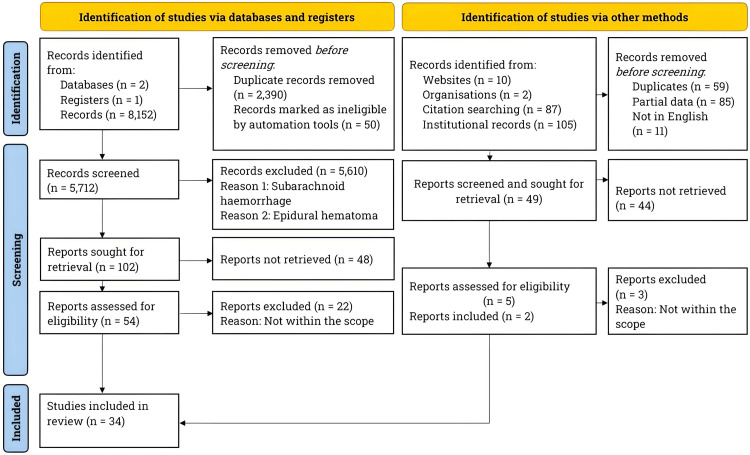
Traumatic brain injuries (TBIs) represent a spectrum of neurological conditions resulting from external forces impacting the head, leading to temporary or permanent impairments in cognitive, emotional, or physical functioning. Acute subdural hematomas (ASDH) are a significant subset of TBIs characterized by the rupture of blood vessels within the subdural space between the brain and the dura mater. Management of ASDH typically involves two primary surgical procedures: craniectomy and craniotomy. This review assessed the efficacy of these surgical approaches in treating patients with ASDH to determine whether one procedure provides superior patient outcomes compared to the other. Furthermore, it aimed to identify factors influencing surgical decisions about the type of procedure. A comprehensive literature search was conducted on ASDH patients undergoing craniotomy and craniectomy, following the Preferred Reporting Items for Systematic Reviews and Meta-Analyses (PRISMA) guidelines. The analysis indicated that craniectomy was associated with higher mortality rates compared to craniotomy. Patients undergoing craniotomy had a statistically heightened likelihood of experiencing residual and rebleeding subdural hematoma. However, the incidence of increased intracranial pressure was significantly more pronounced in craniectomy compared to craniotomy. Follow-up Glasgow Coma Scale (GCS) scores, assessed six months post-surgery, suggested more favorable outcomes for patients who underwent craniotomy, albeit without statistical significance. Furthermore, this systematic review highlighted numerous factors influencing the choice of surgical approach, including the severity of the disease upon admission, patient age, and geographical location. Notably, patients exhibiting a GCS score of less than nine were more likely to be administered craniectomy. Additionally, younger patients, specifically those under 20 years of age with severe injuries, were more frequently subjected to craniectomy. In contrast, neurosurgeons in the United States and several European countries exhibited a preference for craniotomy, whereas craniectomy emerged as the predominant option for ASDH management in the United Kingdom. Ongoing research is essential to ascertain which surgical procedures yield superior patient outcomes within diverse cohorts of ASDH patients. Nonetheless, these findings underscore the critical need for continued investigation to refine surgical strategies and enhance patient outcomes in neurosurgery.
创伤性脑损伤(TBI)是由外力撞击头部导致的一系列神经病症,会引起认知、情感或身体功能的暂时或永久性损害。急性硬膜下血肿(ASDH)是TBI的一个重要子集,其特征是脑与硬脑膜之间的硬膜下间隙内血管破裂。ASDH的治疗通常涉及两种主要手术:颅骨切除术和开颅手术。本综述评估了这些手术方法治疗ASDH患者的疗效,以确定一种手术是否比另一种手术能为患者带来更好的预后。此外,其旨在确定影响手术方式选择的因素。按照系统评价和Meta分析的首选报告项目(PRISMA)指南,对接受开颅手术和颅骨切除术的ASDH患者进行了全面的文献检索。分析表明,与开颅手术相比,颅骨切除术的死亡率更高。接受开颅手术的患者发生硬膜下血肿残留和再出血的可能性在统计学上更高。然而,与开颅手术相比,颅骨切除术中颅内压升高的发生率明显更显著。术后六个月评估的格拉斯哥昏迷量表(GCS)随访评分表明,接受开颅手术的患者预后更有利,尽管无统计学意义。此外,该系统评价强调了影响手术方式选择的众多因素,包括入院时疾病的严重程度、患者年龄和地理位置。值得注意的是,GCS评分低于9分的患者更有可能接受颅骨切除术。此外,年轻患者,特别是20岁以下重伤患者,更频繁地接受颅骨切除术。相比之下,美国和几个欧洲国家的神经外科医生更倾向于开颅手术,而在英国,颅骨切除术是ASDH治疗的主要选择。持续的研究对于确定在不同ASDH患者群体中哪种手术能产生更好的患者预后至关重要。尽管如此,这些发现强调了继续进行研究以完善手术策略并改善神经外科患者预后的迫切需求。