Zhao Yang-Yang, Yang Li-Xia, Que Shuang-Yu, An Lei-Xing, Teeti Abeer A, Xiao Shun-Wu
Department of Neurosurgery Affiliated Hospital of Zunyi Medical University Zunyi China.
Department of Chemistry, School of Science Hebron University Hebron Palestine.
Ibrain. 2024 Jun 1;10(4):519-535. doi: 10.1002/ibra.12165. eCollection 2024 Winter.
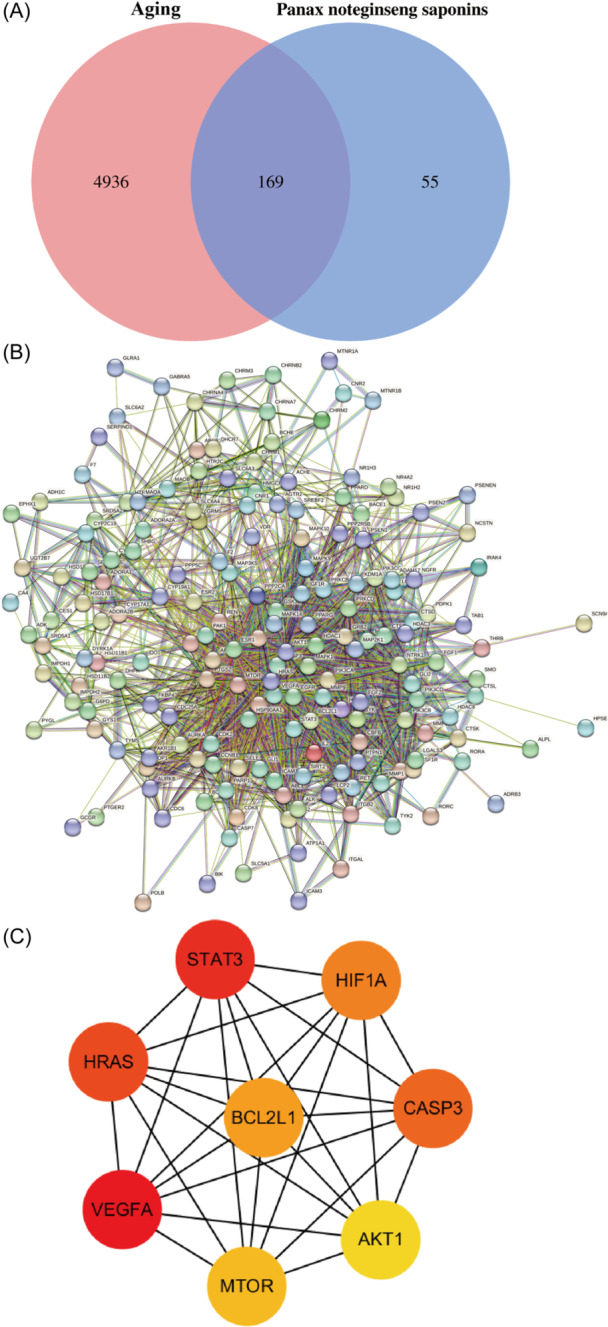
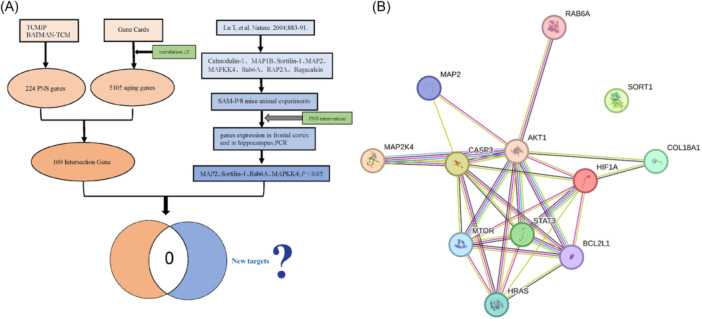
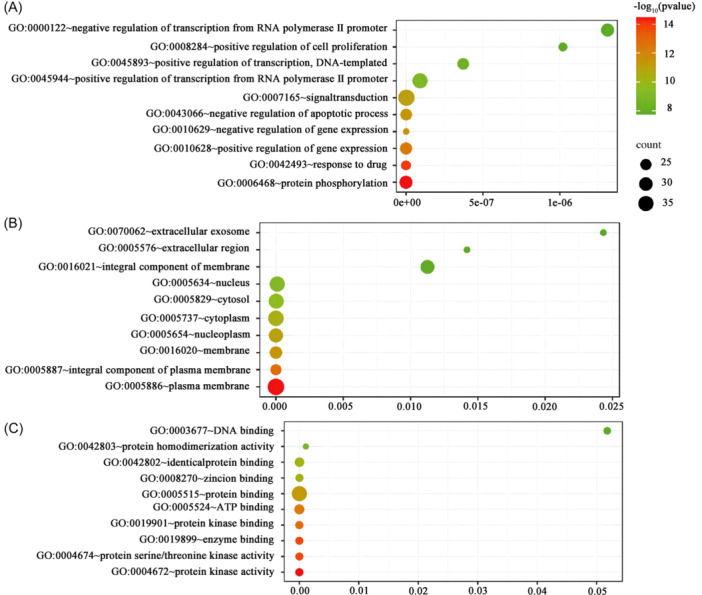
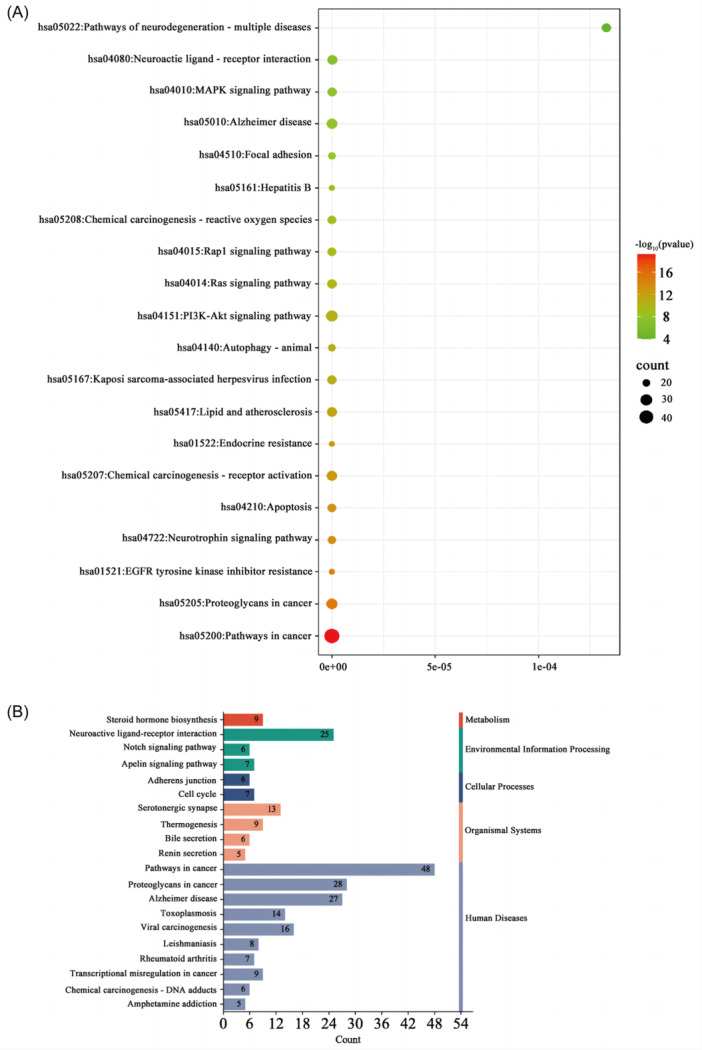
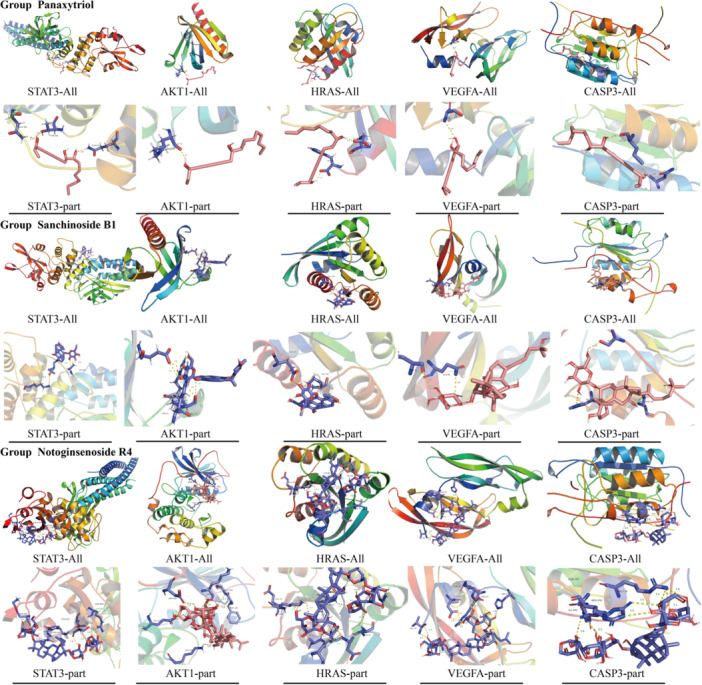
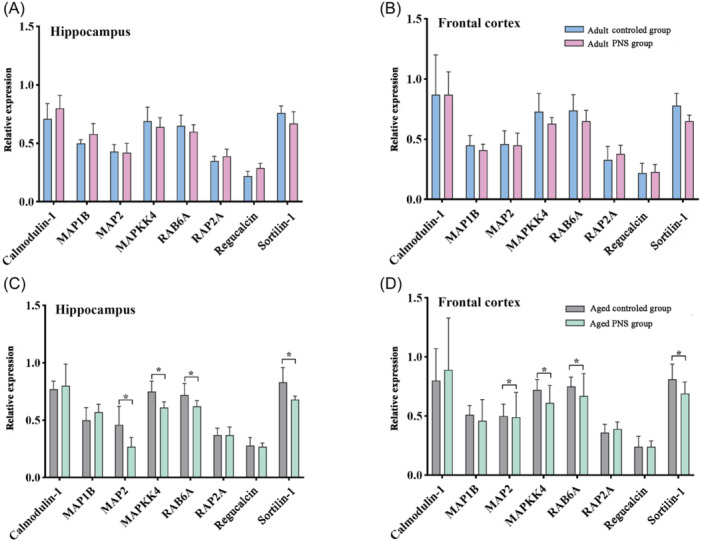
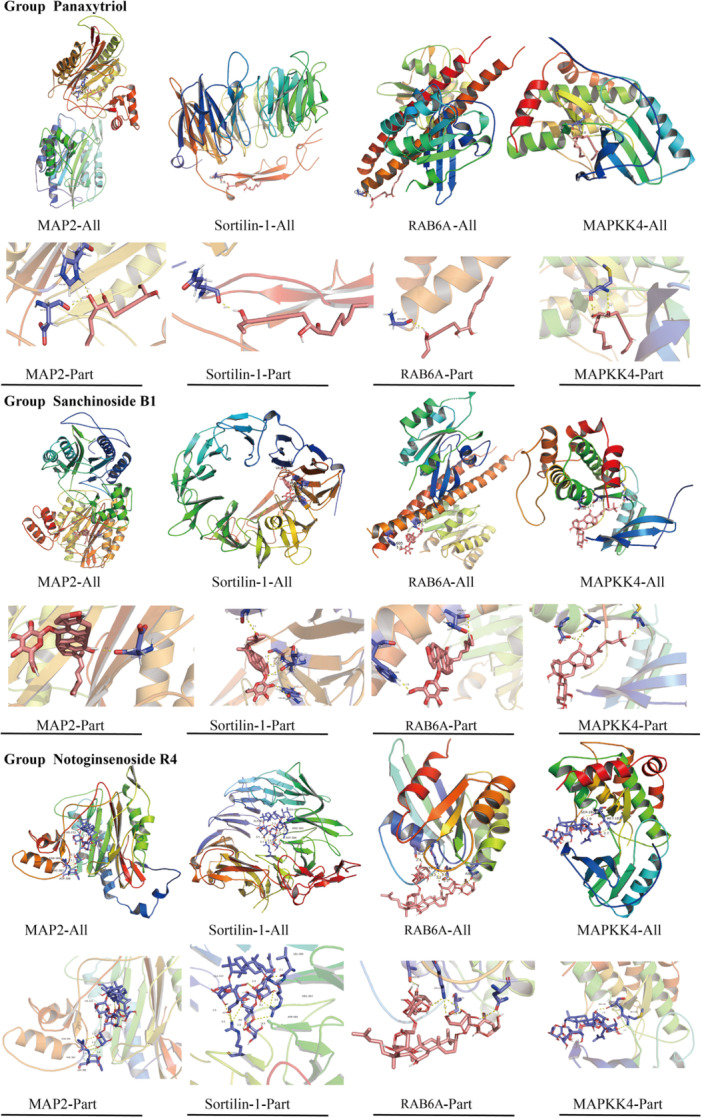
This study aims to investigate the systemic mechanism of Panax notoginseng saponins (PNS) in antiaging using network pharmacology combined with experimental validation. String database and Cytoscape3.7.2 were used to perform the protein-protein interaction (PPI) and construct genes network. The key target genes were analyzed using gene ontology (GO) and Kyoto Encyclopedia of Genes and Genomes (KEGG). Then, the aging-related genes were verified by reverse-transcription polymerase chain reaction in SAM-P/8 mice, and performed molecular docking with the main components of PNS. Moreover, it produced cluster between Hub genes and differential genes. A total of 169 crossover genes were obtained, and the results of GO and KEGG indicated that the antiaging effect of PNS was mediated by apoptosis, cancer, and neurodegeneration and that five of the eight Hub genes had good binding activity with the main components of PNS. In addition, animal experiments reported that MAP2, MAPKK4, RAB6A, and Sortilin-1 have different levels of expression in the brain tissues of aging mice, and bind well docking with the main active components of PNS. However, there was no crossover between the 169 PNS intersecting genes and the four differential genes, while they yielded a link from PPI in which MAP2K4 was only linked to AKT1 and CASP3; MAP2 was only linked to AKT1 and CASP3; RAB6A was only linked to AKT1; but Sortlin-1 did not link to the Hub genes. In summary, the antiaging effect of PNS is associated with the eight Hub genes and four differential genes. All of them consist of a cluster or group that is possibly related to the antiaging effect of PNS.
本研究旨在运用网络药理学结合实验验证的方法,探究三七总皂苷(PNS)的抗衰老系统机制。利用String数据库和Cytoscape3.7.2软件进行蛋白质-蛋白质相互作用(PPI)分析并构建基因网络。采用基因本体论(GO)和京都基因与基因组百科全书(KEGG)对关键靶基因进行分析。然后,通过逆转录聚合酶链反应在快速老化小鼠(SAM-P/8)中验证衰老相关基因,并与PNS的主要成分进行分子对接。此外,还对Hub基因和差异基因进行了聚类分析。共获得169个交叉基因,GO和KEGG分析结果表明,PNS的抗衰老作用是通过细胞凋亡、癌症和神经退行性变介导的,8个Hub基因中有5个与PNS的主要成分具有良好的结合活性。另外,动物实验表明,微管相关蛋白2(MAP2)、丝裂原活化蛋白激酶激酶4(MAPKK4)、RAB6A和Sortilin-1在衰老小鼠脑组织中的表达水平各不相同,且与PNS的主要活性成分对接良好。然而,169个PNS交叉基因与4个差异基因之间没有交叉,不过它们在PPI中产生了一个联系,其中丝裂原活化蛋白激酶激酶4(MAP2K4)仅与蛋白激酶B1(AKT1)和半胱天冬酶3(CASP3)相连;微管相关蛋白2(MAP2)仅与蛋白激酶B1(AKT1)和半胱天冬酶3(CASP3)相连;RAB6A仅与蛋白激酶B1(AKT1)相连;但Sortilin-1未与Hub基因相连。综上所述,PNS的抗衰老作用与8个Hub基因和4个差异基因有关。它们共同构成了一个可能与PNS抗衰老作用相关的簇或组。