Zhuo Zhili, Lu Wenping, Zhang Ling, Zhang Dongni, Cui Yongjia, Wu Xiaoqing, Mei Heting, Chang Lei, Song Qingya
Oncology Department, China Academy of Chinese Medical Sciences Guang'anmen Hospital, No.5 Beixiange, Xicheng District, Beijing, 100053, China.
Department of pathology, China Academy of Chinese Medical Sciences Guang' anmen Hospital, Beijing, 100053, China.
Discov Oncol. 2024 Dec 18;15(1):762. doi: 10.1007/s12672-024-01562-4.
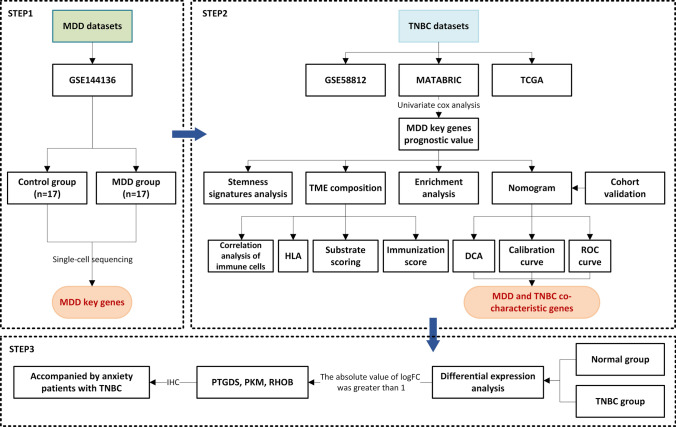
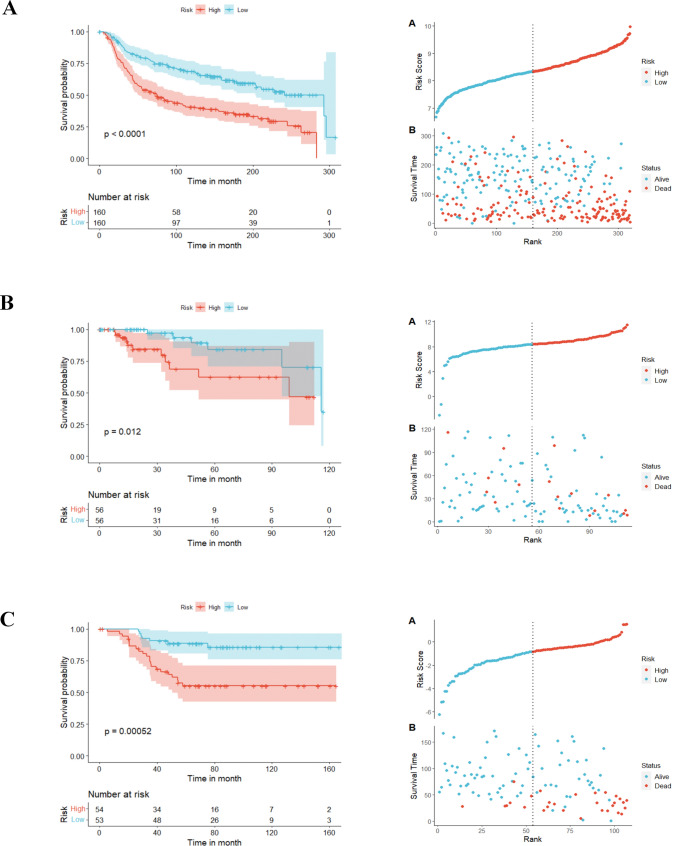
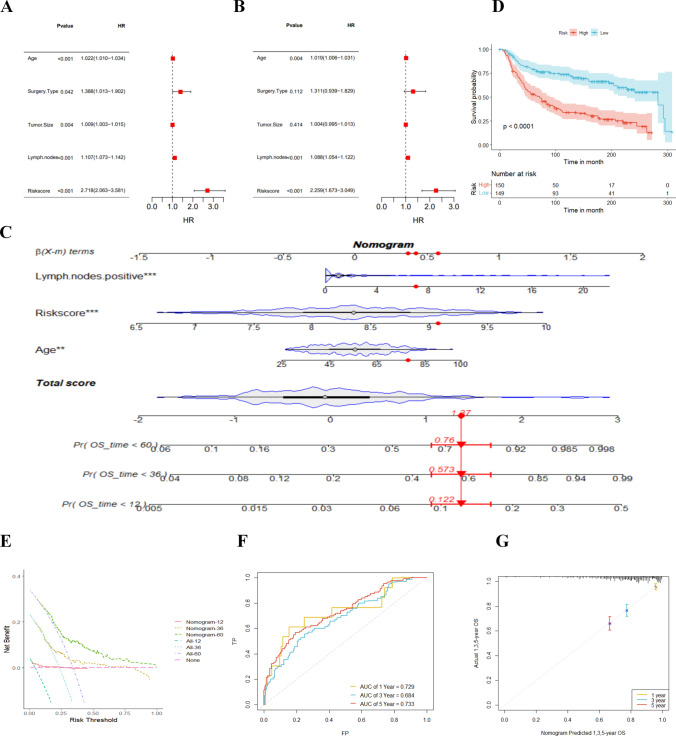
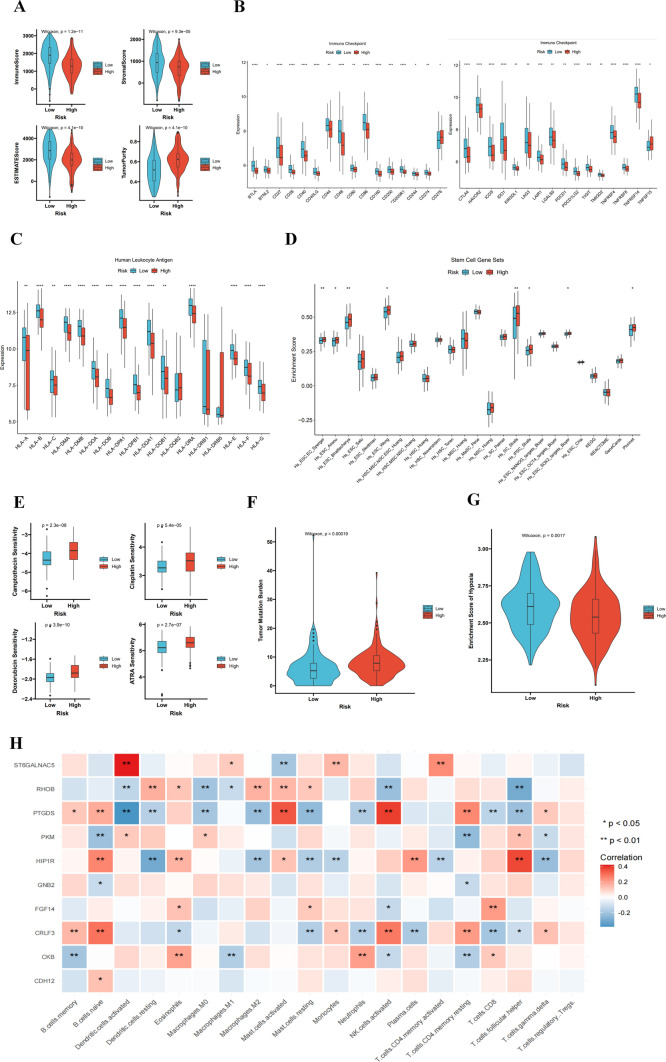
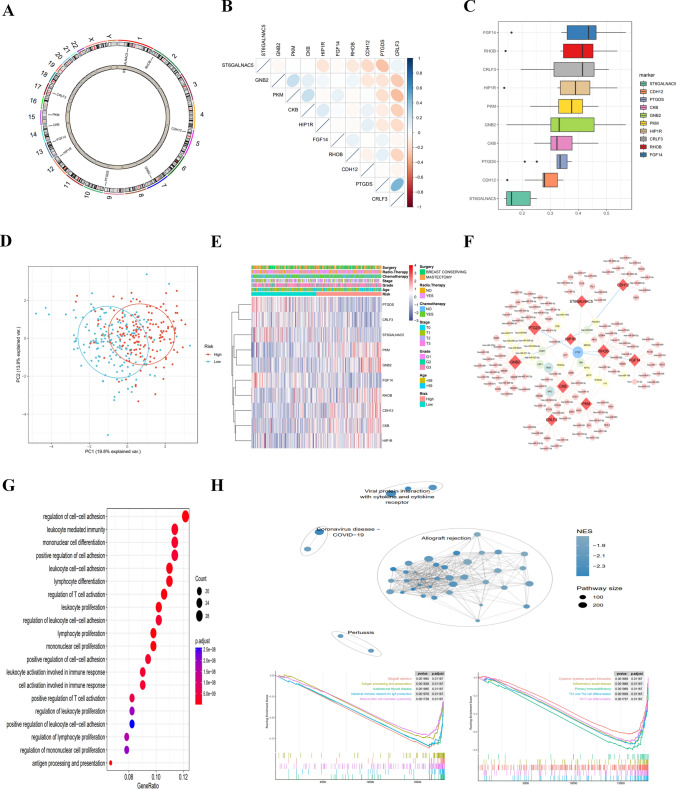
TNBC, the most aggressive form of breast cancer, lacks accurate and effective therapeutic targets. Immunotherapy presents a promising approach for addressing TNBC. Anxiety and depression are frequently concurrent symptoms in TNBC patients. MDD affects the tumor immune microenvironment of TNBC, with its characteristic genes affecting the pathophysiology of MDD and potentially increasing the risk of TNBC recurrence and metastasis. This study reveals significant differences in T lymphocyte infiltration between high-risk and low-risk TNBC groups based on MDD feature genes. This finding aids in identifying TNBC patients who may benefit from immunotherapy, providing new insights for future TNBC immunotherapy strategies. Our aim is to identify MDD-related genes involved in the pathogenesis of TNBC and to provide predictive biomarkers for TNBC immunotherapy.
三阴性乳腺癌(TNBC)是最具侵袭性的乳腺癌形式,缺乏准确有效的治疗靶点。免疫疗法为治疗TNBC提供了一种有前景的方法。焦虑和抑郁是TNBC患者常见的并发症状。重度抑郁症(MDD)影响TNBC的肿瘤免疫微环境,其特征基因影响MDD的病理生理学,并可能增加TNBC复发和转移的风险。本研究揭示了基于MDD特征基因的高危和低危TNBC组之间T淋巴细胞浸润存在显著差异。这一发现有助于识别可能从免疫疗法中获益的TNBC患者,为未来TNBC免疫治疗策略提供新的见解。我们的目标是识别参与TNBC发病机制的MDD相关基因,并为TNBC免疫治疗提供预测性生物标志物。