Shen Guanghui, Chen Haoran, Ye Xinwu, Xue Xiaodong, Tang Shusi
Wenzhou Seventh People's Hospital, Wenzhou, 325800, China.
Cangnan County People's Hospital, Wenzhou, 325800, China.
Int J Bipolar Disord. 2024 Dec 18;12(1):42. doi: 10.1186/s40345-024-00365-4.
The Hypomania Checklist-32 is widely used to screen for bipolar disorder, but its length can be challenging for adolescents with manic symptoms. This study aimed to develop a shortened version of the HCL-32 tailored for adolescents using machine learning techniques.
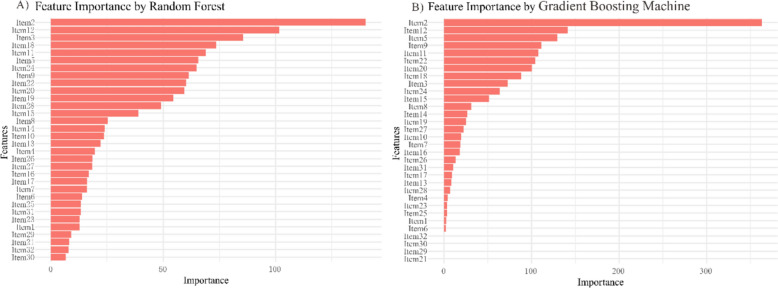
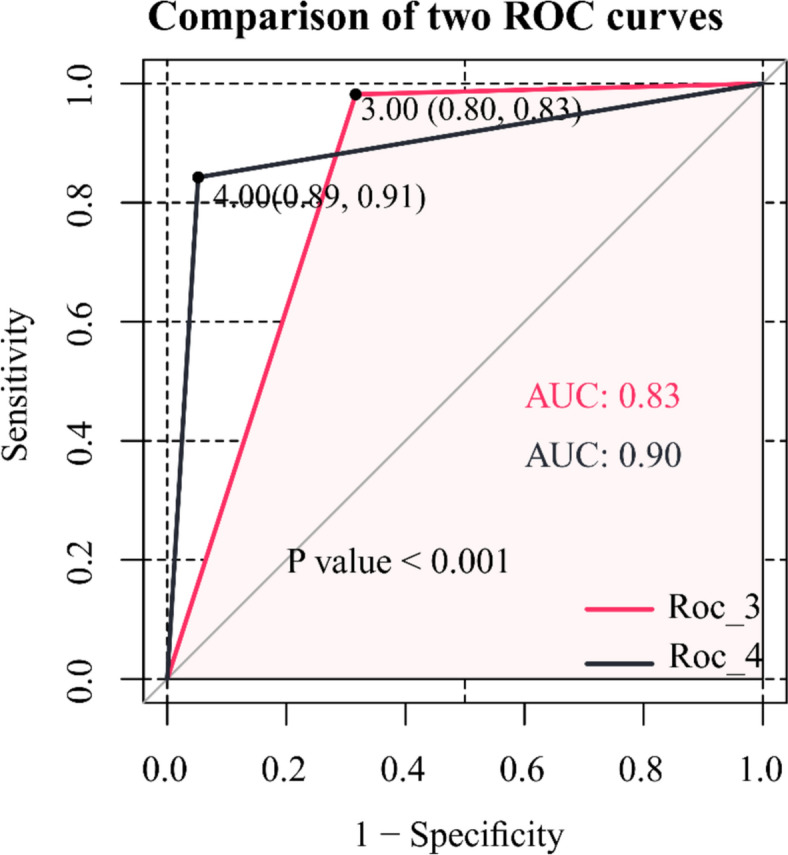
Data from 2,850 adolescents (mean age 15.50 years, 68.81% female) who completed the HCL-32 were analyzed. Random forest (RF) and gradient boosting machine (GBM) algorithms were employed for feature selection. The area under the curve (AUC) was used to evaluate model performance. Receiver operating characteristic (ROC) analysis was conducted to determine optimal cutoff points for the shortened scale.
An 8-item version of the HCL-32 was derived, maintaining high predictive accuracy (AUC = 0.97). The selected items captured core symptoms of adolescent mania, including increased energy, risk-taking, and irritability. Two cutoff points were identified: a score of 3 offered high specificity (0.98) and positive predictive value (0.98), while a score of 4 provided balanced sensitivity (0.87) and specificity (0.94) with the highest overall accuracy (0.91).
The machine learning-driven 8-item version of the HCL-32 demonstrates strong diagnostic utility for adolescent bipolar disorder, offering a more efficient screening tool without sacrificing clinical sensitivity. This shortened scale may improve assessment feasibility and accuracy in clinical settings, addressing the unique challenges of diagnosing bipolar disorder in adolescents.
轻躁狂检查表-32(Hypomania Checklist-32,HCL-32)被广泛用于筛查双相情感障碍,但对于有躁狂症状的青少年来说,其篇幅可能具有挑战性。本研究旨在使用机器学习技术开发一个专为青少年量身定制的HCL-32简版。
对2850名完成HCL-32的青少年(平均年龄15.50岁,68.81%为女性)的数据进行分析。采用随机森林(RF)和梯度提升机(GBM)算法进行特征选择。曲线下面积(AUC)用于评估模型性能。进行受试者工作特征(ROC)分析以确定简版量表的最佳截断点。
得出了一个8项版本的HCL-32,保持了较高的预测准确性(AUC = 0.97)。所选项目涵盖了青少年躁狂的核心症状,包括精力增加、冒险行为和易怒。确定了两个截断点:3分具有较高的特异性(0.98)和阳性预测值(0.98),而4分提供了平衡的敏感性(0.87)和特异性(0.94),总体准确性最高(0.91)。
机器学习驱动的8项版本的HCL-32对青少年双相情感障碍具有很强的诊断效用,提供了一种更有效的筛查工具,同时不牺牲临床敏感性。这个简版量表可能会提高临床环境中的评估可行性和准确性,解决青少年双相情感障碍诊断中的独特挑战。