Shi Jiang-Ling, Wang Youcheng, Han Yufeng, Chen Jinqi, Pu Xiaolan, Xia Ying
West China School of Public Health and West China Fourth Hospital, West China-PUMC C.C. Chen Institute of Health, and State Key Laboratory of Biotherapy,Sichuan University, Chengdu 610041, China.
Sci Adv. 2024 Dec 20;10(51):eads6885. doi: 10.1126/sciadv.ads6885. Epub 2024 Dec 18.
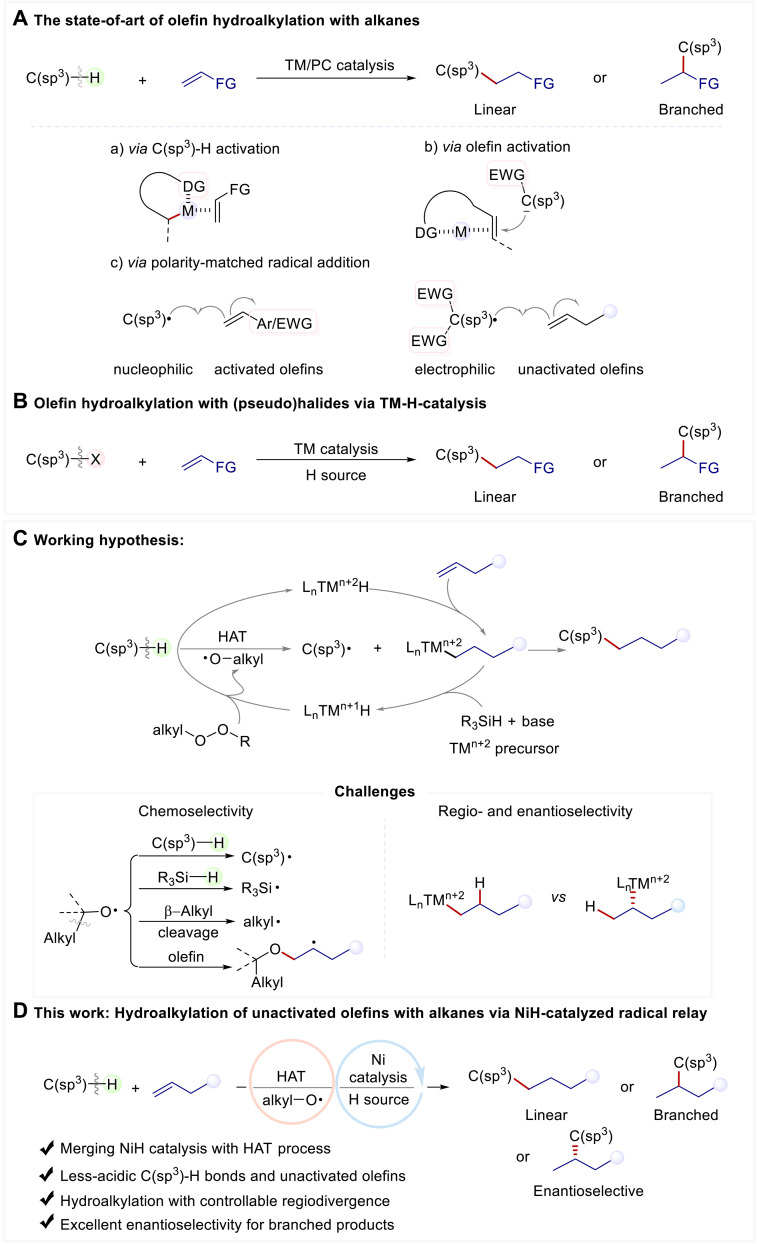
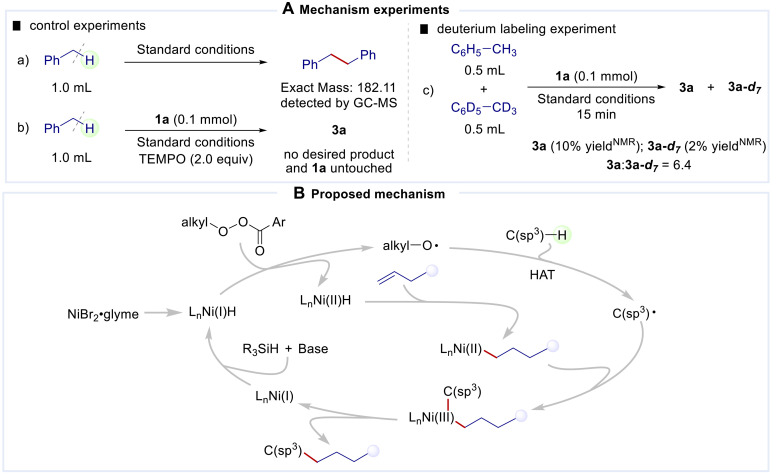
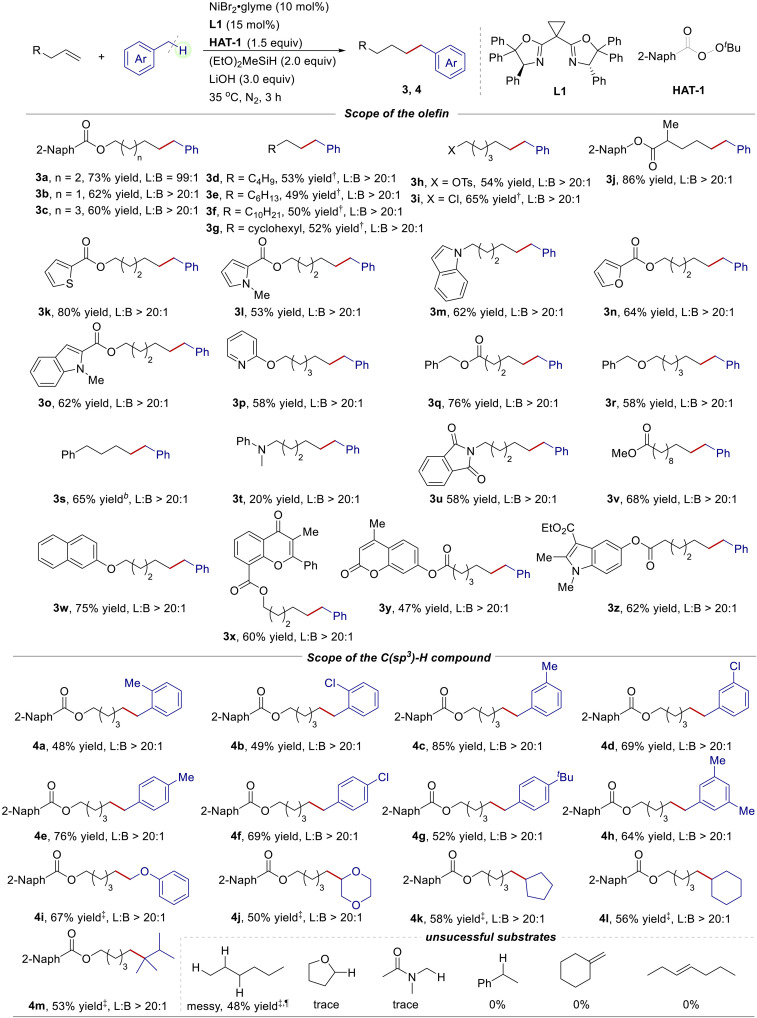
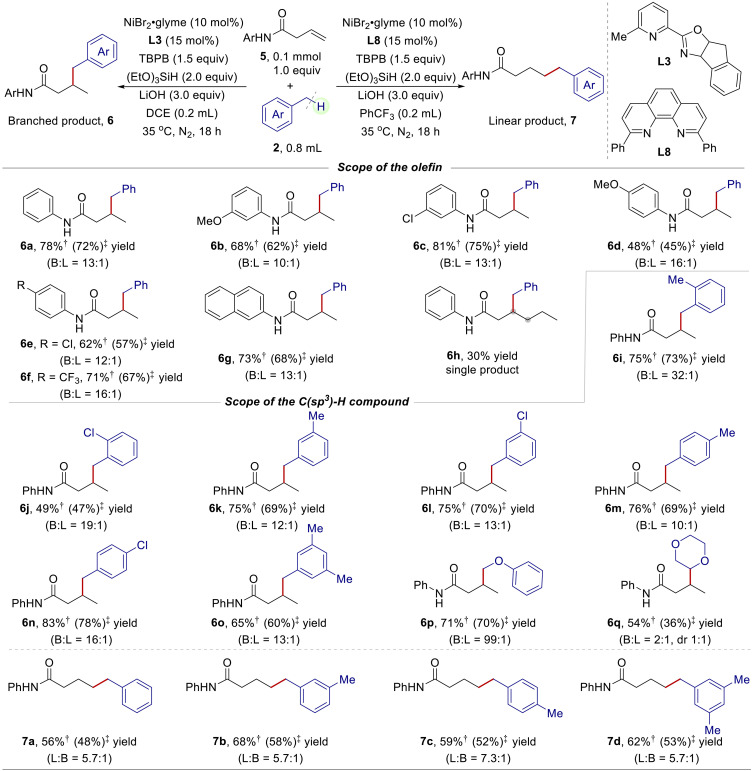
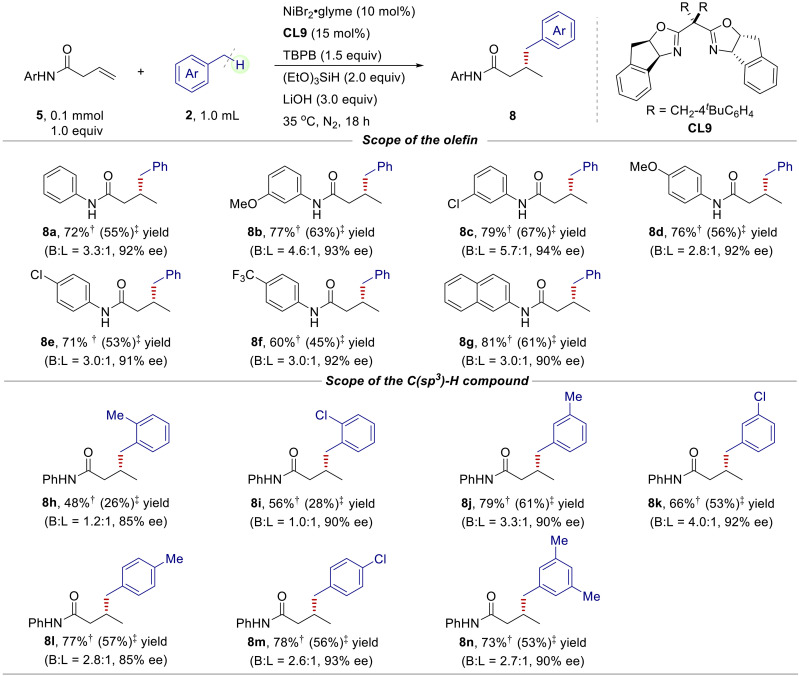
The hydroalkylation reaction of olefins with alkanes is a highly desirable synthetic transformation toward the construction of C(sp)─C(sp) bonds. However, such transformation has proven to be challenging for unactivated olefins, particularly when the substrates lack directing groups or acidic C(sp)─H bonds. Here, we address this challenge by merging NiH-catalyzed radical relay strategy with a HAT (hydrogen atom transfer) process. In this catalytic system, a nucleophilic alkyl radical is generated from a C(sp)─H compound in the presence of a HAT promotor, which couples with an alkyl metallic intermediate generated from the olefin substrate with a NiH catalyst to form the C(sp)─C(sp) bond. Starting from easily available materials, the reaction not only demonstrates wide functional group compatibility but also provides hydroalkylation products with regiodivergence and excellent enantioselectivity through effective catalyst control under mild conditions.
烯烃与烷烃的氢烷基化反应是构建C(sp)─C(sp)键的一种非常理想的合成转化反应。然而,事实证明,这种转化对于未活化的烯烃具有挑战性,特别是当底物缺乏导向基团或酸性C(sp)─H键时。在这里,我们通过将NiH催化的自由基接力策略与氢原子转移(HAT)过程相结合来应对这一挑战。在该催化体系中,在HAT促进剂存在下,C(sp)─H化合物生成亲核烷基自由基,该自由基与由烯烃底物和NiH催化剂生成的烷基金属中间体偶联形成C(sp)─C(sp)键。该反应从易于获得的原料出发,不仅展示了广泛的官能团兼容性,而且在温和条件下通过有效的催化剂控制提供了具有区域发散性和优异对映选择性的氢烷基化产物。