Heo Eun Ha, Abrol Ravinder
Department of Chemistry and Biochemistry, California State University Northridge, CA, 91330, USA.
Department of Chemistry and Biochemistry, California State University Northridge, CA, 91330, USA.
Biochem Biophys Res Commun. 2025 Jan;743:151100. doi: 10.1016/j.bbrc.2024.151100. Epub 2024 Nov 29.
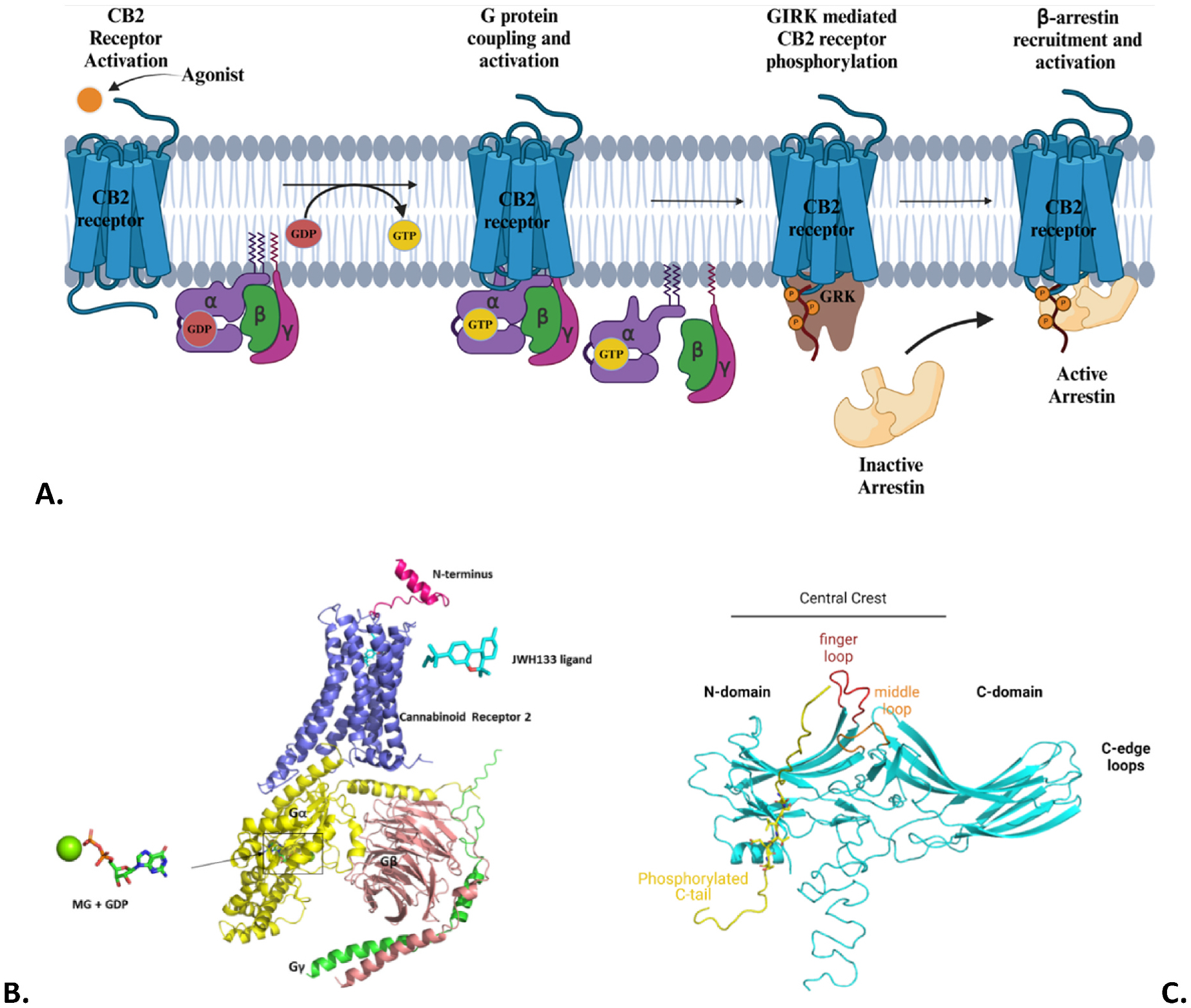
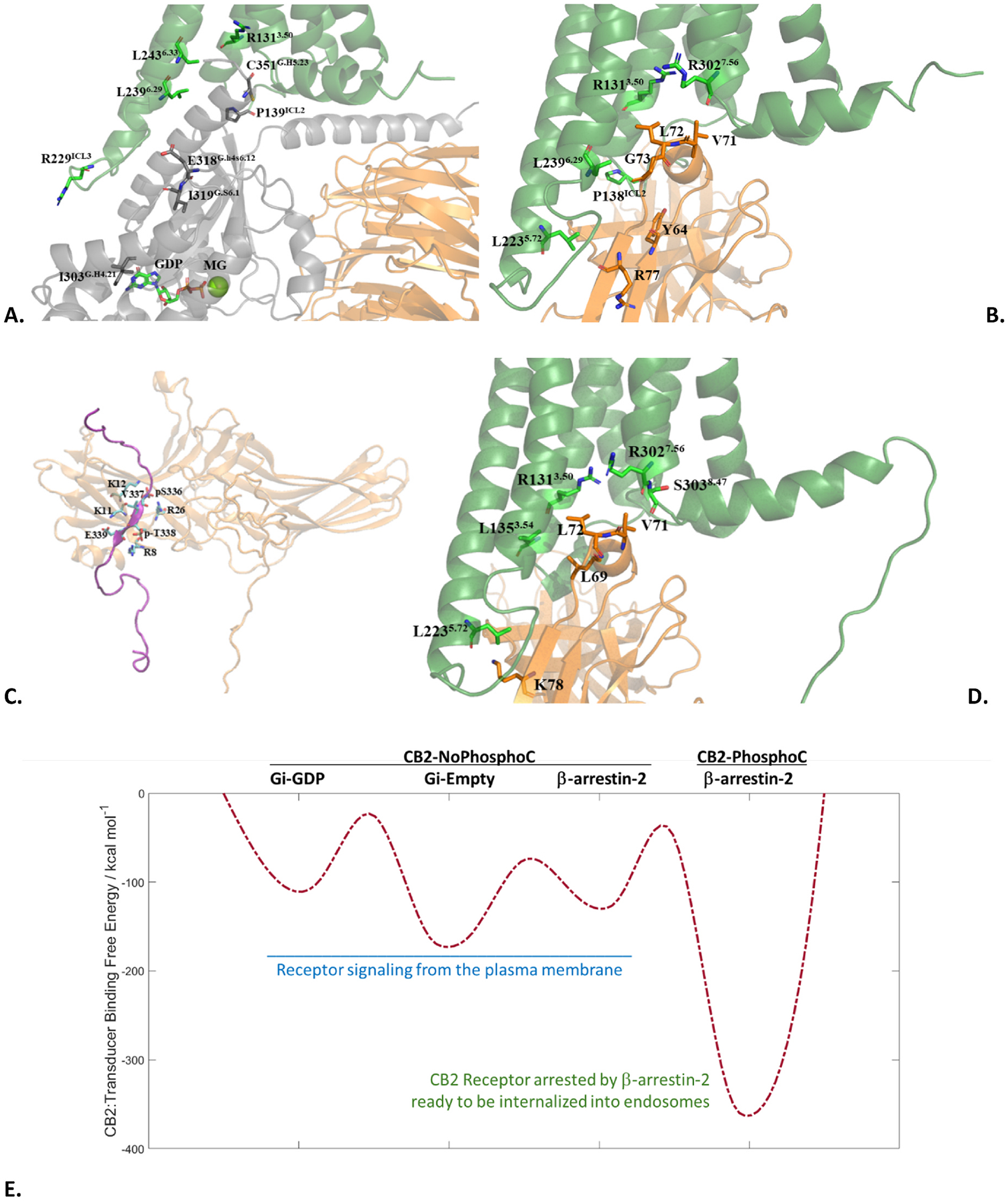
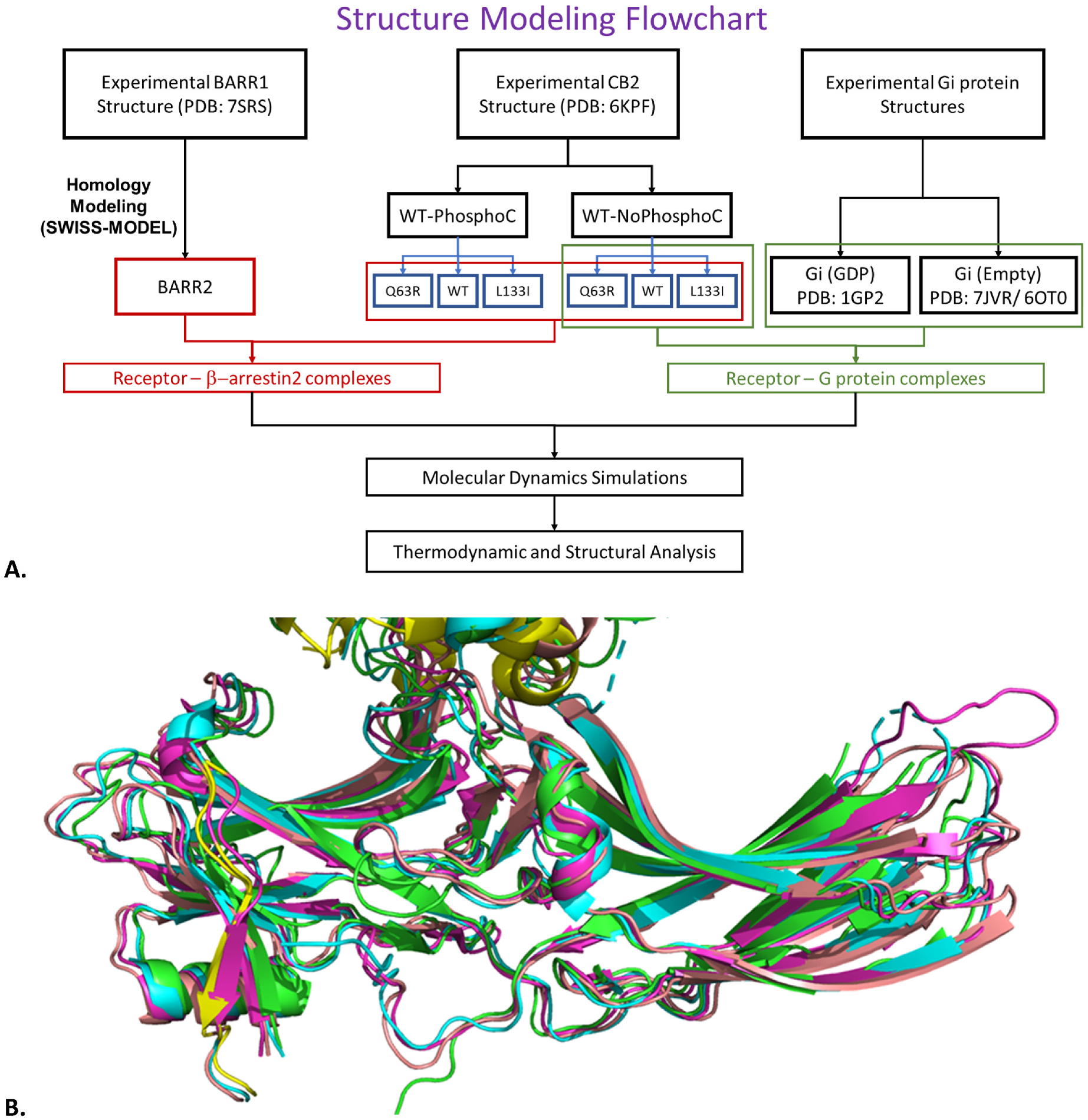
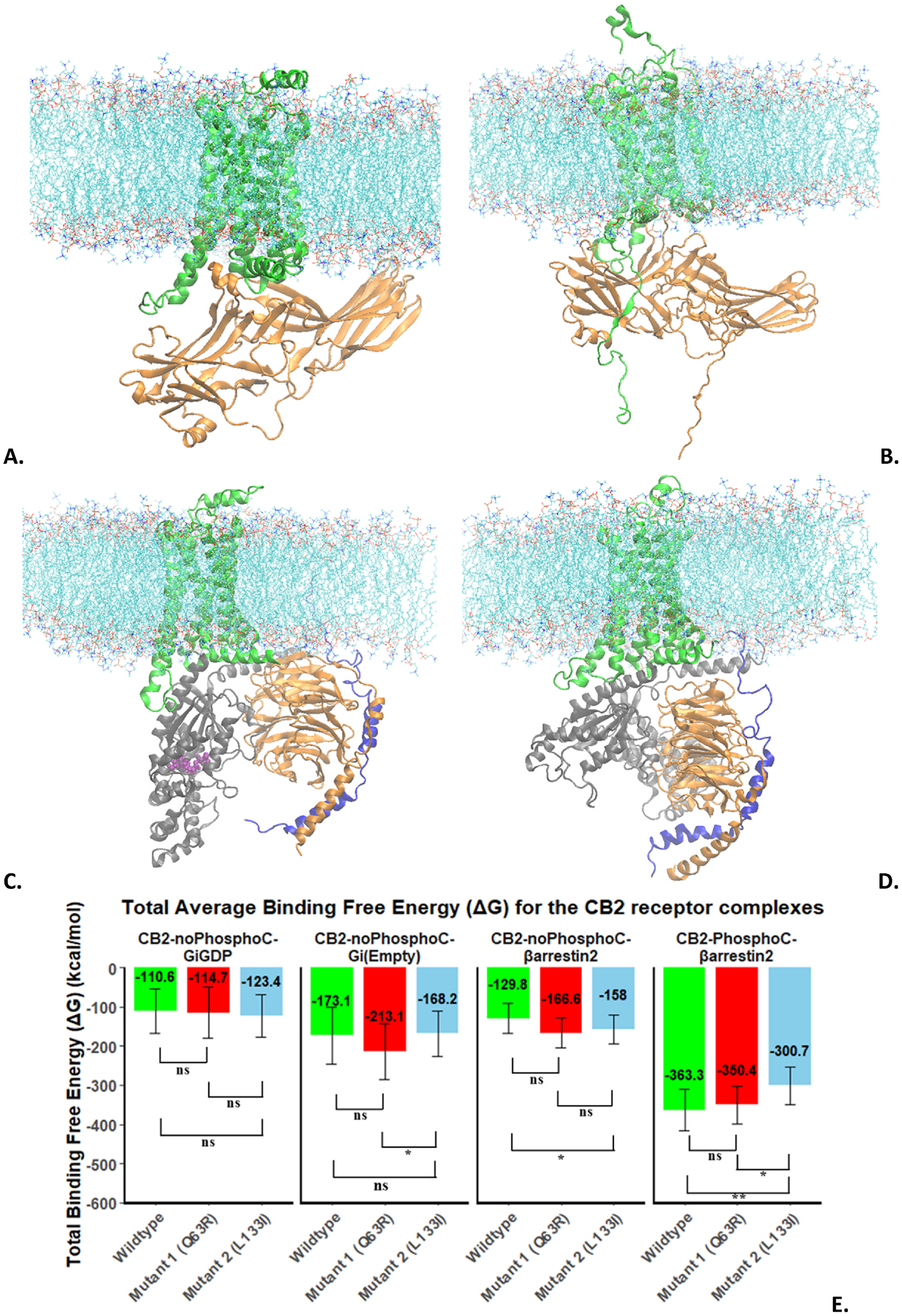
The endocannabinoid signaling system is comprised of CB1 and CB2 G protein-coupled receptors (GPCRs). CB2 receptor subtype is predominantly expressed in the immune cells and signals through its transducer proteins (Gi protein and β-arrestin-2). Arrestins are signaling proteins that bind to many GPCRs after receptor phosphorylation to terminate G protein signaling (desensitization) and to initiate specific G protein-independent arrestin-mediated signaling pathways via a "phosphorylation barcode", that captures sequence patterns of phosphorylated Ser/Thr residues in the receptor's intracellular domains and can lead to different signaling effects. The structural basis for how arrestins and G proteins compete with the receptor for biased signaling and how different barcodes lead to different signaling profiles is not well understood as there is a lack of phosphorylated receptor structures in complex with arrestins. In this work, structural models of β-arrestin-2 were built in complex with the phosphorylated and unphosphorylated forms of the CB2 receptor. The complex structures were relaxed in the lipid bilayer environment with molecular dynamics (MD) simulations and analyzed structurally and thermodynamically. The β-arrestin-2 complex with the phosphorylated receptor was more stable than the non-phosphorylated one, highlighting the thermodynamic role of the receptor phosphorylation. It was also more stable than any of the G protein complexes with CB2 suggesting that phosphorylation signals receptor desensitization (end of G protein signaling) and arrest of the receptor by arrestins. These models are beginning to provide the thermodynamic landscape of CB2 signaling, which can help bias signaling towards therapeutically beneficial pathways in drug discovery applications.
内源性大麻素信号系统由CB1和CB2 G蛋白偶联受体(GPCR)组成。CB2受体亚型主要在免疫细胞中表达,并通过其转导蛋白(Gi蛋白和β-抑制蛋白2)进行信号传导。抑制蛋白是一种信号蛋白,在受体磷酸化后与许多GPCR结合,以终止G蛋白信号传导(脱敏),并通过“磷酸化条形码”启动特定的G蛋白非依赖性抑制蛋白介导的信号通路,该条形码捕获受体胞内结构域中磷酸化丝氨酸/苏氨酸残基的序列模式,并可导致不同的信号传导效应。由于缺乏与抑制蛋白复合的磷酸化受体结构,抑制蛋白和G蛋白如何与受体竞争偏向性信号传导以及不同的条形码如何导致不同的信号传导谱的结构基础尚不清楚。在这项工作中,构建了与CB2受体的磷酸化和非磷酸化形式复合的β-抑制蛋白2的结构模型。通过分子动力学(MD)模拟在脂质双层环境中对复合结构进行松弛,并进行结构和热力学分析。与磷酸化受体复合的β-抑制蛋白2比非磷酸化的更稳定,突出了受体磷酸化的热力学作用。它也比任何与CB2的G蛋白复合物更稳定,表明磷酸化信号受体脱敏(G蛋白信号传导结束)和抑制蛋白对受体的捕获。这些模型开始提供CB2信号传导的热力学图景,这有助于在药物发现应用中使信号偏向治疗有益的途径。