Iitaka Sayuri, Kuroda Akihiro, Narita Tomonori, Hatakeyama Hideyuki, Morishita Masayo, Ungkulpasvich Umbhorn, Hirotsu Takaaki, di Luccio Eric, Yagi Koichi, Seto Yasuyuki
Department of Gastrointestinal Surgery, Graduate School of Medicine, The University of Tokyo, Tokyo, 113-8655, Japan.
Hirotsu Bio Science Inc, Tokyo, 102-0094, Japan.
BMC Cancer. 2024 Dec 18;24(1):1544. doi: 10.1186/s12885-024-13327-x.
Early detection of recurrent gastric and esophageal cancers remains a critical challenge. Innovative and non-invasive cancer screening technologies, such as N-NOSE, can improve early detection. N-NOSE is a urine-based scent test that leverages the olfactory abilities of the nematode C. elegans. For the first time, this prospective study evaluates the efficacy of the N-NOSE chemotaxis index as a novel biomarker for postoperative surveillance and recurrence in patients with upper gastrointestinal cancers.
A two-year prospective cohort study was conducted at The University of Tokyo Hospital, involving 40 patients with gastric and esophageal cancers. Urine samples were collected pre- and postoperatively and analysed using the N-NOSE technique.
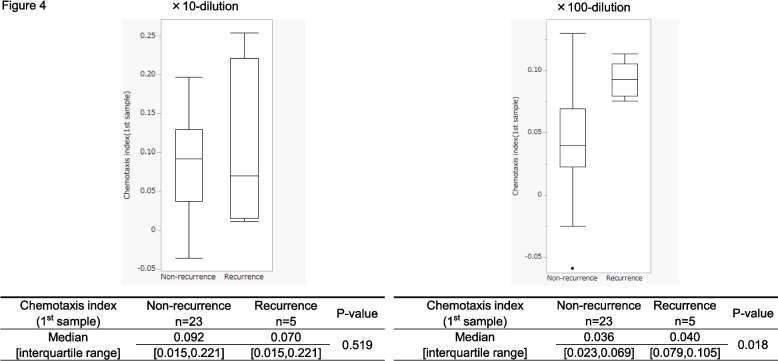
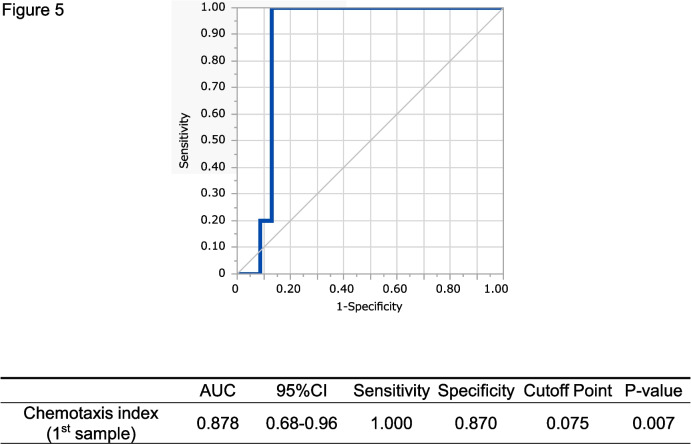
In cases of recurrence with vascular invasion, the chemotaxis index at 100-fold urine dilution was significantly elevated compared to the non-recurrence group.
This study suggests the potential of N-NOSE as an effective follow-up tool for patients with upper gastrointestinal cancer, particularly those with vascular invasion. While N-NOSE has been validated to distinguish between cancer and non-cancer, and its performance compared to traditional markers has been proven, it has not been studied for recurrence. Our data highlights, for the first time, the capability of N-NOSE in the surveillance of cancer recurrence.
早期发现复发性胃癌和食管癌仍然是一项严峻挑战。创新的非侵入性癌症筛查技术,如N-NOSE,可提高早期检测率。N-NOSE是一种基于尿液的气味测试,利用线虫秀丽隐杆线虫的嗅觉能力。这项前瞻性研究首次评估了N-NOSE趋化指数作为上消化道癌症患者术后监测和复发的新型生物标志物的有效性。
在东京大学医院进行了一项为期两年的前瞻性队列研究,纳入40例胃癌和食管癌患者。术前和术后收集尿液样本,并使用N-NOSE技术进行分析。
在发生血管侵犯的复发病例中,尿液稀释100倍时的趋化指数显著高于未复发组。
本研究表明N-NOSE作为上消化道癌症患者,尤其是有血管侵犯患者的有效随访工具的潜力。虽然N-NOSE已被验证可区分癌症和非癌症,并且其与传统标志物相比的性能也已得到证实,但尚未对其用于复发检测进行研究。我们的数据首次突出了N-NOSE在监测癌症复发方面的能力。