Ramalingam Suganya, Shantha Sivaramakrishnan, Srinivasan Chakravarthy Purushothaman, Priyathersini Nagarajan, Muralitharan Susruthan, Sudhakar Uma, Thamizhchelvan Harikrishnan, Parvathi Venkatachalam Deepa
Department of Oral Pathology, Sri Ramachandra Dental College and Hospital, Sri Ramachandra Institute of Higher Education and Research, Porur, Chennai, 600116, India.
Department of Pathology, Sri Ramachandra Medical College and Research Institute, Sri Ramachandra Institute of Higher Education and Research, Porur, Chennai, 600116, India.
BMC Oral Health. 2024 Dec 18;24(1):1487. doi: 10.1186/s12903-024-05245-y.
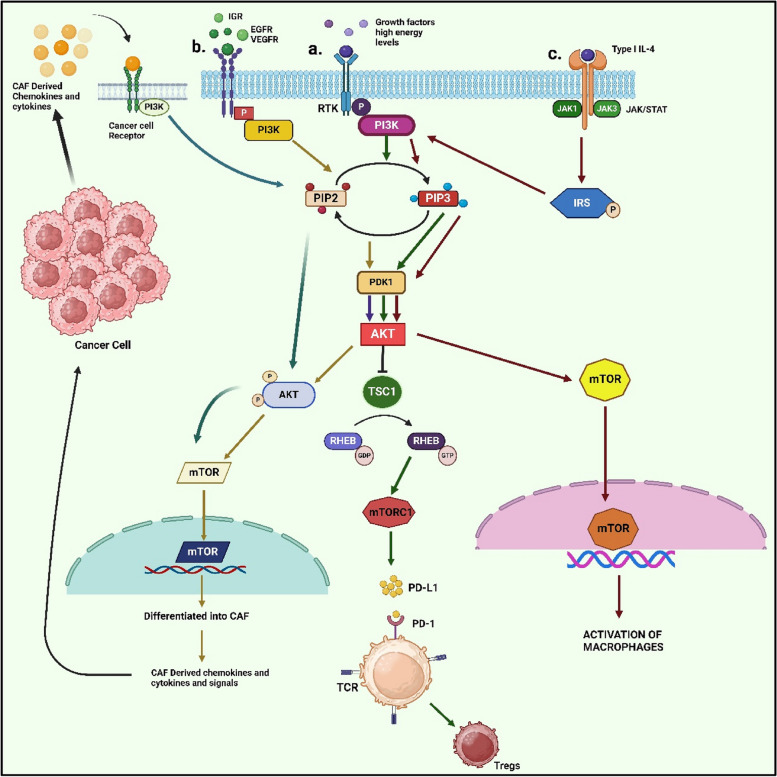
Oral cancer; categorised under head and neck cancers (HNC) predominantly originates from squamous cells and is referred as oral squamous cell carcinoma (OSCC). Various factors (internal and external) causes OSCC. PI3K/AKT/mTOR pathways are known to be primarily mutated in HNC. mTOR remains as a key regulator for various physiological and developmental processes in normal and cancer cells. Cancer cells are surrounded by tumor microenvironment, majorly composed of immune cells. Cancer associated fibroblasts, macrophages and regulatory T cells controlled by mTOR, plays an important role in the progression of cancer.
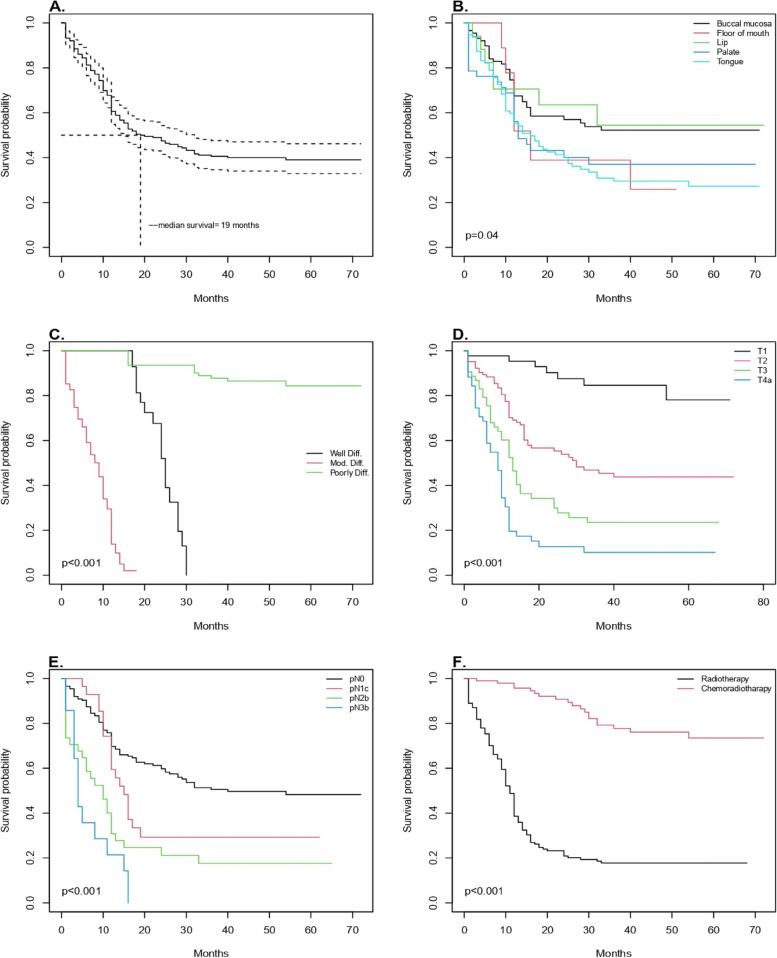
Two hundred sixty retrospective patient samples were collected along with their demographical and clinic-pathological data. Here, we have analysed expression of mTOR, α-SMA, CD163 and FOXp3 using immunohistochemistry and their survival outcomes were calculated using Kaplan-Meier statistical method.
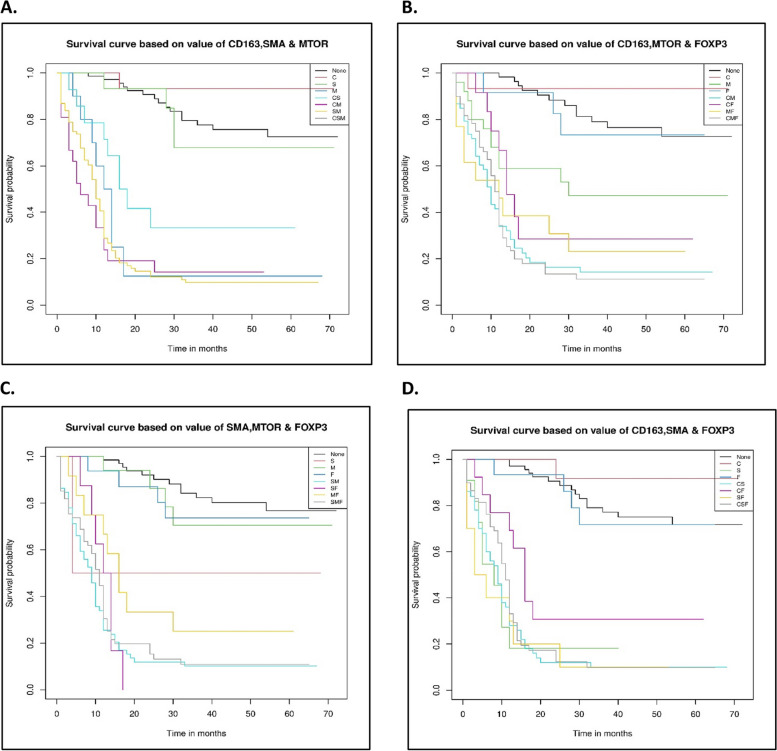
Overexpression of CD163 and α-SMA was detected in samples of patients compared to mTOR and FOXp3. Their expression was compared with clinico-oncological parameters. We also observed two and three combinations of markers and its association with the prognosis of the cancer. The results suggest, higher the expression of all the four markers in combination correlated to poor prognosis of patients and vice-versa.
The study reveals that over expression of CD163 and α-SMA is strongly associated with disease outcome. The combinations of all the four marker expression profile will be emerging strategy towards prognosis and also to determine survival outcomes in patients. This is a pioneering observation of these combinations of markers in OSCC despite certain limitations.
口腔癌;归类于头颈癌(HNC),主要起源于鳞状细胞,被称为口腔鳞状细胞癌(OSCC)。多种因素(内部和外部)可导致OSCC。已知PI3K/AKT/mTOR通路在HNC中主要发生突变。mTOR仍然是正常细胞和癌细胞中各种生理和发育过程的关键调节因子。癌细胞被肿瘤微环境包围,肿瘤微环境主要由免疫细胞组成。由mTOR控制的癌症相关成纤维细胞、巨噬细胞和调节性T细胞在癌症进展中起重要作用。
收集了260例回顾性患者样本及其人口统计学和临床病理数据。在此,我们使用免疫组织化学分析了mTOR、α-SMA、CD163和FOXp3的表达,并使用Kaplan-Meier统计方法计算了它们的生存结果。
与mTOR和FOXp3相比,在患者样本中检测到CD163和α-SMA的过表达。将它们的表达与临床肿瘤学参数进行了比较。我们还观察到了标记物的两种和三种组合及其与癌症预后的关联。结果表明,四种标记物组合的表达越高,与患者预后不良相关,反之亦然。
该研究表明,CD163和α-SMA的过表达与疾病结局密切相关。所有四种标记物表达谱的组合将成为预测预后以及确定患者生存结果的新兴策略。尽管存在某些局限性,但这是在OSCC中对这些标记物组合的开创性观察。