Li Yingqi, Liang Siyuan, Qin Kui, Su Hongtong, Xia Peiyong
Health Care Operation Management Research Center, Shanghai National Accounting Institute, Shanghai, China.
Shanghai University of International Business and Economics, Shanghai, China.
Cost Eff Resour Alloc. 2024 Dec 18;22(1):91. doi: 10.1186/s12962-024-00599-0.
The cost accounting of medical service projects forms the basis for disease cost accounting and DRG (Diagnosis-Related Groups) cost accounting. Among the various costs involved, human resources represent a significant portion and are highly complex, making their accurate accounting a critical and challenging aspect of cost accounting for medical service projects.
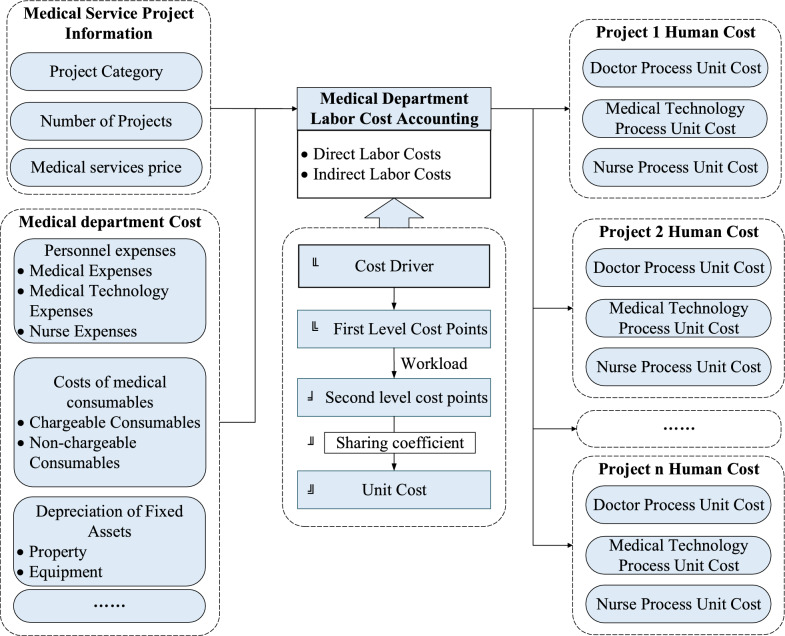
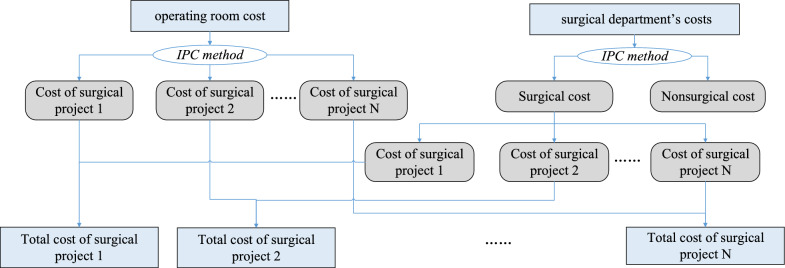
This paper introduces the itemized point cost (IPC) method, a novel cost accounting approach based on the RBRVS (Resource-Based Relative Value Scale) theory. It outlines the core concepts of "points" and "process steps" within the IPC framework and details its application in human cost accounting. An example of impacted tooth extraction in the stomatology department of Hospital A is used to illustrate the IPC method's implementation process.
A comparative analysis with activity-based costing and time-estimation costing methods shows that the IPC method is concise, practical, and operable. It is also aligned with the principles of cost-effectiveness.
The paper proposes strategies to promote the IPC method, including leveraging information technology, enhancing top-level design, and standardizing processes, to improve its adoption and effectiveness in medical cost accounting.
医疗服务项目成本核算是病种成本核算和疾病诊断相关分组(DRG)成本核算的基础。在各项成本中,人力资源成本占比较大且构成复杂,准确核算人力资源成本是医疗服务项目成本核算的重点和难点。
本文引入基于资源相对价值比率(RBRVS)理论的新型成本核算方法——分项点数成本法(IPC),阐述了IPC框架下“点数”和“流程步骤”的核心概念,并详细介绍其在人力成本核算中的应用。以A医院口腔科拔除患牙为例,说明IPC法的实施过程。
与作业成本法和工时估值法的对比分析表明,IPC法简洁、实用、可操作,符合成本效益原则。
本文提出推广IPC法的策略,包括利用信息技术、加强顶层设计和规范流程,以提高其在医疗成本核算中的应用程度和效果。