Mol S, Brown A V, Kuijper T M, Bouwhuis M G, de Groot B, Out A J, Ibelings M G, Koopman J S H A
Department of Emergency Medicine, Franciscus Gasthuis & Vlietland, Rotterdam, The Netherlands.
Department of Emergency Medicine, Curacao Medical Center, Willemstad, Curaçao.
BMC Anesthesiol. 2024 Dec 19;24(1):460. doi: 10.1186/s12871-024-02836-8.
Chronic pain is a substantial problem in modern healthcare resulting in health care overutilization. The cumulative incidence of developing chronic pain after visiting the emergency department with acute pain has been determined for specific patient groups only. If the cumulative incidence of chronic pain in emergency department patients with acute pain is high, more proactive measures are justified to limit development of chronic pain. The primary objective was to study the cumulative incidence of chronic pain in patients visiting Dutch emergency departments with acute pain. In addition, we compared the Health-Related Quality of Life (HRQOL) and pain related interference with work.
In this prospective multicenter cohort study data was collected from adult patients visiting the emergency department with acute pain. Chronic pain was defined by means of a numeric rating scale (NRS) of ≥ 1 measured 90 days after the initial visit. HRQOL was measured with European Quality of Life (EQ-5D-5 L) and Short Form (SF-36) questionnaires.
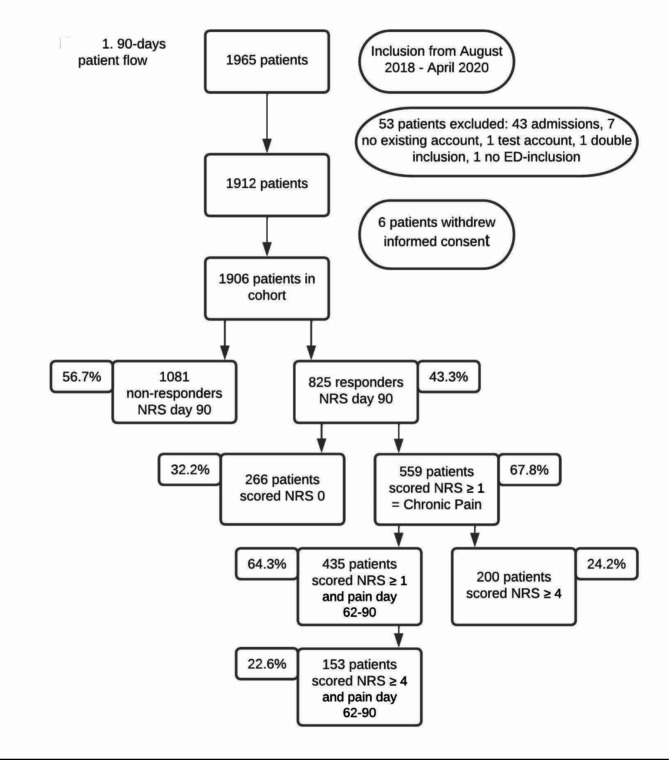
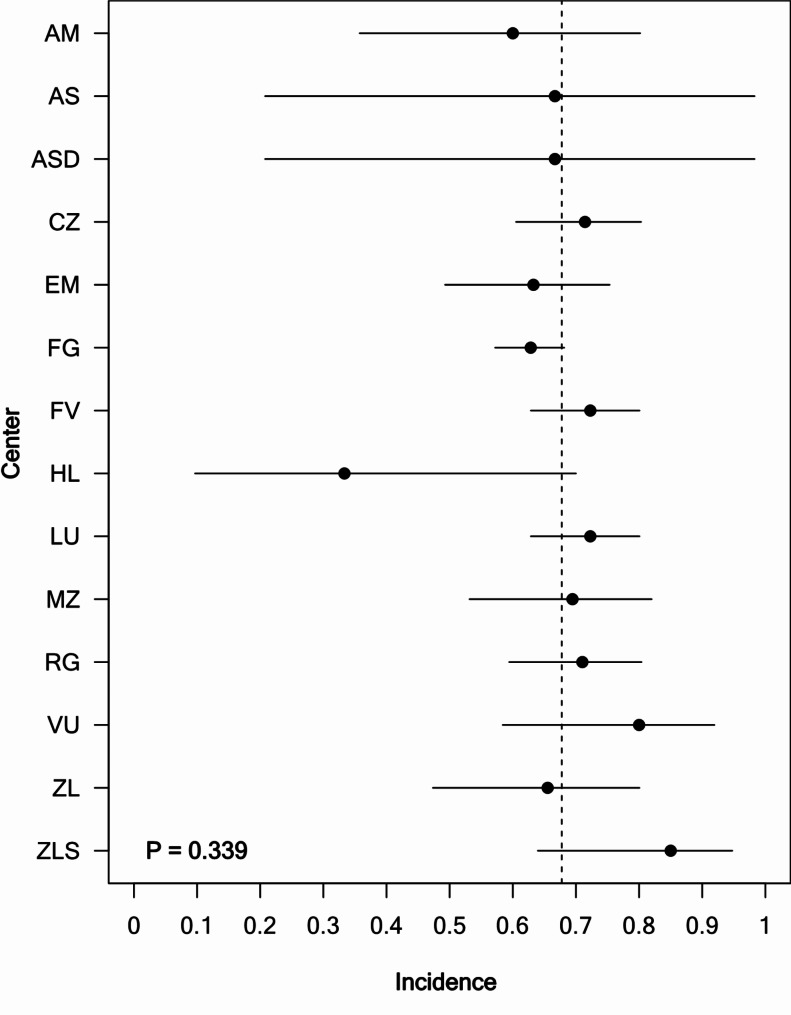
1906 patients were included of which 825 had complete data. Of these, 559 patients (67.8%; 95%CI: 64.5 - 70.9%) scored an NRS ≥ 1 after 90 days. Incidence with completed analyses (with imputed data) was similar. Patients with chronic pain reported a significantly lower HRQOL; EQ-5D-5 L index (median 0.82 vs. 1.00) and significantly more pain related hindrance (median 1.00 vs. 0.00).
67.8% of the responders scored NRS ≥ 1 90 days after ED-visit with acute pain. Regardless of the used definition, chronic pain is associated with a lower HRQOL and more pain related hindrance.
慢性疼痛是现代医疗保健中的一个重大问题,导致医疗资源过度使用。仅针对特定患者群体确定了因急性疼痛就诊急诊科后发生慢性疼痛的累积发病率。如果急性疼痛的急诊科患者中慢性疼痛的累积发病率很高,那么采取更积极的措施来限制慢性疼痛的发展是合理的。主要目的是研究因急性疼痛就诊荷兰急诊科的患者中慢性疼痛的累积发病率。此外,我们比较了健康相关生活质量(HRQOL)和疼痛对工作的相关干扰。
在这项前瞻性多中心队列研究中,收集了因急性疼痛就诊急诊科的成年患者的数据。慢性疼痛通过初次就诊90天后测量的数字评分量表(NRS)≥1来定义。HRQOL使用欧洲生活质量(EQ-5D-5L)和简短形式(SF-36)问卷进行测量。
纳入了1906例患者,其中825例有完整数据。其中,559例患者(67.8%;95%CI:64.5 - 70.9%)在90天后NRS评分≥1。完成分析(使用插补数据)的发病率相似。慢性疼痛患者报告的HRQOL显著较低;EQ-5D-5L指数(中位数0.82对1.00),且疼痛相关障碍显著更多(中位数1.00对0.00)。
67.8%的应答者在因急性疼痛就诊急诊科90天后NRS评分≥1。无论使用何种定义,慢性疼痛都与较低的HRQOL和更多的疼痛相关障碍有关。