Zhu He, Lei Jiahui, Gao Fan, Guo Yingjie, Zhao Limin
Department of Respiratory and Critical Care Medicine, Zhengzhou University People's Hospital, Henan Provincial People's Hospital, Zhengzhou, 450003, Henan, China.
Department of respiratory and critical care medicine, Henan provincial people's hospital, Henan, Zhengzhou, 450003, Jinshui District, China.
BMC Pulm Med. 2024 Dec 18;24(1):609. doi: 10.1186/s12890-024-03445-4.
UMEC/VI administered via a combination inhaler is associated with a clinically significant improvement in lung function and health-related quality of life in patients with mild-to-moderate COPD. However, their efficacy compared to other bronchodilator mono or dual therapies still remains unclear.
The objective of this research was to evaluate the therapeutic efficacy of UMEC/VI dual and UMEC/VI/FF triple therapies versus alternative bronchodilator regimens in COPD patients.
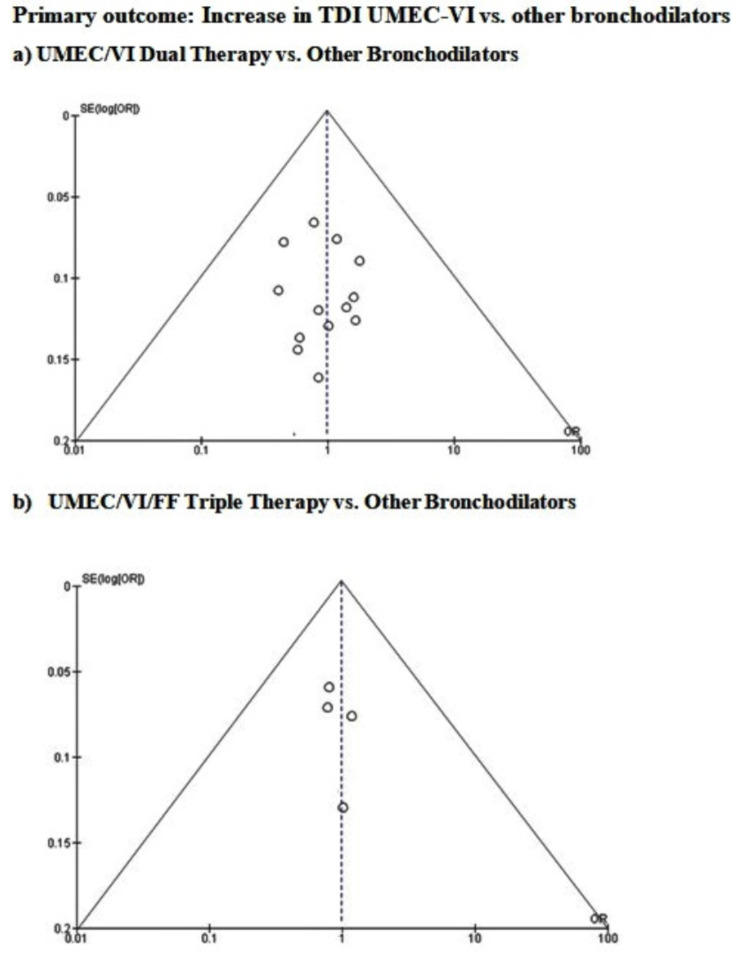
A systematic search was conducted using four electronic databases (PubMed, EMBASE, Scopus, and Cochrane Library) to select publications published in peer-reviewed journals written in English. The odds ratio (OR) and risk ratio (RR) was calculated, along with their 95% confidence intervals. We assessed heterogeneity using Cochrane Q and I [2] statistics and the appropriate p-value. The analysis used RevMan 5.4.
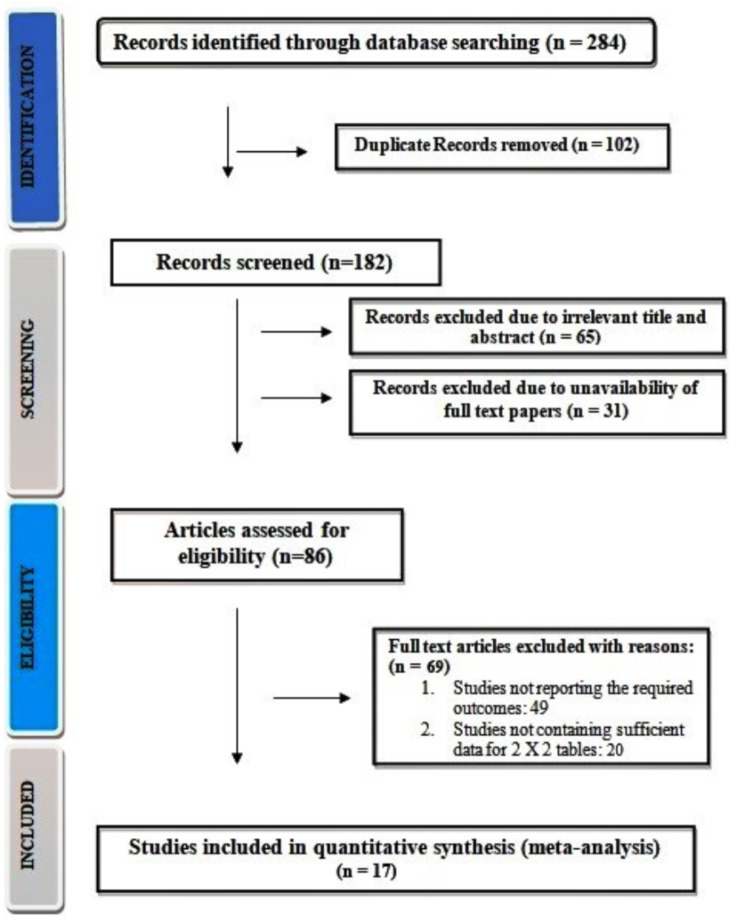
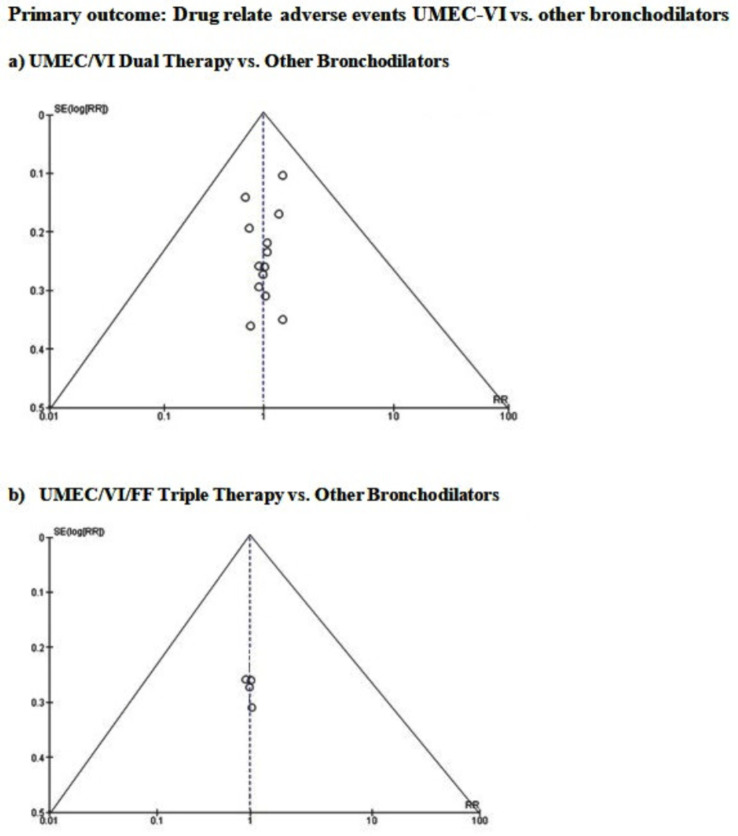
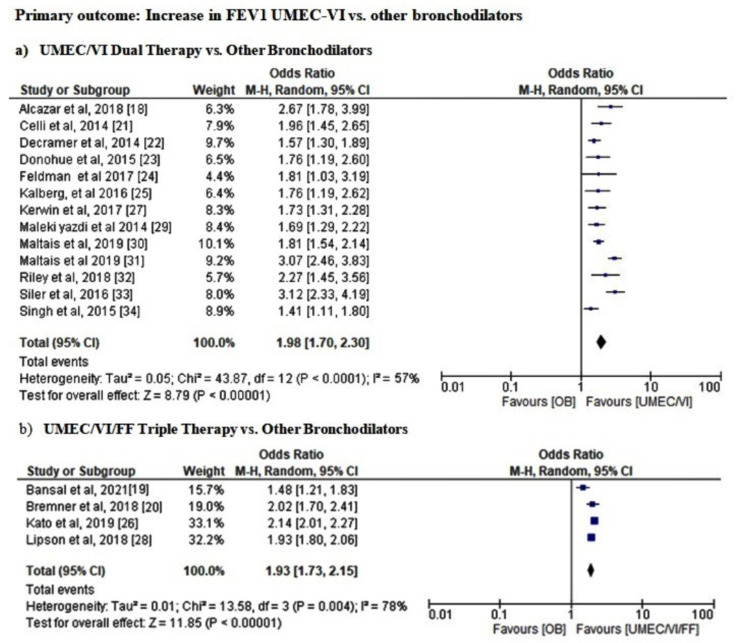
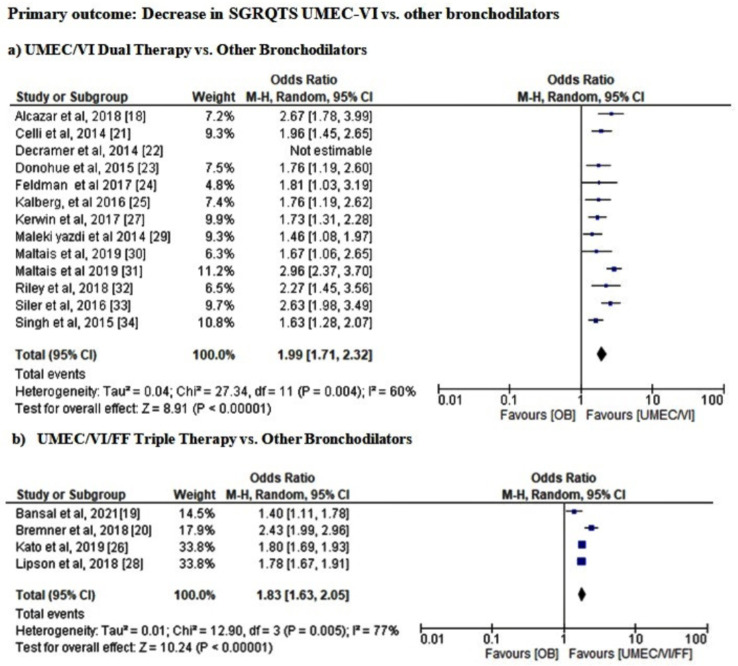
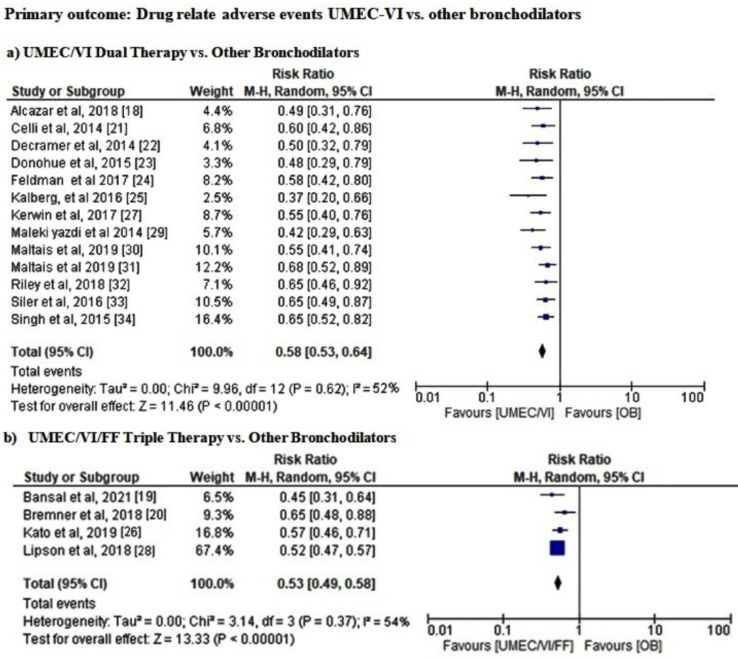
The current meta-analysis includes 31,814 COPD patients from 17 RCTs. The meta-analysis results demonstrate that the combination of LABA and LAMA provides additive bronchodilation and improved lung function in COPD patients. We found that UMEC/VI dual therapy significantly improved FEV1 (OR 1.98 [95% CI 1.70-2.30]), TDI values (OR 1.97 [95% CI 1.72-2.26]), and reduced SGRQ total scores (OR 1.99 [95% CI 1.71-2.32]), with fewer drug-related adverse events (RR 0.58 [95% CI 0.53-0.64]). Similarly, UMEC/VI/FF triple therapy also showed similar benefits, with significant improvements in FEV1 (OR 1.93 [95% CI 1.73-2.15]), TDI values (OR 2.37 [95% CI 2.15-2.61]), and reduced SGRQ total scores (OR 1.83 [95% CI 1.63-2.05]), and fewer drug-related adverse events (RR 0.53 [95% CI 0.49-0.58]).
This systematic review and meta-analysis concludes that UMEC and VI combinations are an efficacious treatment option for symptomatic COPD patients.
通过联合吸入器给药的umeclidinium/vilanterol(UMEC/VI)与中重度慢性阻塞性肺疾病(COPD)患者的肺功能及健康相关生活质量的显著临床改善相关。然而,与其他支气管扩张剂单一或联合疗法相比,其疗效仍不明确。
本研究旨在评估UMEC/VI双联疗法和UMEC/VI/富马酸福莫特罗(FF)三联疗法与其他支气管扩张剂方案对COPD患者的治疗效果。
通过四个电子数据库(PubMed、EMBASE、Scopus和Cochrane图书馆)进行系统检索,以选择发表在同行评审英文期刊上的文献。计算比值比(OR)和风险比(RR)及其95%置信区间。我们使用Cochrane Q和I²统计量及适当的p值评估异质性。分析使用RevMan 5.4。
当前的荟萃分析纳入了来自17项随机对照试验(RCT)的31,814例COPD患者。荟萃分析结果表明,长效β2受体激动剂(LABA)和长效抗胆碱能药物(LAMA)联合使用可提供相加的支气管扩张作用,并改善COPD患者的肺功能。我们发现,UMEC/VI双联疗法显著改善第1秒用力呼气容积(FEV1)(OR 1.98 [95% CI 1.70 - 2.30])、过渡呼吸困难指数(TDI)值(OR 1.97 [95% CI 1.72 - 2.26]),并降低圣乔治呼吸问卷(SGRQ)总分(OR 1.99 [95% CI 1.71 - 2.32]),且药物相关不良事件较少(RR 0.58 [95% CI 0.53 - 0.64])。同样,UMEC/VI/FF三联疗法也显示出类似的益处,FEV1显著改善(OR 1.93 [95% CI 1.73 - 2.15])、TDI值(OR 2.37 [95% CI 2.15 - 2.61]),SGRQ总分降低(OR 1.83 [95% CI 1.63 - 2.05]),药物相关不良事件较少(RR 0.53 [95% CI 0.49 - 0.58])。
本系统评价和荟萃分析得出结论,UMEC和VI联合使用是有症状COPD患者的有效治疗选择。