Yin Qingsheng, Yang Genhui, Su Runtao, Bu Jie, Li Ying, Zhang Han, Zhang Yanjun, Zhuang Pengwei
State Key Laboratory of Chinese Medicine Modernization, Tianjin University of Traditional Chinese Medicine, Jinghai District, Tianjin, 301617, China.
State Key Laboratory of Component-Based Chinese Medicine, Tianjin University of Traditional Chinese Medicine, Tianjin, 301617, China.
Chin Med. 2024 Dec 19;19(1):169. doi: 10.1186/s13020-024-01041-6.
Blood-brain barrier (BBB) integrity disruption is a key pathological link of diabetes-induced cognitive impairment (DCI), but the detailed mechanism of how the diabetic environment induces BBB integrity disruption is not fully understood. Our previous study found that Zi Shen Wan Fang (ZSWF), an optimized prescription consisting of Anemarrhenae Rhizoma (Anemarrhena asphodeloides Bge.), Phellodendri Chinensis Cortex (Phellodendron chinense Schneid.) and Cistanches Herba (Cistanche deserticola Y.C.Ma) has excellent efficacy in alleviating DCI, however, whether its mechanism is related to repairing BBB integrity remains unclear. This study aims to reveal the mechanism of BBB integrity destruction in DCI mice, and to elucidate the mechanism by which ZSWF repairs BBB integrity and improves cognitive function in DCI mice.
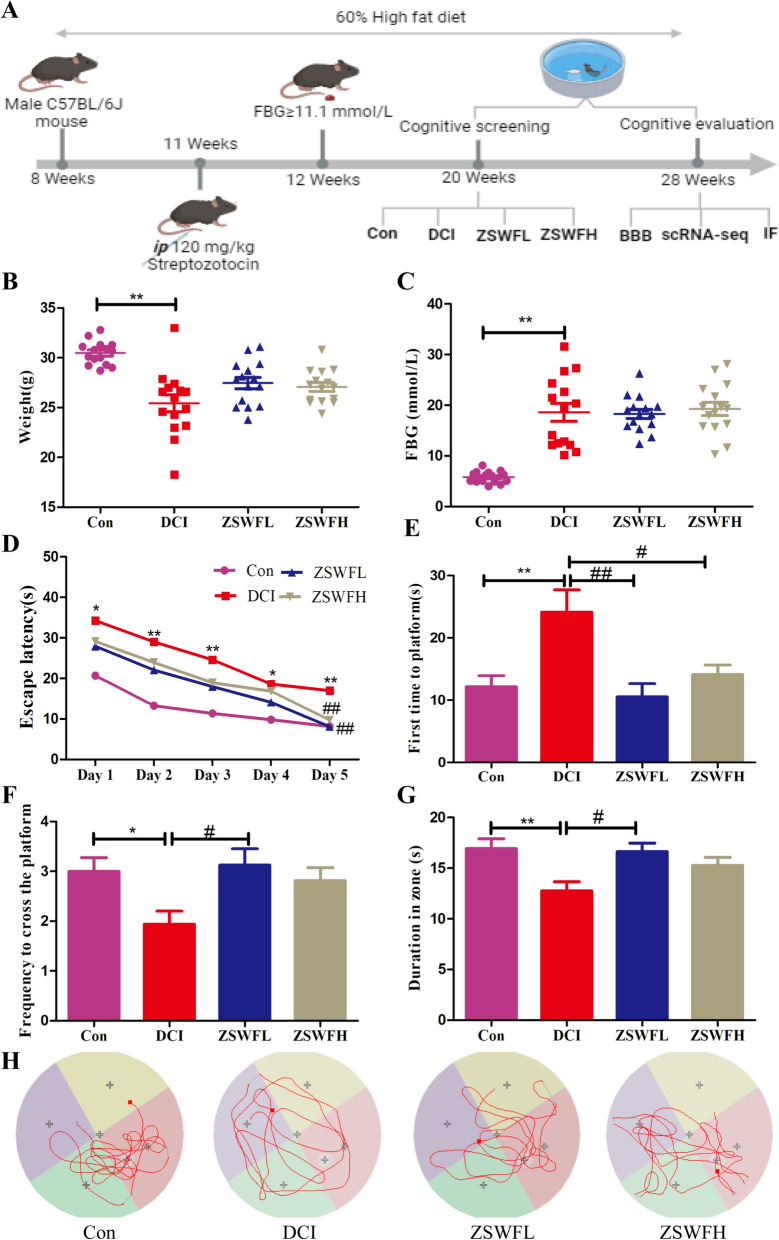
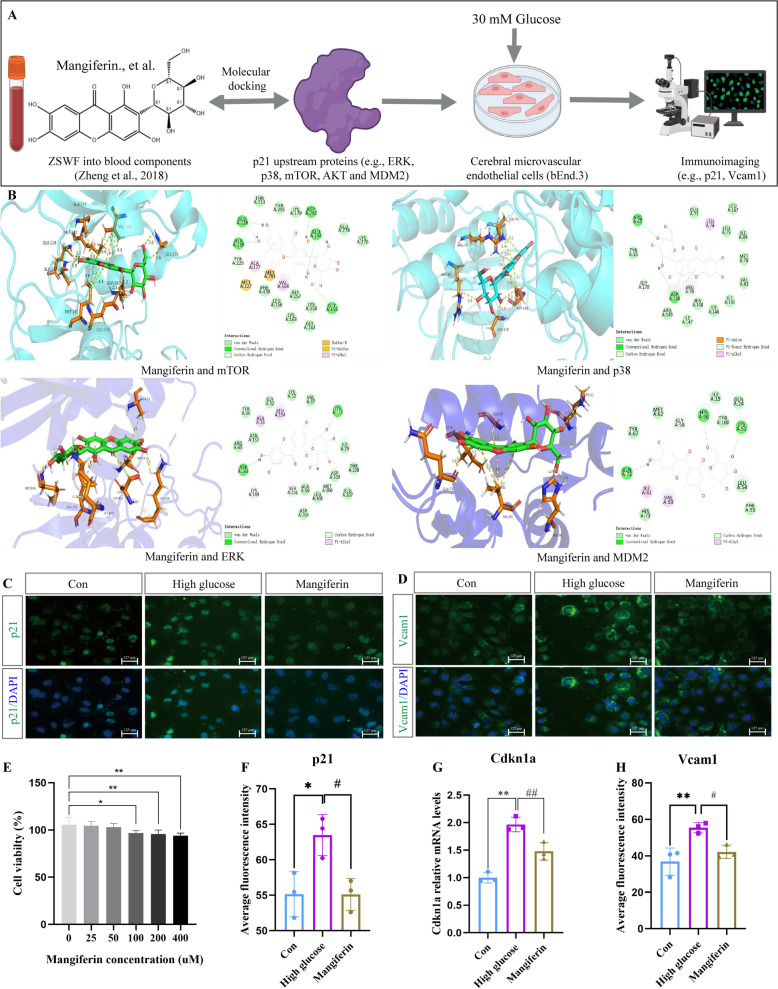
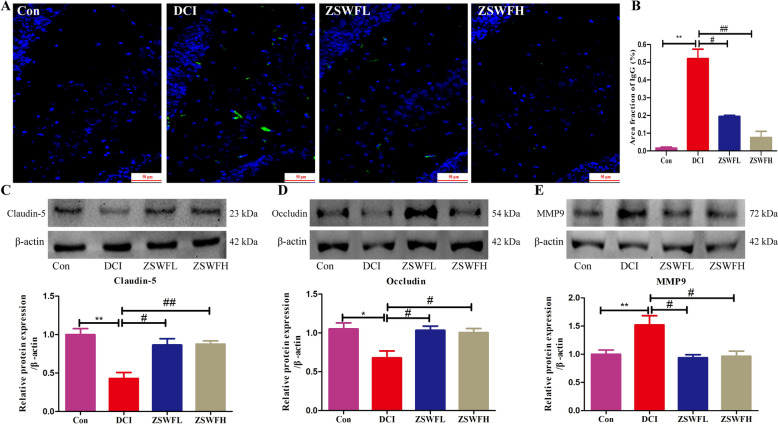
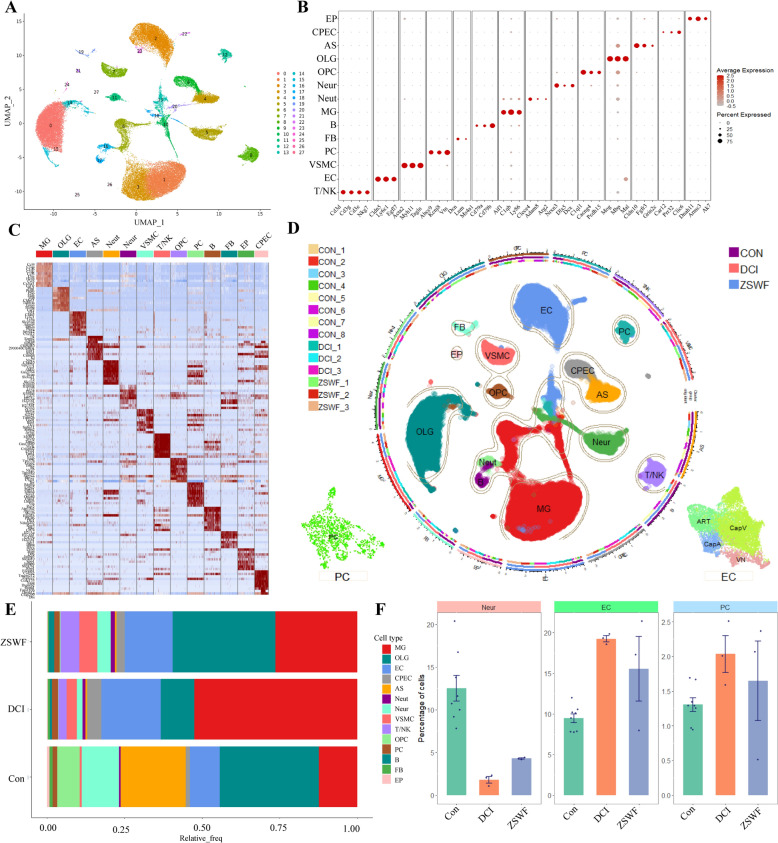
Diabetic mouse model was established by feeding a 60% high-fat diet combined with a single intraperitoneal injection of 120 mg/kg streptozotocin (STZ). DCI mice were screened with morris water maze (MWM) after 8 weeks of sustained hyperglycemic stimulation. ZSWF was administered daily at doses of 9.36 and 18.72 g/kg for 8 weeks. Cognitive function was evaluated using MWM, blood-brain-barrier (BBB) integrity was tested using immunostaining and western blot, the underlying mechanisms were explored using single-cell RNA sequencing (scRNA-seq), validation experiments were performed with immunofluorescence analysis, and the potential active ingredients of ZSWF against cerebrovascular senescence were predicted using molecular docking. Moreover, cerebral microvascular endothelial cells were cultured, and the effects of mangiferin on the expression of p21 and Vcam1 were investigated by immunofluorescence staining and RT-qPCR.
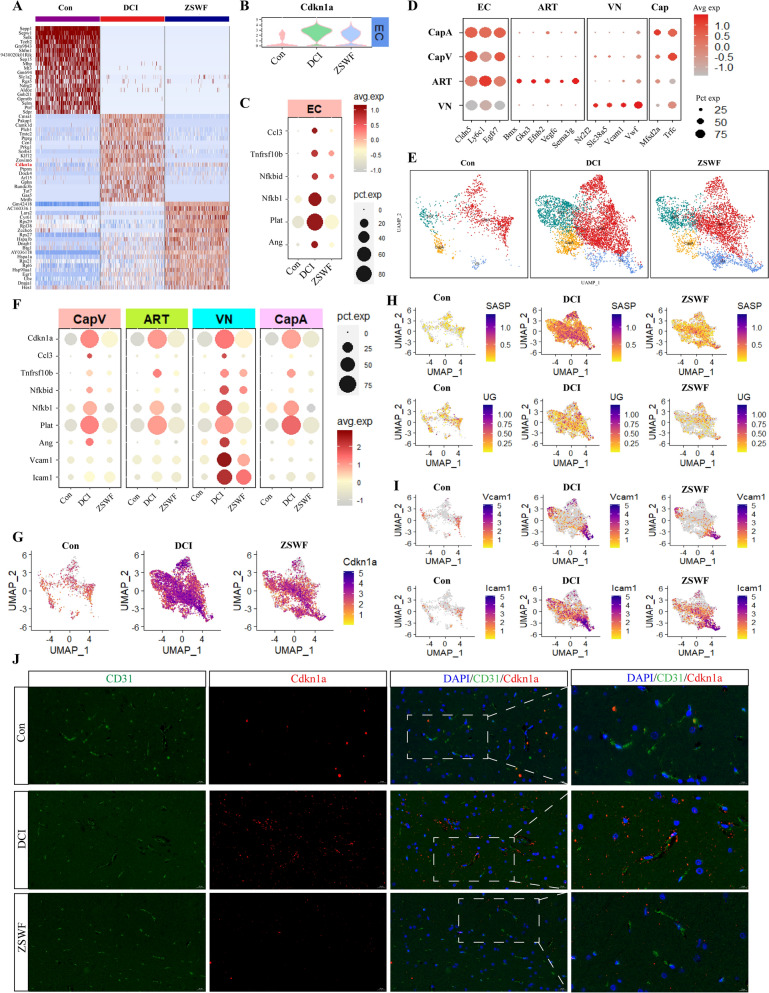
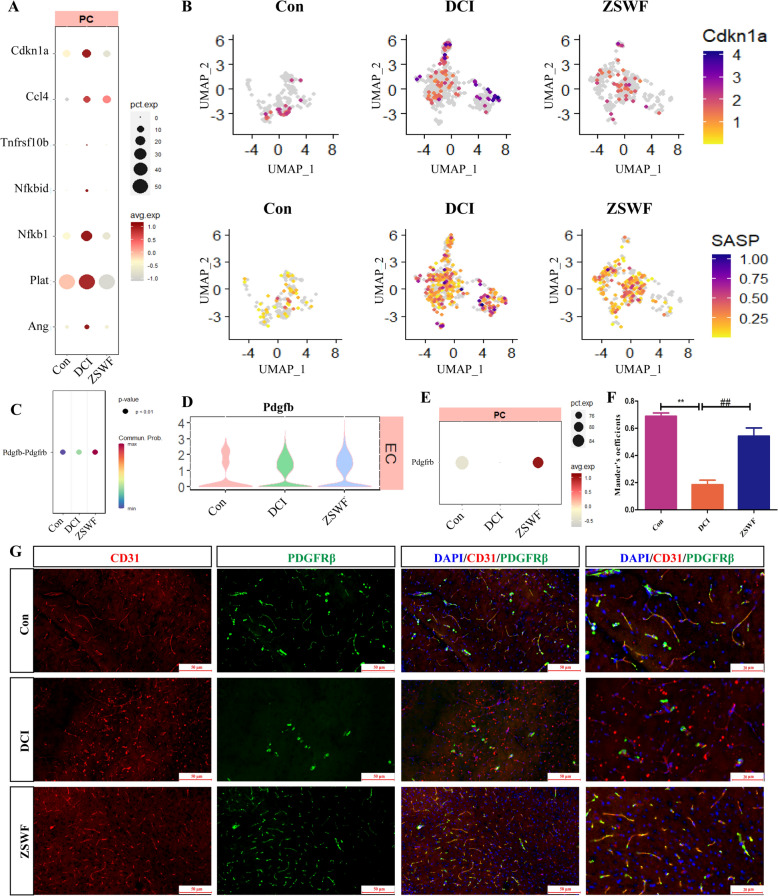
ZSWF treatment significantly ameliorated cognitive function and repaired BBB integrity in DCI mice. Using scRNA-seq, we identified 14 brain cell types. In BBB constituent cells (endothelial cells and pericytes), we found that Cdkn1a and senescence-associated secretory phenotype (SASP) genes were significantly overexpressed in DCI mice, while ZSWF intervention significantly inhibited the expression of Cdkn1a and SASP genes in cerebrovascular cells of DCI mice. Moreover, we also found that the communication between brain endothelial cells and pericytes was decreased in DCI mice, while ZSWF significantly increased the communication between them, especially the expression of PDGFRβ in pericytes. Molecular docking results showed that mangiferin, the blood component of ZSWF, had a stronger affinity with the upstream proteins of p21. In vitro experiments showed that high glucose significantly increased the expression of p21 and Vcam1 in bEnd.3 cells, while mangiferin significantly inhibited the expression of p21 and Vcam1 induced by high glucose.
Our study reveals that ZSWF can ameliorate cognitive function in DCI mice by repairing BBB integrity, and the specific mechanism of which may be related to preventing cerebrovascular cells senescence, and mangiferin is its key active ingredient.
血脑屏障(BBB)完整性破坏是糖尿病诱导的认知障碍(DCI)的关键病理环节,但糖尿病环境如何诱导BBB完整性破坏的详细机制尚未完全明确。我们之前的研究发现,由知母(Anemarrhena asphodeloides Bge.)、黄柏(Phellodendron chinense Schneid.)和肉苁蓉(Cistanche deserticola Y.C.Ma)组成的优化方剂滋肾万方(ZSWF)在缓解DCI方面具有优异疗效,然而,其机制是否与修复BBB完整性相关仍不清楚。本研究旨在揭示DCI小鼠BBB完整性破坏的机制,并阐明ZSWF修复DCI小鼠BBB完整性及改善认知功能的机制。
通过喂食60%高脂饮食并单次腹腔注射120 mg/kg链脲佐菌素(STZ)建立糖尿病小鼠模型。持续高血糖刺激8周后,用莫里斯水迷宫(MWM)筛选DCI小鼠。ZSWF以9.36和18.72 g/kg的剂量每日给药8周。使用MWM评估认知功能,使用免疫染色和蛋白质免疫印迹检测血脑屏障(BBB)完整性,使用单细胞RNA测序(scRNA-seq)探索潜在机制,通过免疫荧光分析进行验证实验,并使用分子对接预测ZSWF抗脑血管衰老的潜在活性成分。此外,培养脑微血管内皮细胞,通过免疫荧光染色和RT-qPCR研究芒果苷对p21和Vcam1表达的影响。
ZSWF治疗显著改善了DCI小鼠的认知功能并修复了BBB完整性。使用scRNA-seq,我们鉴定出14种脑细胞类型。在BBB组成细胞(内皮细胞和周细胞)中,我们发现Cdkn1a和衰老相关分泌表型(SASP)基因在DCI小鼠中显著过表达,而ZSWF干预显著抑制了DCI小鼠脑血管细胞中Cdkn1a和SASP基因的表达。此外,我们还发现DCI小鼠脑内皮细胞与周细胞之间的通讯减少,而ZSWF显著增加了它们之间的通讯,尤其是周细胞中PDGFRβ的表达。分子对接结果表明,ZSWF的血液成分芒果苷与p21的上游蛋白具有更强的亲和力。体外实验表明,高糖显著增加了bEnd.3细胞中p21和Vcam1的表达,而芒果苷显著抑制了高糖诱导的p21和Vcam1的表达。
我们的研究表明,ZSWF可通过修复BBB完整性改善DCI小鼠的认知功能,其具体机制可能与预防脑血管细胞衰老有关,芒果苷是其关键活性成分。