Hosokawa Rikuya, Matsumoto Yuki, Nishida Chizuko, Funato Keiko, Mitani Aki
Department of Human Health Sciences, Graduate School of Medicine, Kyoto University, 53 Shogoin-kawahara-cho, Sakyo-ku, Kyoto, 606-8507, Japan.
School of Human Life Sciences, Tokushima Bunri University, Tokushima, 770-8514, Japan.
BMC Psychol. 2024 Dec 18;12(1):761. doi: 10.1186/s40359-024-02280-w.
Social and emotional learning (SEL) is crucial for developing skills such as emotional regulation, cooperation, and goal achievement. Deficits in these skills are linked to later academic and behavioral problems. While SEL interventions have been widely implemented internationally, few have been tested in early childhood settings in Japan, and their effectiveness remains unclear. In 2022, the Fun FRIENDS social and emotional learning program was introduced in class units for 4-5-year-olds attending kindergartens and children's schools in Wakayama Prefecture, Japan. Thus, this study examined the effectiveness of the Fun FRIENDS program in children aged 4-5 years in Japan.
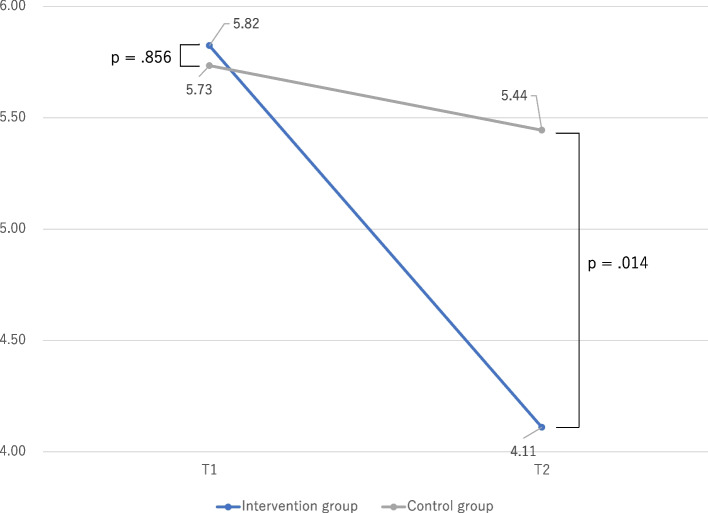
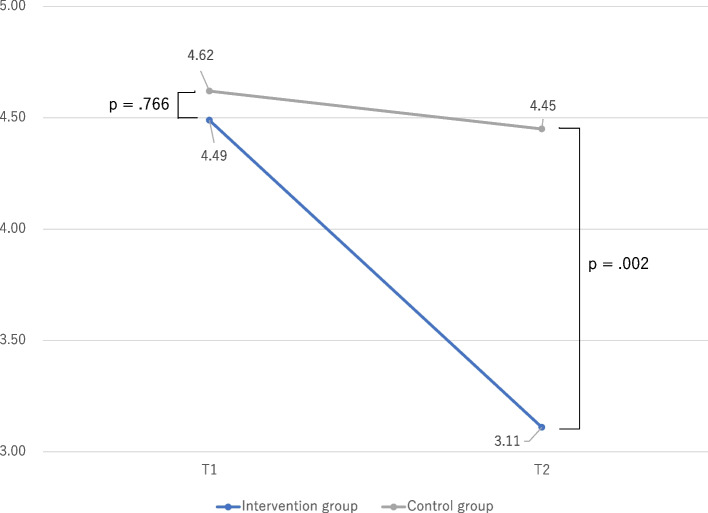
Fun FRIENDS is based on a cognitive-behavioral approach designed to teach participants how to cope with anxiety and stress, and to develop resilience and confidence. The program consists of 10 weekly sessions of approximately 1 h each. The intervention group comprised 115 children from two facilities, while the control group comprised 93 children from three facilities. Intervention effectiveness was evaluated through changes in externalizing (e.g., aggression, oppositional behavior) and internalizing behaviors (e.g., anxiety, depression), measured using the Strengths and Difficulties Questionnaire. Finally, data from 94 participants in the intervention group and 66 participants in the control group were analyzed.
In the intervention group, externalizing behaviors showed a significant reduction both before and after the intervention and internalizing behaviors also decreased significantly. Conversely, the control group did not exhibit any significant changes in either externalizing or internalizing behaviors before or after the intervention. The effect size for externalizing behaviors in the target group was 0.744, while the effect size for internalizing behaviors was 0.653.
Social and emotional learning programs in classrooms may effectively control problem behaviors in early childhood and prevent school maladjustment. A whole-class approach can reach more children, maximizing the preventive effects. The program can improve academic performance and social adaptation, contributing to the long-term development of psychological health and social skills. Nevertheless, further longitudinal research is required to assess the program's long-term effects. In summary, strengthening the focus on social-emotional learning in early childhood education policy is key to realizing long-term benefits for child development.
社会情感学习(SEL)对于培养情绪调节、合作和目标达成等技能至关重要。这些技能的缺陷与后期的学业和行为问题相关。虽然SEL干预措施已在国际上广泛实施,但在日本的幼儿教育环境中进行测试的却很少,其有效性仍不明确。2022年,“趣味朋友”社会情感学习项目在日本和歌山县的幼儿园和儿童学校以班级为单位面向4至5岁儿童推出。因此,本研究考察了“趣味朋友”项目对日本4至5岁儿童的有效性。
“趣味朋友”基于认知行为方法,旨在教导参与者如何应对焦虑和压力,并培养恢复力和自信心。该项目包括每周一次、每次约1小时的10次课程。干预组由来自两个机构的115名儿童组成,对照组由来自三个机构的93名儿童组成。通过使用优势与困难问卷测量的外化行为(如攻击行为、对立行为)和内化行为(如焦虑、抑郁)的变化来评估干预效果。最后,对干预组的94名参与者和对照组的66名参与者的数据进行了分析。
在干预组中,外化行为在干预前后均显著减少,内化行为也显著下降。相反,对照组在干预前后的外化行为或内化行为均未表现出任何显著变化。目标组外化行为的效应量为0.744,内化行为的效应量为0.653。
课堂中的社会情感学习项目可能有效控制幼儿期的问题行为并预防学校适应不良。全班参与的方法可以覆盖更多儿童,使预防效果最大化。该项目可以提高学业成绩和社会适应能力,有助于心理健康和社交技能的长期发展。然而,需要进一步的纵向研究来评估该项目的长期效果。总之,在幼儿教育政策中加强对社会情感学习的关注是实现儿童发展长期效益的关键。