Varricchio Silvia, Ilardi Gennaro, Russo Daniela, Di Crescenzo Rosa Maria, Crispino Angela, Staibano Stefania, Merolla Francesco
Department of Advanced Biomedical Sciences, Pathology Unit, University of Naples "Federico II", via S.Pansini, 5, Naples 80131, Italy.
Department of Medicine and Health Sciences "V. Tiberio", University of Molise, via De Sanctis, Campobasso 86100, Italy.
J Pathol Inform. 2024 Nov 9;15:100407. doi: 10.1016/j.jpi.2024.100407. eCollection 2024 Dec.
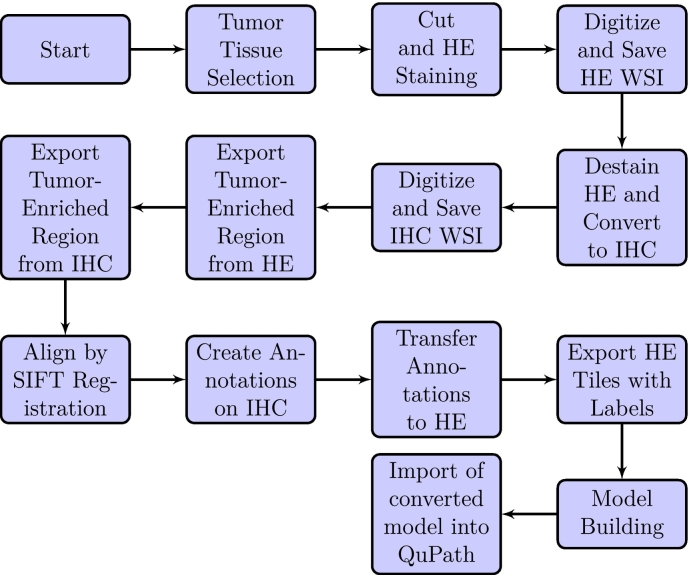
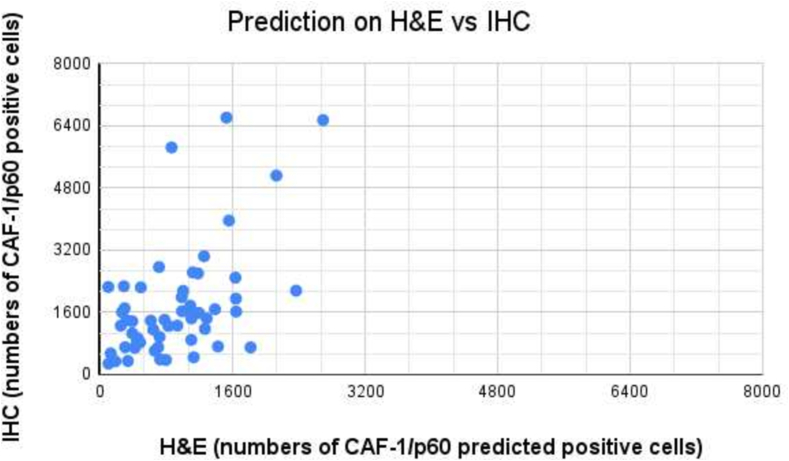
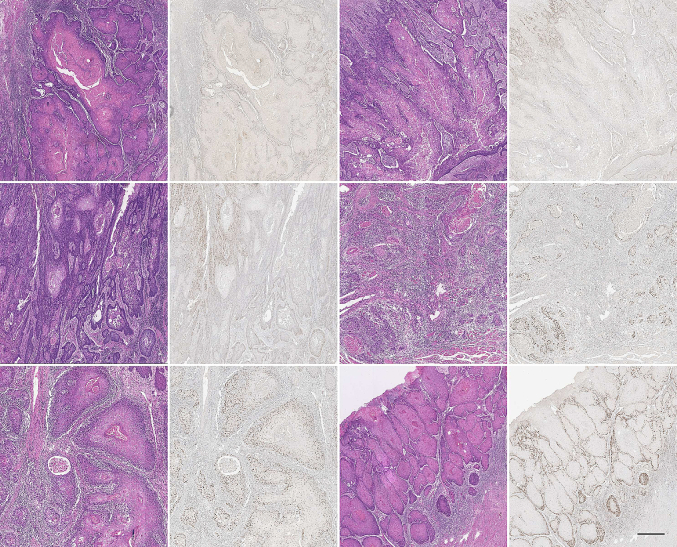
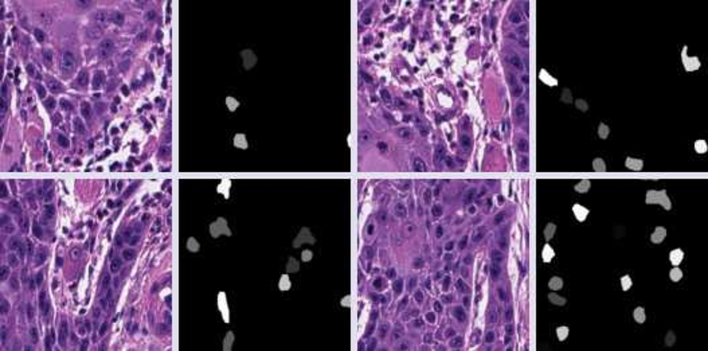
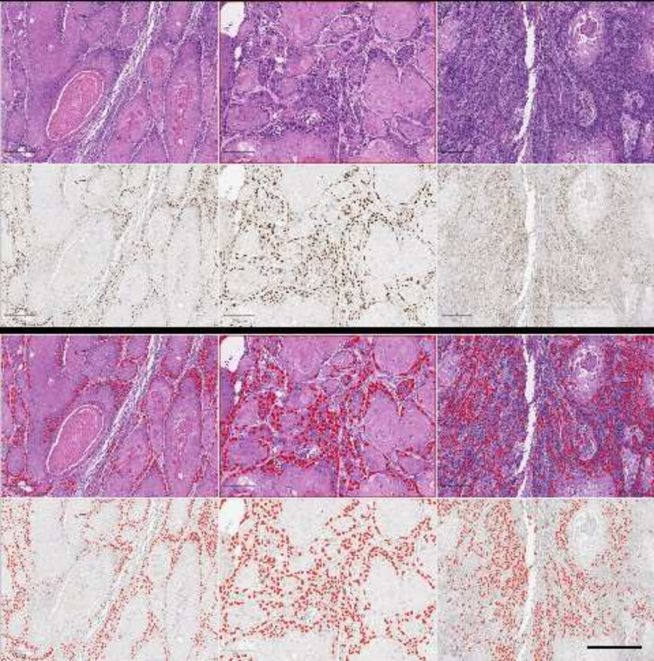
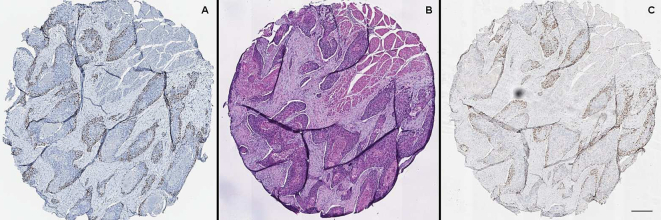
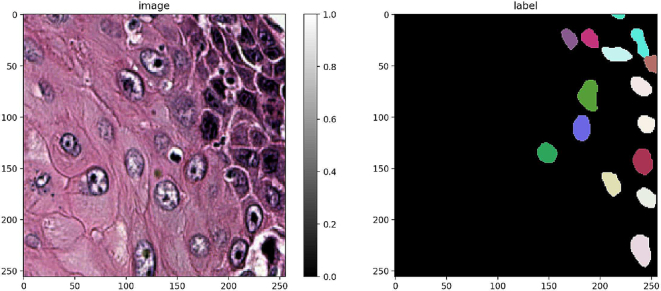
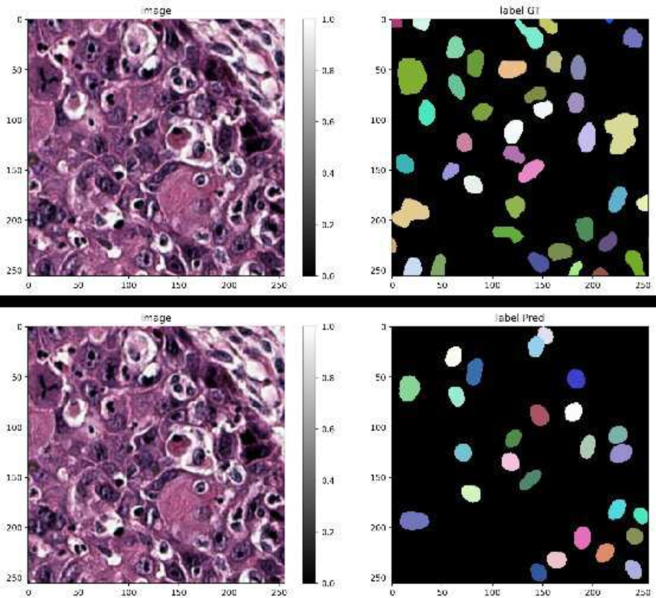
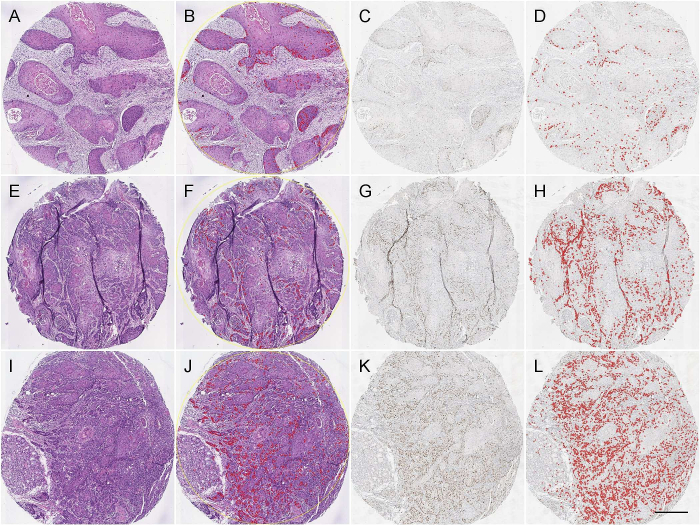
In the current study, we introduced a unique method for identifying and segmenting oral squamous cell carcinoma (OSCC) nuclei, concentrating on those predicted to have significant CAF-1/p60 protein expression. Our suggested model uses the StarDist architecture, a deep-learning framework designed for biomedical image segmentation tasks. The training dataset comprises painstakingly annotated masks created from tissue sections previously stained with hematoxylin and eosin (H&E) and then restained with immunohistochemistry (IHC) for p60 protein. Our algorithm uses subtle morphological and colorimetric H&E cellular characteristics to predict CAF-1/p60 IHC expression in OSCC nuclei. The StarDist-based architecture performs exceptionally well in localizing and segmenting H&E nuclei, previously identified by IHC-based ground truth. In summary, our innovative approach harnesses deep learning and multimodal information to advance the automated analysis of OSCC nuclei exhibiting specific protein expression patterns. This methodology holds promise for expediting accurate pathological assessment and gaining deeper insights into the role of CAF-1/p60 protein within the context of oral cancer progression.
在当前的研究中,我们引入了一种独特的方法来识别和分割口腔鳞状细胞癌(OSCC)细胞核,重点关注那些预计具有显著CAF-1/p60蛋白表达的细胞核。我们提出的模型使用StarDist架构,这是一个为生物医学图像分割任务设计的深度学习框架。训练数据集包括精心标注的掩码,这些掩码由先前用苏木精和伊红(H&E)染色,然后用p60蛋白免疫组织化学(IHC)重新染色的组织切片创建。我们的算法利用细微的形态学和比色法H&E细胞特征来预测OSCC细胞核中的CAF-1/p60 IHC表达。基于StarDist的架构在定位和分割先前通过基于IHC的地面真值识别的H&E细胞核方面表现出色。总之,我们的创新方法利用深度学习和多模态信息来推进对表现出特定蛋白表达模式的OSCC细胞核的自动分析。这种方法有望加快准确的病理评估,并更深入地了解CAF-1/p60蛋白在口腔癌进展背景下的作用。