Li Liyang, Li Fan, Zhou Chenghao, Ni Kangxin, Hu Haiyi, Wang Mingchao, Wang Huan, Gao Lei
School of Medicine and Health, University of New South Wales, Sydney, NSW, Australia.
Department of Urology, Sir Run Run Shaw Hospital, Zhejiang University School of Medicine, Hangzhou, China.
Transl Cancer Res. 2024 Nov 30;13(11):6364-6380. doi: 10.21037/tcr-2024-2195. Epub 2024 Nov 27.
N-acetyltransferase 10 () is a lysine acetyltransferase known for catalyzing the N4-acetylcytidine (ac4C) modifications on RNAs. Recent studies have associated with the pathogenesis of various cancers. However, its specific function and prognostic significance in papillary renal cell carcinoma (pRCC) remain poorly understood. This study aimed to explore prognostic value and mechanisms in pRCC.
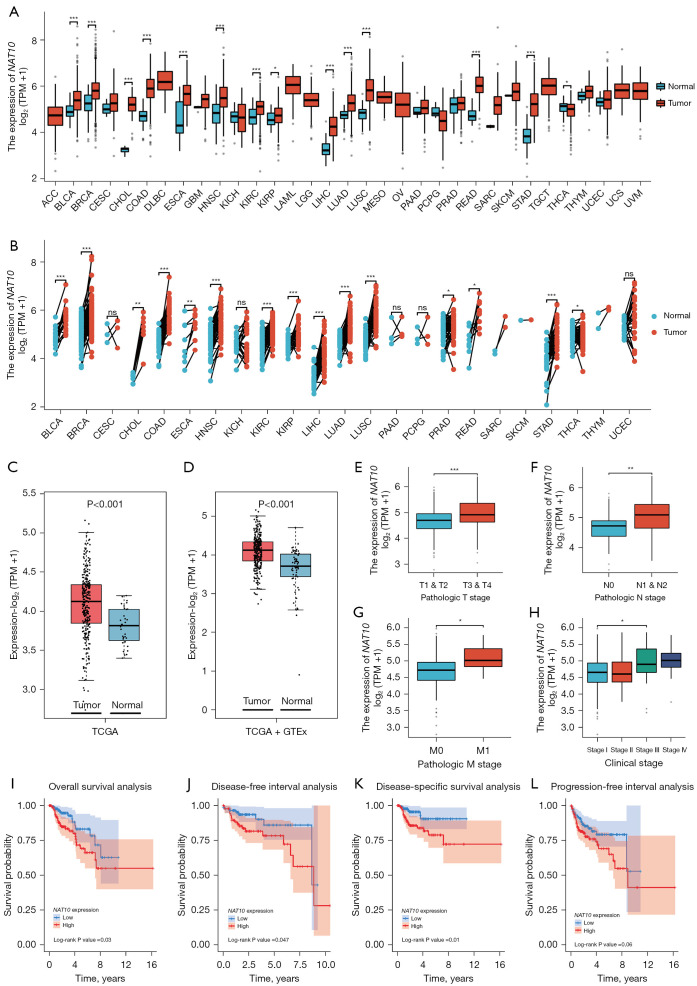
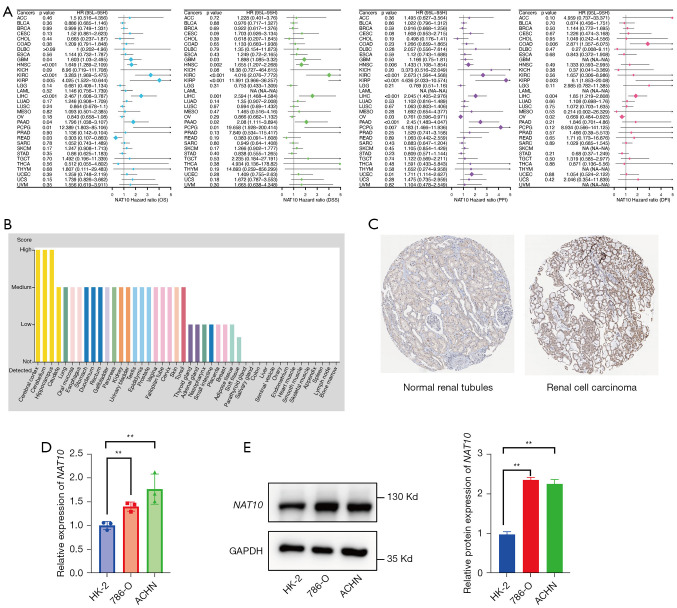
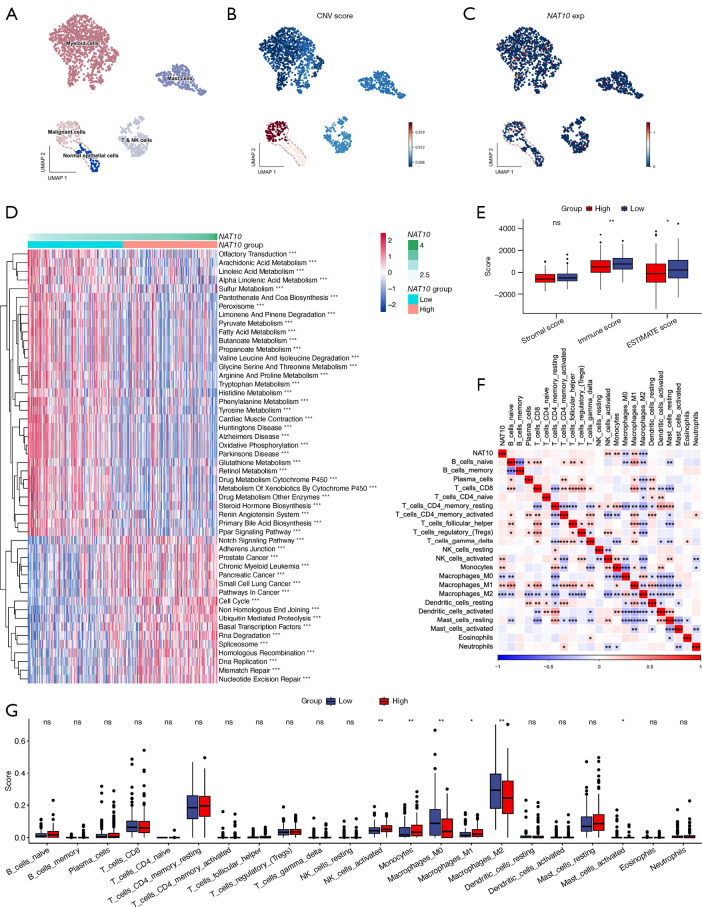
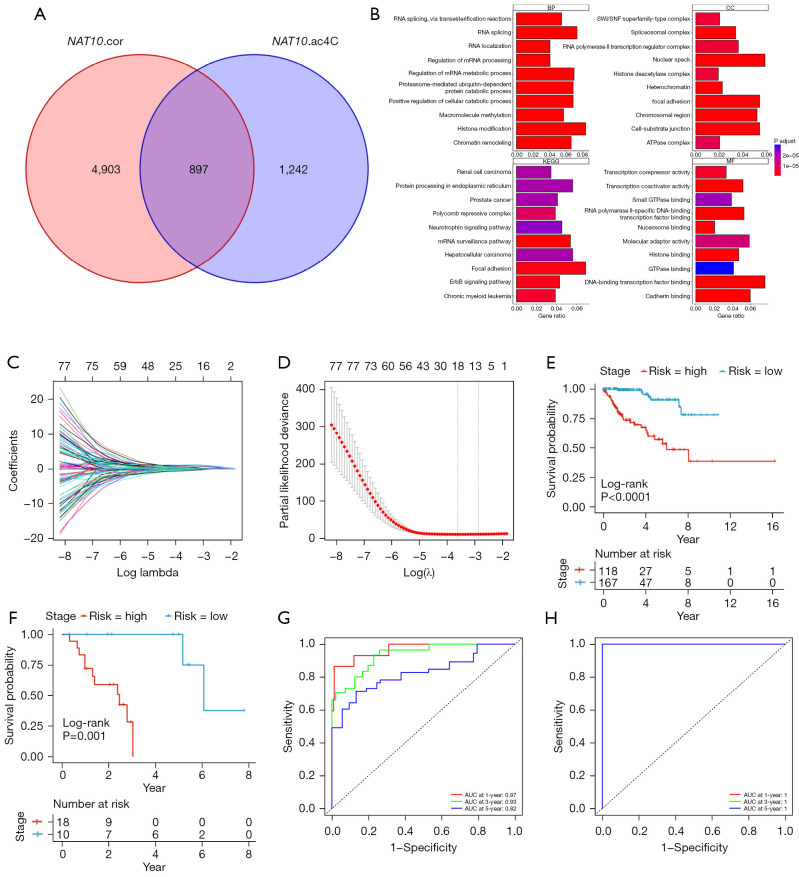
expression and prognostic associations in pancancer were analyzed using The Cancer Genome Atlas (TCGA). Single-cell RNA (scRNA) sequencing data from a previous study were used to characterize expression at the single-cell level in pRCC. Pathway enrichment analysis, including gene set variance analysis (GSVA) and overrepresentation analysis, was conducted to investigate the potential mechanisms through which exerts its effects. Immune cell infiltration analysis, conducted through the ESTIMATE and CIBERSORT algorithms, was performed to examine the association of with the tumor microenvironment (TME). A -related prognostic model was constructed using least absolute shrinkage and selection operator (LASSO) Cox regression on genes that were both positively correlated with and were identified as -mediated ac4C targets by ac4C RNA immunoprecipitation sequencing The model's performance was validated in the TCGA training set (n=285), with 42 events (deaths) and 243 censored cases, and in the GSE2748 external validation set (n=28), with 13 events (deaths) and 15 censored cases. The association between -related risk scores and immunotherapy response was assessed via the IMvigor210 cohort. Finally, the aberrant expression of was confirmed through immunohistochemistry data from the Human Protein Atlas database and our experimental validations from quantitative real-time polymerase chain reaction (qRT-PCR) and Western blot analyses.
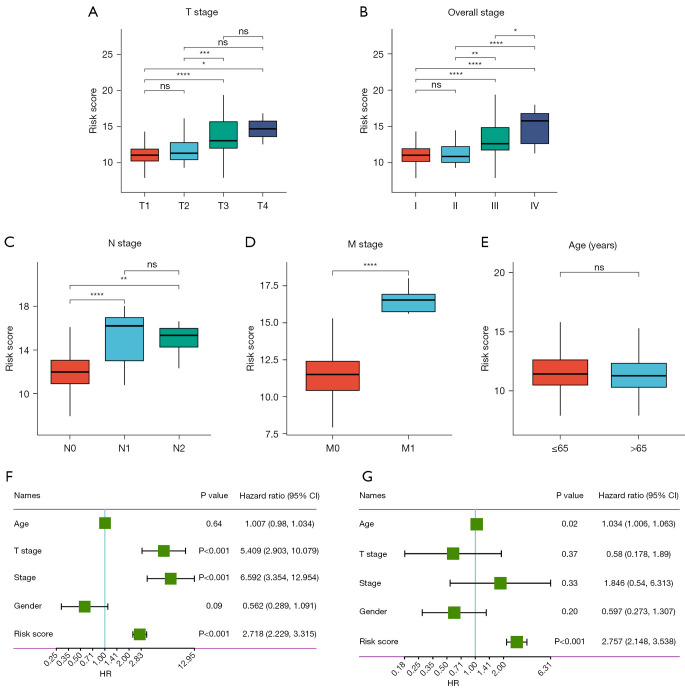
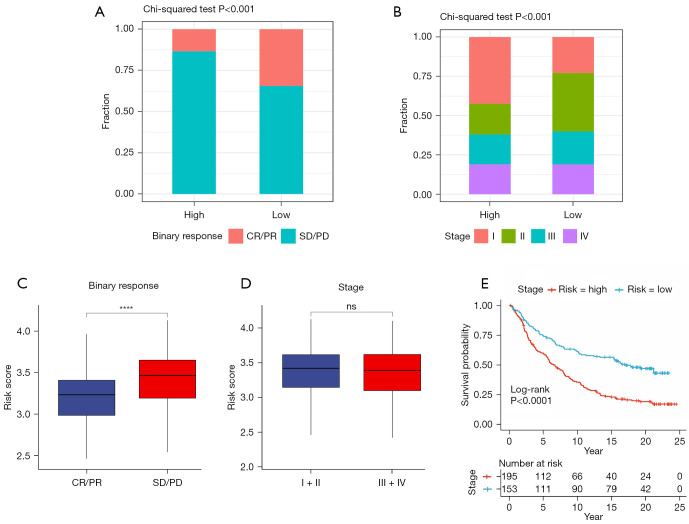
is upregulated in multiple cancers, including pRCC, and higher expression correlates with advanced stages and poorer prognosis. Single-cell RNA-sequencing data confirmed elevated expression in malignant pRCC cells. Pathway enrichment and immune cell infiltration analyses indicated that is associated with malignancy-related pathways and a disordered TME. A prognostic model was constructed using LASSO Cox regression, with 18 core genes being identified, and demonstrated high predictive accuracy for survival. The model achieved AUC values of 0.97, 0.93, and 0.82 for 1-, 3-, and 5-year survival in the TCGA training set, respectively, while all AUC values in the GSE2748 external validation set were 1. Higher -related risk scores were linked to poorer immunotherapy response in the IMvigor210 cohort. 's prognostic significance was validated across various cancers, with elevated expression at both the messenger RNA and protein levels confirmed through immunohistochemistry and experimental validation in RCC cell lines.
Our findings suggest that is aberrantly expressed in pRCC, is associated with poor prognosis, and contributes to pRCC progression through multiple pathways, offering new insights into the personalized treatment of patients with pRCC.
N-乙酰转移酶10(NAT10)是一种赖氨酸乙酰转移酶,以催化RNA上的N4-乙酰胞苷(ac4C)修饰而闻名。最近的研究将NAT10与各种癌症的发病机制联系起来。然而,其在乳头状肾细胞癌(pRCC)中的具体功能和预后意义仍知之甚少。本研究旨在探讨NAT10在pRCC中的预后价值和机制。
使用癌症基因组图谱(TCGA)分析NAT10在泛癌中的表达及预后相关性。利用先前一项研究中的单细胞RNA(scRNA)测序数据,在单细胞水平上表征NAT10在pRCC中的表达。进行通路富集分析,包括基因集变异分析(GSVA)和过表达分析,以研究NAT10发挥作用的潜在机制。通过ESTIMATE和CIBERSORT算法进行免疫细胞浸润分析,以检查NAT10与肿瘤微环境(TME)的关联。使用最小绝对收缩和选择算子(LASSO)Cox回归,基于与NAT10呈正相关且经ac4C RNA免疫沉淀测序鉴定为NAT10介导的ac4C靶点的基因,构建NAT10相关的预后模型。该模型的性能在TCGA训练集(n = 285,42例事件(死亡)和243例截尾病例)和GSE2748外部验证集(n = 28,13例事件(死亡)和15例截尾病例)中得到验证。通过IMvigor210队列评估NAT10相关风险评分与免疫治疗反应之间的关联。最后,通过人类蛋白质图谱数据库的免疫组化数据以及我们通过定量实时聚合酶链反应(qRT-PCR)和蛋白质印迹分析进行的实验验证,证实了NAT10的异常表达。
NAT10在包括pRCC在内的多种癌症中上调,较高的NAT10表达与晚期和较差的预后相关。单细胞RNA测序数据证实恶性pRCC细胞中NAT10表达升高。通路富集和免疫细胞浸润分析表明,NAT10与恶性相关通路和紊乱的TME相关。使用LASSO Cox回归构建了一个预后模型,确定了18个核心基因,并显示出对生存的高预测准确性。该模型在TCGA训练集中1年、3年和5年生存率预测的AUC值分别为0.97、0.93和0.82,而GSE2748外部验证集中的所有AUC值均为1。在IMvigor210队列中,较高的NAT10相关风险评分与较差的免疫治疗反应相关。NAT10的预后意义在各种癌症中得到验证,通过免疫组化以及在RCC细胞系中的实验验证,证实了其在信使RNA和蛋白质水平上的表达均升高。
我们的研究结果表明,NAT10在pRCC中异常表达,与不良预后相关,并通过多种途径促进pRCC进展,为pRCC患者的个性化治疗提供了新的见解。